
Finding the Best MW4 Cheat: Top 7 PC Providers Compared Picking a cheat provider for a fast shooter usually comes down to one question: can you tell what the tool actually does before you pay for it? Screenshots and taglines are cheap. Clear feature breakdowns and real gameplay footage are rarer, and that gap is what separates the sites worth a second look from the ones that just talk a big game. This rundown covers seven PC-focused MW4 cheat and mod providers, starting with a site built specifically around MW4 and moving through tools that serve a wider range of shooters. Some lean on low prices, some on support, and one isn’t about cheating at all. Here’s what each one actually offers. Best for MW4-Specific Feature Clarity – MW4 Hacks and Cheats MW4 Hacks and Cheats is built around one game, and that focus shows in how the site is organized. It covers aimbot, ESP, and radar together, with ESP set up to be customizable rather than a single fixed overlay. The feature list also includes player boxes, skeleton tracking, health display, weapon identification and distance readouts, all shown in the live game view rather than as a separate window you have to tab over to check. Access plans, setup guidance and support resources are all laid out alongside that footage instead of being an afterthought. Best for Broad Game Coverage at Scale – Battlelog Enhancements Battlelog Enhancements pitches itself as the largest supplier of game cheats worldwide, and its feature list backs up the scale claim: wallhacks, ESPs and aimbots sit alongside undetectable cheats and a custom-built loading tool. Support runs 24/7 through live chat, which matters if you’re troubleshooting at odd hours. It’s the pick for someone who wants one account covering multiple shooters rather than a deep cover one. Best for Low Ban-Rate Claims Across Multiple Titles – LaviCheats LaviCheats targets players across Valorant, Warzone, Overwatch, PUBG, Apex Legends, and other online games with what it calls an advanced anti-cheat bypass system and a hardware-ID spoofer, aimed at keeping ban rates low. Products are self-coded, and support is available 24/7. Pricing runs on subscriptions and is positioned as lower than the industry standard, which makes it a reasonable option for someone cheating across several games rather than just one. The flip side of covering that many titles is the same one Battlelog faces: breadth over specialization, so expect general tooling rather than a build tuned to a single game’s quirks. Best for Budget Month-to-Month Access – Aimware Aimware offers a set of movement and aim-adjustment features including smoothing, randomized aimbot lock-on, auto wall, legit anti-aim, speed-limit, and anti-spread. Pricing is published clearly: $20.42 for one month, $35.73 for three months, and $66.36 for six months, so you know the cost before committing. The catch is reputation. Aimware carries a 1.7/5 rating on Trustpilot, which is worth weighing against the low entry price before you sign up for a longer plan. Best for Covering Current-Generation Shooters – Proofcore Proofcore sells private cheats across a long list of current titles, including Fortnite, PUBG, Apex Legends, DayZ, Overwatch 2, Black Ops 6, Arma 3, Arc Raiders, Black Ops 7, Cold War, MW III and MW II. Features include advanced aim and what the site calls industry-leading technology, backed by dedicated support. Pricing starts at $23.99 for some cheats and stays under $100 per month, which gives buyers a clear ceiling. With that many games supported, Proofcore reads as a generalist’s toolkit built for players who jump between shooters rather than someone focused on a single release. Best for Simple Setup on CS2 – Kernaim Kernaim focuses on CS2 and leans hard on ease of use: a straightforward installation process, an automated key system, and pricing described as reasonable for what it includes. The site also offers compensation during maintenance downtime, which is a concrete commitment you don’t see listed elsewhere here. Because Kernaim is built around CS2 specifically, it’s not the choice if MW4 is your main game. It’s a solid fit for someone whose priority is a quick, low-friction setup on a single, well-supported title. Best for Free Single-Player Mod Access – WeMod WeMod is a different kind of entry. Rather than competitive cheats, it offers free mods, maps, and trainers across thousands of PC games through its app, aimed at players who want to tweak single-player experiences rather than gain an edge in online matches. That makes it a poor match for anyone looking for ESP or aimbot tools for a competitive shooter like MW4. It’s worth knowing about if modding a single-player campaign is actually the goal, which is a different use case entirely from the rest of this list. Players digging into game mechanics more broadly might also find value in guides like GTA San Andreas cheats for PS4 or the full list of GTA 4 cheat codes, which cover a console-era approach to the same idea. Matching the Tool to What You Actually Need to Verify The right pick depends on what you’re trying to confirm before you spend money. If you’re jumping between several competitive titles, a broader provider like Battlelog Enhancements or LaviCheats covers more ground with one subscription. If CS2 is your only concern, Kernaim’s setup process is built for exactly that. If you’re after mod access for single-player games instead of competitive tools, WeMod is the only entry here built for that purpose at all. But if MW4 is the actual game you’re playing, the calculation changes. Generalist tools are built to work across many titles, which means they can’t document any single one in depth. MW4 Hacks and Cheats can, because it only covers one game. The combination of real beta footage, detailed feature explanations, and a status page that separates demonstrated results from verified retail compatibility gives MW4 players a way to check claims against evidence before paying, something none of the multi-game providers on this list are positioned to offer for this specific title. Before you trust
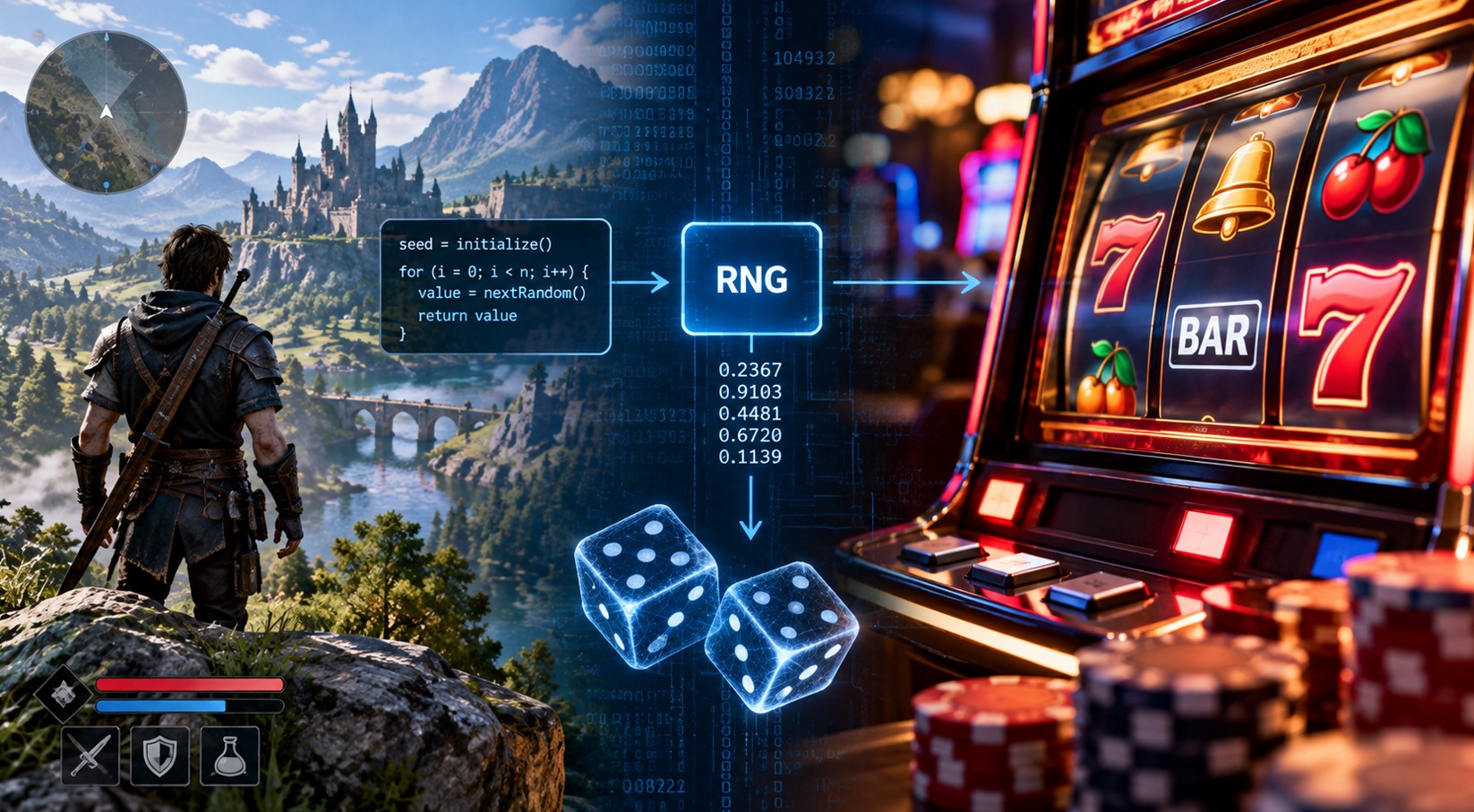
Game RNGs and Certified Casino RNGs – What Separates Them
Certified Casino RNGs vs Video Games: The Key Differences A video game might use a random number generator to position enemies or construct an unfamiliar landscape. In a digital slot machine, similar mathematics determines symbols and prize combinations. Both systems can rely on deterministic algorithms, yet the consequences of faulty output differ considerably. When money is wagered, the software must satisfy defined standards for statistical behaviour, security and the accurate calculation of results. Those safeguards, rather than a fundamentally different source of randomness, separate ordinary game RNGs from certified casino systems. Why Video Game RNGs and Casino RNGs Serve Different Purposes? Game developers often favour pseudorandom number generators (PRNGs) because their sequences can be reproduced. Entering the same initial seed allows a developer to recreate a procedural environment or investigate a software defect. Predictability under controlled conditions is useful in this setting. Gambling software faces additional scrutiny because generated numbers determine financial outcomes. The distinction is relevant to platforms such as tooniebet, which offers more than 5,000 casino games to customers in Canada outside Ontario. Its catalogue combines digital casino titles with live-dealer formats, where cards, roulette wheels or other physical equipment may determine results independently of software RNGs. A deterministic generator can meet gambling standards. Its suitability depends on secure initialization, resistance to prediction and accurate integration with the game’s mathematical model. A Random-Looking Sequence Is Not Necessarily Unpredictable An evenly distributed sequence is not necessarily secure. Someone who discovers a generator’s internal state may be able to calculate subsequent values even when earlier results appear statistically random. The UK Gambling Commission addresses this distinction through Remote Gambling and Software Technical Standards, including RTS 7. GLI-19, developed for interactive gaming systems, establishes additional expectations concerning cryptographic strength and resistance to attacks. Seeding is a particular concern. A generator initialized exclusively from the current time may expose enough information for an attacker to reconstruct its sequence. GLI-19 therefore prohibits time alone as an initialization seed and requires protections against identical starting states across games. Statistical testing addresses a different question: whether generated values exhibit the expected distribution. A system can satisfy distribution tests while remaining vulnerable to prediction. Laboratories must therefore examine both numerical behaviour and the security properties of the software producing it. These standards provide useful technical benchmarks, although adoption and enforcement depend on the gambling jurisdiction. How Laboratories Test the Numbers and The Outcomes They Produce A casino game does not display raw RNG output. Software converts generated values into reel positions, cards, symbols or other events. Errors introduced during conversion can alter the intended probabilities. Consider a generator producing integers from 0 to 255, each with equal probability. Dividing those values into ten outcomes using the remainder operation leaves six outcomes with 26 possible inputs each. The other four receive only 25. The original distribution was uniform. The conversion was not. Known as modulo bias, this mathematical problem illustrates why laboratory assessments must extend beyond the generator itself. Different prizes can legitimately have different probabilities, but those probabilities must follow the game’s specified mathematical model. GLI-19 testing procedures account for this by examining production-equivalent game functions, scaling methods and final results. Raw numerical output and the completed game’s behaviour may be evaluated separately. Even a cryptographically strong generator cannot correct mistakes in symbol mapping, card selection or payout calculations. Why Certified RNGs Can Still Produce a House Edge? Fair randomness concerns whether outcomes follow their specified probabilities. It says nothing about whether those probabilities favour the person placing a wager. Suppose a hypothetical game charges $1 and pays $9 on 10% of outcomes, returning nothing otherwise. Its theoretical return to player (RTP) is 90%, equivalent to an expected payout of $0.90 per dollar wagered. That percentage describes a mathematical expectation, not a schedule of winnings. A short sequence can produce results substantially above or below the theoretical return. Volatility further affects how prizes are distributed. Two games with identical RTP figures might differ considerably in winning frequency and payout size. This distinction matters when interpreting certified gambling software. Laboratory testing cannot eliminate the financial disadvantage built into a game’s payout mathematics. In Canada, responsible gambling protections and legal requirements differ by province. Gambling is restricted to those of legal gambling age in their province or territory. Anyone who chooses to gamble should recognize the possibility of losing their entire stake, establish financial limits, and avoid treating gambling as a source of income. Why an RNG Certificate Does Not Cover Every Game or Software Update An RNG certificate must be interpreted according to its testing scope. A laboratory might assess a generator component, a particular game integration, or a specified mathematical configuration. Those findings cannot automatically be extended to unrelated products. ToonieBet operates under Tobique Gaming Commission licence No. 0000050. An operator licence and independent certification of a particular game’s RNG are separate matters. Neither should be presented as evidence of the other without supporting documentation. Changes made after testing also require attention. Modified payout tables, revised outcome mapping or replacement generator software can affect the validity of earlier assessments. GLI-19 distinguishes laboratory certification from operational auditing, which considers the production environment, configuration controls and security procedures. British technical requirements also establish testing and reporting obligations for relevant game releases and major updates. A meaningful certification claim therefore identifies the tested software, its configuration, the applicable standard and the scope of the assessment. The strength of the evidence rests on those particulars, not simply on the presence of a certification label. P.S. YaninaGames ensures you receive the latest insights and news related to the world of video games. Please share and support this post if you’ve liked reading our blog. Any feedback is much appreciated.
The Blood of Dawnwalker Update: Every Fix and Its Cause
The Blood of Dawnwalker Update 1.1, Traced Back to the Complaints That Caused It It lands the week of October 19 – which is to say, starting tomorrow – on PS5, Xbox Series X|S and PC, and Rebel Wolves has not committed to an exact day. Patch notes are usually read as a list of gifts. This one reads better as a receipt. Almost every item in The Blood of Dawnwalker Update 1.1 can be traced directly to something players have been saying since the game launched on September 3, and reading it that way tells you more about where the game actually hurts than a feature list ever would. So here is the update mapped onto its causes. Eight frictions, eight answers, and then the honest section on what the update does not contain. The Complaint What 1.1 Does About It I built my character wrong and can’t undo it The Draught of Mind Rebirth, a full respec item The easiest difficulty still isn’t easy Story becomes Forgiving, and a new Story mode adds combat assistance Open-world fights lock me in place Reworked targeting, locking and disengaging, plus a navigation mesh fix Stunning an enemy throws my lock-on somewhere else Stun target-switching removed Shadowstep misses the ledge I aimed at More responsive traversal targeting and surface attachment I can’t read the subtitles Larger fonts and subtitles for every line of dialogue The PC version stutters Updated frame generation with dedicated settings My version is censored Blood and gore restored on the Japanese Steam build Plus over 1,100 further improvements and fixes that nobody has itemised publicly. Complaint One: The Build You Can’t Undo Three skill trees – Swordmastery, Witchcraft and Vampirism – in a game that takes 50 to 70 hours to finish, with no way back once you have committed. That was always going to generate a particular kind of regret, because Dawnwalker’s progression is not spent in points so much as in time, which is the resource the entire game is built around. Coen has thirty days and nights to save his family, plot-advancing actions consume time segments, and learning abilities is part of that economy. Discovering at hour forty that you built for swordplay in a run you have been solving through witch magic is a genuinely painful position. The Draught of Mind Rebirth answers it directly. The item makes Coen forget his Swordmastery, Witchcraft and Vampirism abilities and lets you reapply the time you spent learning them to a different set. Note the precise wording there, because it matters: you are not refunding points, you are recovering the time investment. That is a design-consistent fix rather than a generic respec button, and it fits a game where time is the currency that everything else is denominated in. The Blood of Dawnwalker Update Adds Two Difficulties, Not One This is the change most likely to be misread, so it is worth being precise. The game shipped with four difficulty levels. After 1.1 there are five, and the rename is the confusing part: The existing Story difficulty becomes Forgiving. A new Story mode sits below it, adding further combat assistance. So if you are playing on Story today, your difficulty is not being changed – it is being renamed, and a gentler option is being added underneath. Anyone who concluded the game was getting easier for everyone has misread the announcement. The reason this exists is straightforward. Dawnwalker’s daytime combat runs on directional blocking, where damage builds charges for Hex magic and executions, and directional systems are unusually unforgiving for players who do not naturally read attack angles. A difficulty tier that assists with that is a legitimate accessibility measure rather than a concession. Complaint Two: Open-World Combat Was a Trap The most substantive gameplay work in the update, and the complaint with the clearest shape. Players reported a specific and repeatable problem: entering combat in the open world effectively locked them in place, with enemies aggroing as they ran past and no clean way to leave a fight they had not chosen to start. In a game with a thirty-day structure where exploration is supposed to be the thing that does not cost time, being dragged into unwanted fights is more than an annoyance. What 1.1 changes: Improved targeting, enemy locking and disengaging, which is the headline fix. A navigation mesh fix for combat escapes, flagged by the director back in September, which addresses the underlying reason leaving a fight behaved oddly. Enemies less likely to attack when you simply run past them. No more being locked in place during open-world encounters. Stun target-switching removed, so landing a stun no longer flings your lock-on onto a different enemy. That last one is small in a patch note and enormous in a fight. Any lock-on system that reassigns your target at the exact moment you created an opening is working against the player, and removing it is the kind of fix that will make the combat feel better without anyone being able to point at what changed. Camera work accompanies it – adjusted combat animations and camera movement – which suggests the team treated the whole encounter-readability problem as one job rather than a list of bugs. Complaint Three: Shadowstep Missed The night half of the game has its own friction, and it has been addressed. Coen’s vampiric traversal – Shadowstep teleportation and Planeshift – is the mechanic that makes nighttime play feel different from daytime play, and when it misses a surface you wanted, it breaks the fantasy immediately. Update 1.1 brings more responsive targeting and surface attachment for both. Which is a small line that covers the difference between a vampire gliding onto a rooftop and a vampire bouncing off a wall into a courtyard full of guards. The Blood of Dawnwalker Update Also Fixes Reading, Framerate and Censorship Three unrelated items that share a theme: they are all about the game being properly presented to the person playing it. Subtitles. You can now
The Legend of Zelda Ocarina of Time Remake: Changes
The Legend of Zelda Ocarina of Time Remake, Walked Through Area by Area It arrives on November 5, which is eighteen days away, and the preview embargo has done something unusually helpful: journalists were given five specific areas to play, and between them they have produced a fairly precise picture of what has changed. Those areas are Kokiri Forest, the first half of the Deku Tree, Hyrule Field, Castle Town, and the entire Forest Temple as adult Link. That is a good spread – one starting zone, one child dungeon, the overworld, the hub town and one adult dungeon. So rather than a feature list, let’s take the walk. Five stops, what changed at each, and what has quietly been taken out along the way. First, the systems that apply everywhere, because they change how all five feel. System The Original The Remake Jumping Automatic, based on where you ran off A dedicated button you press Camera Locked Free control Item switching Menu-driven An item bar, in the style of Breath of the Wild Ranged aiming C-buttons ZR, with gyro aiming for Slingshot and Hero’s Bow Dialogue Text and grunts Fully voiced cutscenes Time of day Outdoors only Passes everywhere, including towns and buildings Tracking Nothing A “Threads of Time” log for story and objectives Ocarina Button inputs Button inputs, plus optional playing through the Switch 2 microphone That jump button deserves an early mention because it changes a twenty-eight-year-old frustration. In 1998, Link jumped when the ground ran out, which meant a missed platform was often a question of approach angle rather than skill. Pressing a button means a missed jump is now your fault, which is oddly more satisfying. You can also jump from anywhere, including straight onto a vine wall to start climbing. Stop One: Kokiri Forest and the Great Deku Tree The opening hour is where the art style argument gets settled for each player individually, and it is worth being straight about: reception has been split. What previews describe is a sharp-edged, figurine-like look that keeps the exaggerated character proportions rather than pushing toward realism. Link’s tunic and hat carry far richer patterns and textures. Kokiri Forest reads as more overgrown, and both the Great Deku Tree and, later, the Forest Temple feel darker and more decayed than their N64 versions. Real-time lighting is doing the heavy lifting, and the detail preview writers keep returning to is that Navi casts light. A fairy that actually illuminates the space around her is a small thing that changes the mood of every dark room in the game. The voice acting lands here first, and the early verdicts are specific: The Great Deku Tree sounds ancient, weary and frail, which is the correct read of that character. Saria’s farewell has been singled out as carrying real emotional weight. Navi is the adjustment. She now sounds closer to a teenager or young woman rather than the childlike sprite players have in their heads, and more than one preview flagged that it will take some adjusting. Not everyone is sold on the look. Some reactions have praised the environmental detail while finding the character models unsettling, with unflattering comparisons made to fan remakes. That argument is not going to resolve before launch. Stop Two: Hyrule Field The honest stop, and the one where expectations should be managed. Hyrule Field is still mostly empty. It has visibly more texture, and previews note that ruined buildings now dot the landscape and that the space feels larger. But it remains what it always was – the connective tissue between Zora’s Domain, Death Mountain and everywhere else, rather than a destination. If you were hoping for a Breath of the Wild treatment, with shrines and climbable towers scattered across the plain, that is not what has been built. The remake is a remake. Those ruined structures are atmosphere and landmarks rather than content. What they do accomplish is navigation. A flat green expanse with nothing on it is genuinely hard to orient yourself in, and scattered ruins give you something to steer by, which matters more now that the camera is free rather than locked. The Legend of Zelda Ocarina of Time Remake Changes Most in Castle Town This is the stop with the real additions, and the one worth getting excited about. Hyrule Castle Town is now a fully explorable area, and previews consistently describe it as the biggest transformation in everything they played. The comparison being drawn is to Wind Waker’s Windfall Island – not enormous by modern standards, but genuinely inhabited. What has been added: New backstreets, which did not exist in the 1998 layout. New characters, including a bearded man who helps you locate another NPC. Better NPC animation, with townsfolk behaving playfully rather than shuffling on a loop. More detailed and active shops and buildings, so the town reads as a working place. Time passing indoors, which means the town has a genuine daily rhythm rather than a frozen interior state. And then there is the thing people came here for. A new side quest in Castle Town. The potion shop attendant is in a panic about a bug and asks Link for an empty bottle to catch it. Hand one over and he lets you keep the bottle – now filled with a red healing potion. That is a small quest, and its smallness is the point. It is exactly the register of Ocarina’s original side content: a stranger with a problem, a trivial favour, a permanent reward. What is notable is that there is no journal entry or quest log tracking it. You find it, or you don’t. That design decision tells you something about the remake’s philosophy. Nintendo has added a Threads of Time log for the main story and objectives, and then deliberately left the optional discoveries outside it. New content, old discovery rules. One more change worth knowing: previews report that NPCs point you toward objectives more clearly than before, which is the
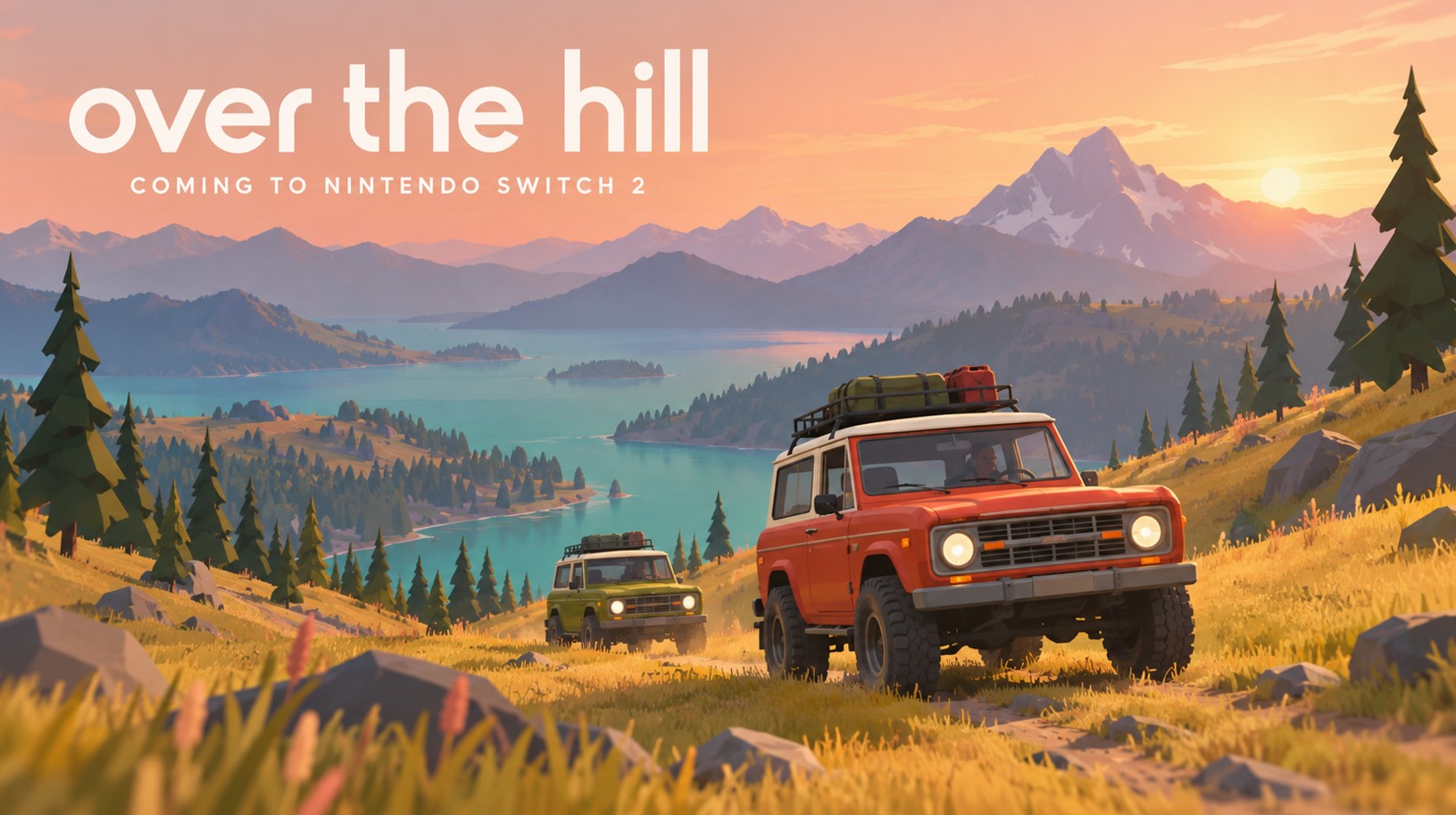
Over the Hill on Switch: Five Numbers and One Caveat
Over the Hill on Switch: Five Numbers, Then the Caveat Nobody Mentions Four days ago a game about getting a 1970s four-wheel drive unstuck from a muddy hill launched on Steam with 1.2 million wishlists behind it. Yesterday it hit its all-time concurrent player peak – which is to say, three days after release, its audience was still growing. That is a genuine indie success story and it deserves a clear-eyed telling rather than a press release. It also comes with a caveat that most coverage of this keyword glosses over, so let’s put it at the top: the handheld version is Nintendo Switch 2, not the original Switch. The release of Over the Hill on Switch has not been announced, and the console versions as currently stated are not arriving this year. The rest of this is five numbers, taken one at a time, with an honest account of what each actually proves. Because wishlists are not sales, a high review score is not a consensus, and a peak player count on day four means something quite specific. The Number What It Is 1,200,000+ Steam wishlists at launch 500,000+ Players who tried the demo before release 92% of 1,611 Steam user review score, Very Positive 12,685 All-time peak concurrent players, set October 17 $24.99 Full price, discounted to $19.99 until October 28 Number One: 1.2 Million Wishlists, and What They Actually Measure Funselektor Labs is not an unknown quantity. The studio made Art of Rally, and founder Dune Casu has been clear that Over the Hill was a deliberate step away from motorsport – the pitch was a vast world to lose yourself in at a slower pace. That reputation shows in how the wishlist number accumulated. Early reporting had it gathering 100,000 wishlists inside five days of announcement. It passed a million before launch and crossed 1.2 million by release day on October 14, 2026. Here is the honest reading. A wishlist is an intent signal, not a purchase, and conversion rates vary enormously. What a 1.2 million figure reliably tells you is that the game solved its discovery problem completely – the hardest problem an indie release faces – long before it had to solve its quality problem. What makes the figure credible rather than inflated is the game’s positioning. It is an off-roading game with: No racing. The developers and the store page both state this plainly, and it is the central design decision. Vintage 4×4 vehicles from the 1960s to the 1980s, with period-appropriate tools. No mini-map. You navigate by paper map and compass. Winches and wooden planks as the primary problem-solving tools rather than speed. Campsites and resource gathering, with drop-in co-op for up to four players. That is a specific audience being spoken to very precisely, which is generally how an indie game gets to a million wishlists without a marketing budget the size of a publisher’s. Number Two: Half a Million Demo Players The second number is the one that actually predicts sales, and it is the one I would have watched if I were the studio. Over 500,000 people played the Over the Hill demo before launch. A closed playtest ran April 24-26, 2026, with registration open from April 9 to April 16 on the studio’s own site, and a public demo followed during a Steam Next Fest. Demo players are a far better signal than wishlists because they have spent time rather than a click. Somebody who finished a session of a slow, stubborn off-road game and then kept the wishlist is telling you something a wishlist alone cannot. It also explains why the review score held up after release, which is the usual failure point for heavily wishlisted indie games. A large chunk of the launch audience already knew exactly what the game felt like, so the mismatch between expectation and product was small. Over the Hill on Switch and the Number That Doesn’t Exist Yet Now the part you came for, and the part where the keyword needs correcting. The Nintendo platform is Switch 2. Every announcement from the studio and its partners names Nintendo Switch 2 alongside PlayStation 5 and Xbox Series X|S. The original Switch is not on the list, and nothing published suggests it will be. The timing has also moved. Earlier reporting, from the ID@Xbox Showcase announcement, placed the console versions in 2026. Coverage around the PC launch now places them in 2027, with no exact date for any platform. Given the PC version only arrived on October 14, the later window is the one to plan around. What is confirmed about the console release: Platforms: PlayStation 5, Xbox Series X|S and Nintendo Switch 2. Wishlisting is already live on the PlayStation and Xbox digital storefronts, with Nintendo eShop pre-orders described as coming soon. Physical editions are happening, published by Serenity Forge – but only for PS5 and Switch 2, not Xbox. The Premium Standard Edition includes a window cling and a soundtrack download card. The Collector’s Edition adds a car standee, an embroidered patch, a lanyard keychain, a collar pin and a poster. Pricing for both physical editions is still to be confirmed, and since Serenity Forge is Colorado-based, availability outside the United States is not yet clear. The soundtrack is also sold separately as DLC on PC. Console Release Status Platforms PS5, Xbox Series X|S, Switch 2 Original Switch Not announced Date 2027 per current reporting, no specifics Pre-orders Live on PlayStation and Xbox stores, eShop “soon” Physical Serenity Forge, PS5 and Switch 2 only, pricing to be confirmed If you own an original Switch and were hoping to play this on it, the honest answer right now is that you are waiting for hardware rather than a port. Number Three: 92% of 1,611 Reviews The Steam score sits at Very Positive, with 92% of 1,611 user reviews positive at the time of writing. For a $25 indie release four days old, that is a strong, stable number. But a user
Fire Emblem Fortune’s Weave Guide: Run Your Week
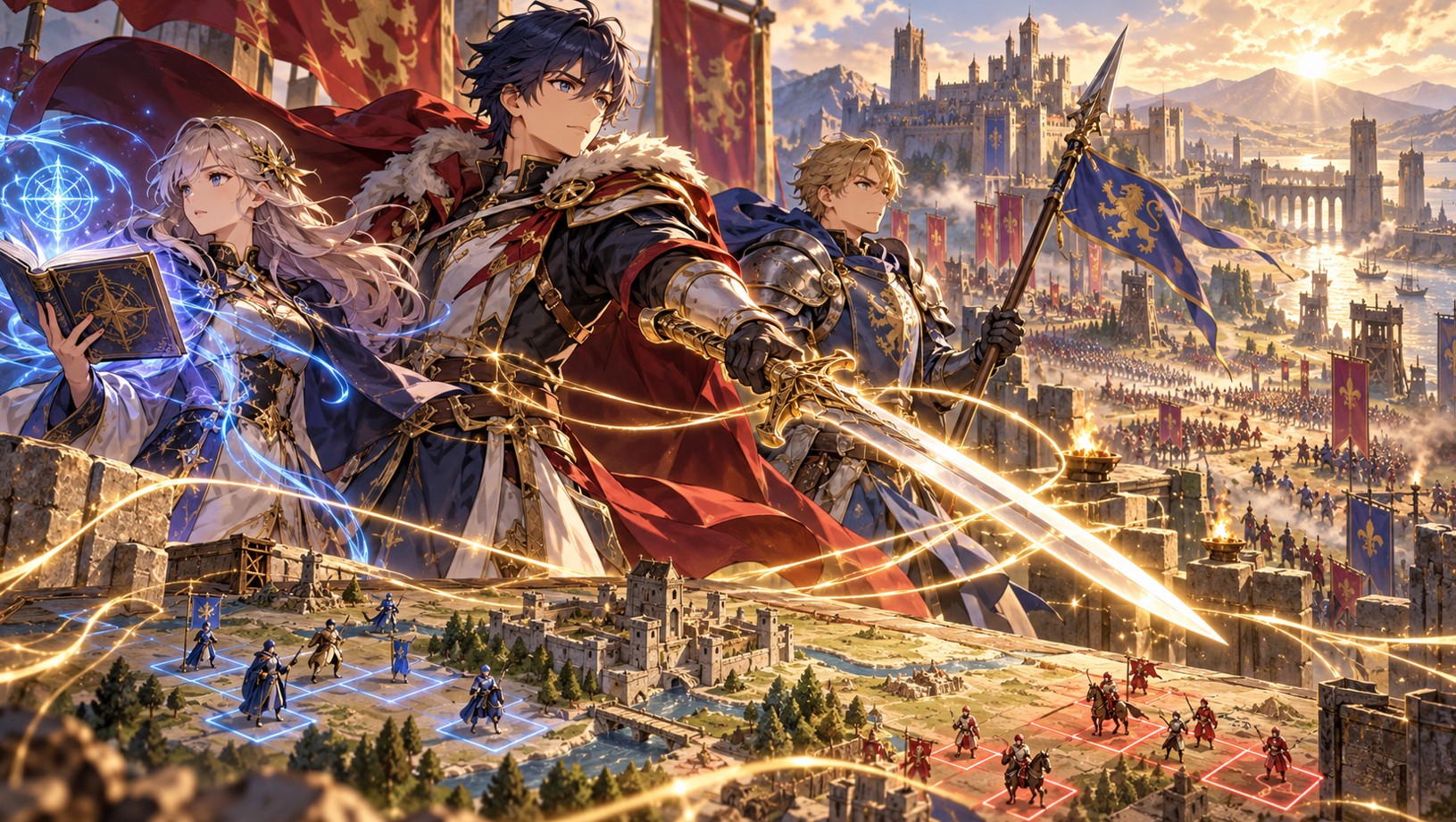
Fire Emblem Fortune’s Weave Guide: The Calendar Is the Real Difficulty Most strategy guides for this game will hand you a tier list and a route recommendation. Both are useful. Neither is where your run is actually being decided. Fortune’s Weave runs on a seven-day week, and six of those seven days belong to a different god. Serve Aurora on a Monday and the gauge fills faster, the result is guaranteed Perfect, and the Motivation you spent comes back. Serve her on a Thursday and you get a slower fill and you have paid for it. That is a real, repeating, compounding difference, and it means the strongest thing you can bring to this game is not a build. It is a schedule. So here is the guide written as one – a working Dagsion week, day by day, followed by the three things that do not fit inside a week. The game launched on September 17 and the community has had a month to work out the loop, which is long enough for a clear picture to form. God Holy Day Blessing at Levels 1 / 2 / 3 Aurora Monday Halves physical damage taken / Halves magical damage taken / Neutralises enemy Underworld Boons Mars Tuesday Hit +50 on physical attacks / Restores HP on a kill / Str +5 Smyrnos Wednesday Hit +50 on magic attacks / Magic range +1 / Mag +5 Jurah Thursday Negates effective damage / Blocks follow-up attacks / Blocks critical hits Kalla Friday Avo +50 / Spd +5 / Mov +2 Credna Saturday Visibility +5 / Zero weapon durability cost / Army attacks first in the enemy phase Fortuna None The rewind. Arrives in a Part 1 story battle and needs no service Print that, screenshot it, whatever you like. The rest of this follows from it. Monday Through Thursday: Build Your Defensive Floor First Temple service works like this. Each week you pick two units at a god’s temple, each spends one point of Motivation, and the god’s gauge fills over time. On that god’s holy day, the gauge fills faster, the result is guaranteed Perfect, and the Motivation gets refunded – so holy-day service is strictly better in both currencies at once. Which means the service order worth following is not alphabetical or whichever temple is closest. It is a priority list: Credna first, for the Visibility +5 at Level 1, because fog-of-war maps are where unprepared armies get dismantled and seeing five tiles further is the cheapest insurance in the game Aurora second, because halving physical damage army-wide for a turn is the single most forgiving button available and it scales with how badly a map is going Mars or Jurah third, depending on your army – Mars for a physical team that keeps missing, Jurah if effective damage and enemy criticals are what keep killing your units Kalla last in most runs, though she is excellent if you are chasing low turn counts, since Mov +2 at Level 3 is a turn saved on nearly every map Smyrnos sits where your mage count puts him, which on a Theodora or Leda army is considerably higher than on Dietrich’s Notice that Jurah’s third level blocks critical hits outright. That is not a damage reduction, it is a denial, and on Hard it is the difference between a Classic-mode run surviving an ambush and ending there. One scheduling detail that catches people: temple warps become available in the capital and send you to a god’s minor temple out in the remote areas. Combined with Posthouses – visit them early to open carriage travel, and remember you can only carriage to somewhere you have already been – you can usually reach the right temple on the right day without burning half a week travelling. Friday and Saturday: Spend the Week’s Momentum The calendar runs on four turns per day – morning, day, evening and night, six hours each – which gives you twenty-eight actions a week and a lot of ways to waste them. Two habits fix most of that waste. First, pin your events. The calendar lets you pin up to three days, and the things worth pinning are the timed ones: holy days, psychic consultations, arena exhibitions. Pin them a few days ahead so you have travel time back to Dagsion rather than discovering on the morning that you are three carriage rides away. Second, read the Adventure Guide’s star ratings as instructions rather than suggestions. Its first page tells you what to do next and who to recruit, with Dagsion tasks in the left column and World Map tasks on the right. Three-star tasks are top priority. Two-star and one-star tasks should be cleared before your next major battle, not after it. Shopping belongs in this part of the week too, and the single most useful economic fact in the game is that Dagsion is not the best shop. Surrounding cities frequently carry better gear. Regia specifically has cheap gifts and cheaper licenses, which matters enormously once you start reclassing through certification exams. Some towns specialise in a weapon type, some sell items available nowhere else, and some sell maps that show every location in their local area – which is the fastest way to stop wandering. Fire Emblem Fortune’s Weave Guide to Sunday, the Only Day That Resets Sunday is administration day, and treating it as one changes your whole week. Everything weekly resets on Sunday. Unit Motivation – shown as flames – resets then, shops restock then, and meals are 50% off on Sundays. That discount is more significant than it looks, because meals partially restore Motivation, and Motivation is what temple service spends. So Sunday is when you refill the resource that Monday through Saturday consumes, at half price. The full weekly activity list, all of which resets: Interacting with the Pale Raven, which raises your protagonist’s Support Level. Giving gifts to each potential recruit, once each per week. Sharing meals, limited by whichever

Golden Clover Easter Egg: Only One Is Actually Gold
Golden Clover Easter Egg: Only One of Them Is Actually Gold Search this term and you get a mess. Slot-machine roguelites, a Club Penguin fan server, a Roblox wiki, a Stardew Valley item that turns out to live in a mod, and a dozen pages that have clearly never looked at any of it. Underneath that mess there is exactly one place where a literally golden clover easter egg was handed out as a reward for solving a hidden puzzle. It was a weapon charm in Rainbow Six Siege, it went to the people who got there first, and the hunt it belonged to took about a year to finish. Everything else is a near match – and the near matches are more interesting than they sound, because three separate games independently arrived at almost the same idea: gather lucky objects, rig a gambling device, walk away with something gold. So this is a sorting exercise rather than a list. Four ways a clover can be hidden in a game, plus one way a clover claim can be fake. Here is the shape of it first. Game What the Clover Is How It’s Hidden What You Get Rainbow Six Siege 30 four-leaf clovers on Emerald Plains Behind a destructible vent and across map geometry A golden clover weapon charm for the first finders Control One four-leaf clover among six lucky objects Behind a Level 5 door and a six-part ritual A golden suit, two ability points, crafting materials Deep Sleep: Labyrinth of the Forsaken A clover traded from a casino guest Behind a trade and a three-item combination A golden chip at the roulette table One In A Thousand: Clover Book One four-leaf clover among thousands Inside the odds themselves The clover, pressed into a journal CloverPit The Golden Clover charm Not hidden at all – it is on sale A 20% shot at the Golden Modifier Work down that table and the categories sort themselves. Category One: Hidden in the Geometry This is the real one, and it is worth telling properly because the setup is unusually elaborate for a competitive shooter. Emerald Plains arrived in Rainbow Six Siege on April 19, 2022, in the Y7S1.2 mid-season patch during Operation Demon Veil – still the only map the game has ever shipped mid-season. It is set in Northern Ireland, on a private ranch and country club, which is the detail that makes the rest of this make sense. Inside the 2F Vault there is a secret drone vent. It does not open by hand. You need explosives to get into it, which already puts the find outside what a player stumbles across during a normal round. Behind it sits a leprechaun statue holding a sign. The sign tells you to go and find thirty four-leaf clovers hidden around the map. Ubisoft confirmed the hunt publicly on the day the map launched, posting that Emerald Plains hides many secrets – at least thirty, in fact – and asking whether anyone had found any of the fella’s clovers yet. Community searching has since accounted for all thirty, spread across various rooms. And this is where the gold comes in. Ubisoft’s community account later stated that a golden clover charm was given to community members who were the first to find one of the thirty clovers, as part of the hunt that started with the map’s release. The same post noted the final clovers were only found roughly a year afterwards. A few things worth separating out, because this is the part other pages get wrong: The ordinary Clover charm is a store item, sold for Renown or R6 Credits on the usual rotation, and it is not the same object. The golden version was never purchasable and was not tied to an event pass or a battle pass tier. The award went to first finders, not to everyone who eventually found a clover, which is why it reads as rare rather than merely old. The number awarded has never been published, so anyone quoting a figure is guessing. The detail comes from Ubisoft’s community account replying to players, not from a patch note, which is worth knowing when you see it cited as official documentation. That is the genuine golden clover easter egg. A destructible vent, a statue, a sign, thirty hidden objects, a year of searching, and a charm you cannot buy. Golden Clover Easter Egg Category Two: Hidden Behind a Ritual Here is the coincidence that makes this topic genuinely interesting rather than merely trivial. Two completely unrelated games – a 2019 third-person action game from a Finnish studio and a browser-born horror adventure from a solo developer – both built a secret in which you assemble lucky charms around a roulette wheel and win something gold. Control puts its version in the Luck & Probability department of the Research sector, behind a Level 5 security door. The goal is to make the roulette ball land on seven, and you get there by arranging the room’s superstitions correctly. The four-leaf clover is one piece of that. It starts in a white planter outside the experiment room, and it has to be moved into the white planter near the television. Then four lightbulbs on, horseshoe facing upward, the Maneki-Neko’s paw set moving, the elephant left exactly as you found it, and a bronze koi fish hauled in from near the office entrance with Jesse’s launch ability and parked within a couple of feet of the wheel. Spin from outside the red carpet, as the whiteboard tells you. Get any of it wrong and the room tells you off – a fire extinguisher discharges, the sprinklers come on, or a phone starts ringing. Get it right and the ball lands on seven, and Jesse walks out with a golden suit, two ability points and crafting materials. Deep Sleep: Labyrinth of the Forsaken does the same thing in miniature. Its clover lives in The Lucky Casino, held by a character called
Super Scary Games to Play This Halloween Season
Super Scary Games, Sorted by the Night You Actually Have Twenty-two days to Halloween. And here’s the thing nobody accounts for in the usual ranked lists: the scariest game in the world is useless to you on a Tuesday when you’ve got ninety minutes and a headache. Horror is the genre most sensitive to circumstance. A three-hour psychological gut-punch played alone at 1am lands completely differently from the same game in a brightly lit room with someone watching over your shoulder. A co-op scavenging game that’s genuinely terrifying with four friends is just tedious solo. So this isn’t a ranking. It’s a planner. Work out what kind of evening you’ve got, then pick accordingly. Good news if you’re reading this now – October 2026 has been unusually generous. Three horror games launched yesterday alone, two more arrive before the 31st, and almost every live-service horror game on the market is mid-event right now with dated rewards you can still catch. The October 2026 Release Calendar of Super Scary Games Game Date Platforms Shape of It Clive Barker’s Hellraiser: Revival Oct 8 PC, PS5, Xbox Series X|S, Switch 2 First-person action horror, 8-12 hours Silver Pines Oct 8 PC, PS5, Xbox Series X|S, Switch, Switch 2 2.5D metroidvania survival horror Invokyr Oct 8 PC, Early Access Up to six players, supernatural board game Valor Mortis Oct 13 PC, PS5, Xbox Series X|S First-person soulslike, around 20 hours Remothered: Red Nun’s Legacy Oct 27 PC, PS5, Xbox Series X|S, Switch 2 Series finale, Akira Yamaoka soundtrack That October 8 cluster is genuinely remarkable – three very different horror games on one Thursday. If you only have money for one, the rest of this article should help you work out which. One Evening, Alone, Door Locked The sweet spot for pure dread is the three-hour game. Long enough to build, short enough that you finish it in one sitting and go to bed properly rattled. Mouthwashing is the one I’d press into anyone’s hands first. Psychological horror about the crew of a stranded space freighter, told through unreliable perspectives, with no traditional combat at all. Three hours. Overwhelmingly Positive on Steam, and two years after release it’s still the game people cite when they want to prove horror doesn’t need monsters. Detention runs about the same length and does something braver. Set in 1960s Taiwan under martial law, it builds its horror out of local mythology and political terror in equal measure. Overwhelmingly Positive, and the 2019 film adaptation tells you how much it landed. Stories Untold is the oddest recommendation here and the one that tends to stick longest. Four experimental episodes built around text adventures, puzzles and 1980s technology, from the team that later made Observation. About three hours. Worth noting that studio – formerly No Code, now Screen Burn Interactive – just released Silent Hill: Townfall last month, so you can trace a straight line between the two. Flesh Made Fear takes the opposite approach: late-90s survival horror with fixed cameras and tank controls, deliberately. Pick Natalie or Jack and your health, inventory and parts of the story change. Six hours, Very Positive on Steam, and it came out on Halloween last year, which is the correct day for a game like that. A few notes on getting the most from a short one: Play it in a single sitting. These games are paced as films, not seasons. Headphones, not speakers – the sound design in all four is doing most of the work. Don’t look anything up mid-playthrough, because the discoveries are the content. Accept that three hours is a full experience, not a demo at a reduced price. Super Scary Games for a Group and a Voice Channel Different genre entirely. Co-op horror isn’t about dread, it’s about panic and laughter, and right now almost all of it is mid-Halloween-event. Phasmophobia is the obvious pick, and the timing is perfect. Up to four players, available on PC, PS5, Xbox Series X|S and VR with crossplay, and its Crimson Eye event is live from October 8 to November 1. The event’s genuinely substantial. Blood Moon weather makes ghosts harder, you hunt Blood Moon totems for points, and eight maps are featured – 6 Tanglewood Drive, 42 Edgefield Road, Grafton Farmhouse, 13 Willow Street, Bleasdale Farmhouse, Point Hope on standard only, Camp Woodwind and Nell’s Diner. Rewards include a seasonal tee, the Beholder ID Card and Badge set, the Blood Moon charm and an upgradeable trophy, and if you already own the trophy from a previous year you keep upgrading the same one. Three dated extras worth diarising: the Twitch drop runs until 11:59pm BST on October 15, double XP runs October 15 to 22, and the Ghost Hunts 4 Hearts charity collaboration with the American Heart Association runs October 26 to November 1. Lethal Company has no Halloween event, which is almost funny given how much of its DNA now runs through the genre. It turns three on October 23. Up to four players, Steam only, still Early Access, still the best proximity-chat comedy of terror available. Dead by Daylight brings back Haunted by Daylight, its long-running Halloween event – four survivors against one killer, across PC, PlayStation, Xbox and Switch with crossplay. Hunt: Showdown 1896 is in the middle of Blood Testament Chapter 2, live since October 6, with All Hallow’s Cleave still to come. Solos, duos or trios, and the PvPvE tension of hunting monsters while another team hunts you is its own distinct flavour of stress. GTFO is the serious option. Four players, Steam only, finished rather than live-service, and the most genuinely intense co-op horror on the market. No event, no seasonal cosmetics, just four people whispering in a dark room trying not to wake anything. Invokyr, out yesterday, is the new entrant – up to six players navigating a supernatural board game in an abandoned 1970s house, with dice that carry hidden advantages or drawbacks. Early Access on PC, so temper expectations, but

PolyTrack Maps: Official and Community Tracks
PolyTrack Maps and Track Codes PolyTrack is a low-poly time-trial racer from the developer Kodub, and its tracks fall into two groups: maps that ship with the game and maps that players pass around as text codes. The Poki page for the game lists its PolyTrack maps as 17 official tracks plus 30+ community creations across Summer, Winter, and Desert themes. The Official PolyTrack Maps The official set is sorted by scenery, and the split looks like this: Theme Official tracks Summer 7 Winter 5 Desert 5 Total 17 BlueStacks, which offers the game for PC play, reports the same breakdown and adds that the driving stays the same across seasons, with only the scenery changing. The game’s listing says each map asks for a different driving style. Some call for smooth steering through long corners, others punish entering too fast, and a few have jumps that punish poor landings. Community PolyTrack Maps and Where Players Share Them Community maps live mostly on forums. Kodub opened a thread on itch.io on June 10, 2023, titled “Share your tracks here!”, and invited players to post the codes for tracks they had built. A later capture of that page shows over 739,000 views and 23,815 replies. The game’s listing also points players to Reddit and other forums for custom tracks. Several posts pair a code with a time to beat. One early example, a track called Sludge-Works, came with the question of whether anyone could finish it in under 48 seconds. A separate itch.io thread started by a player sorts shared tracks into four types: 1 Lap Track with Checkpoints. Generator Track. Multi-lap Track. Checkpoint Back to Start Track. How to Import a PolyTrack Map Code? Unlike the password codes used for Pokémon Pokopia Mystery Gifts, which unlock in-game items, a PolyTrack code carries a whole track. According to the game’s listing, an imported code appears in the Custom Tracks tab. The process is short: Copy the full code from the forum post, from the first character to the last. Import the code into the game. Open the Custom Tracks tab, where the imported map appears. Drive the map and compare your time with the one in the post. Why Does a Track Code Fail to Import? Most failed imports trace back to one of three causes reported by players on itch.io. The code was cut short. A reply in Kodub’s suggestions thread tells players to check that the track code was copied correctly. The code may not match your version. One player blamed a version 4 track for a failed import, though the reply pointed out that older tracks are meant to stay compatible and that a bad copy is the likelier cause. Recurring problems with long track codes. One poster asked Kodub to compact codes for big maps, since their city map’s code was very long, which makes partial copies easier to miss. Building a Map of Your Own The track editor is built into the game. The listing describes the same loop for every map: Choose parts from the build menu. Place and rotate them to shape the route. Add checkpoints and a finish so runs can be timed. A track can be tested at any time and then exported and shared with friends, which is how most of the codes in the itch.io threads came to exist. BlueStacks notes that straight lines are the easiest tracks to build at first. FAQ How many official PolyTrack maps are there? Seventeen: seven Summer, five Winter, and five Desert tracks, according to BlueStacks. The game’s listing gives the same total. Where are community PolyTrack maps shared? Kodub’s official track-sharing thread on itch.io is the main hub, and the game’s listing also names Reddit and other forums. Where does an imported map appear? In the Custom Tracks tab. Why won’t my track code import? The code may have been copied incompletely, or the track may come from a different version of the game. Can I build my own PolyTrack map? Yes. The built-in editor lets you place parts, add checkpoints and a finish, test the track, and export it as a code. Before You Import Your First Map Official maps cover three themes, and community maps add whatever players post on the forums, so most players move between both. Copy each code whole, and note which build of the game a track came from before assuming the code is broken. P.S. The YaninaGames team explained the basics of PolyTrack maps. If you’ve found this post useful, consider sharing it across your social media. Any feedback is much appreciated!

Crash Game Odds Explained: Why Most Rounds End Below 2x
Crash Game Odds Explained Unless you’ve been hiding under a rock, you already know how wildly popular Crash games are in the online crypto casino world, and – let’s be honest – they are totally addictive, particularly as they’re (on the face of it) so easy to play. The premise is simple… just watch the multiplier climb as high as you dare, holding your nerve and aiming to cash out before the crash happens. Straightforward, high-octane, and a fast way to bank a win without applying anything more than great timing. But the more you play, the more you’ll notice that most of the rounds end before 2x, so what’s going on underneath? We’re going to deep-dive into the maths behind the game to give you that valuable knowledge upgrade you can use to become a better player! Below, crash game odds are explained at their finest! Multipliers Equal Probability OK, so the multiplier is basically a measure of probability, and once you can get your head around the sums, you’ll start to see why low multipliers tend to crop up so frequently (and why the 10x and above rounds don’t). To get casino crash game odds explained simply, look at the house edge. So, say you’re playing a crash game with a house edge of 1pc, the sum you need is 0.99 divided by the multiplier itself. So, you want to calculate the likelihood of reaching 2x, then 0.99 / 2 = 49.5%. Simple, right? This means just under half of all rounds will crash out before the 2x multiplier kicks in. At this URL you can find a crypto casino strategy games tester. Applying the Crash Multiplier Calculation This handy sum works for all levels of multipliers to tell you the chance of actually reaching them (and they definitely put the reality of these games into the spotlight!) Target multiplier Approx. chance you’ll reach it 1.2x 82.5% 1.5x 66.0% 2x 49.5% 3x 33.0% 5x 19.8% 10x 9.9% 20x 4.95% 50x 1.98% 100x 0.99% Once you get the hang of this calculation, you can start to visualise the impacts on your game time. The higher you set your multiplier target, the smaller the reality is that you’ll actually get there. The 10x target has basically a one in ten chance of being reached, and the 100x is about one in 100. But Isn’t That Massive Multiplier Round Due? Nope. The software underlying Crash is totally random, and every round is independent. So if you try to chase wins after a string of losses because you think a higher multiplier is just around the corner… it isn’t (probably), and you’re on a fast track to burning through your funds. This is newbie gaming behaviour, and casinos rely on it to make money! What 100,000 Crash Rounds Look Like: A Simulation We asked a particularly smart person in our team to show what 100,000 simulated rounds might look like if we used that simple 1% house edge example above. The results showed: The medium crash kicked in at c 1.97x in the simulation, so around half finished under this level. Distribution spread out more as the multiplier increased, so there were lots of smaller crashes and far fewer really big ones (meaning most rounds are low). Over 50,000 rounds ended below 2x, and just 1,000 hit 100x or above. The high multipliers really are just a small part of the game’s overall distribution. FAQ Why does Crash tend to have low multipliers? Basically, it’s down to the probability curve. You need to stay in the game far longer to hit a 5x multiplier compared to a double, for example. So you’ll see most crash out at under 2x, and a very occasional 100x round – it’s all built into the model. Can you boost your odds by cashing out early? Cash out early, and yes, you boost your chances of doing so successfully, but that doesn’t translate into beating the underlying maths model. The house edge is always in place, and the high targets that result in bigger payouts are far harder to reach. What else should I consider? The fundamentals! Choosing a reliable online crypto casino with the Crash games that appeal to you, and are verified, tested and positively reviewed by the player community, with great customer service and clear processes. With so many dodgy casinos out there, you really must choose a good one, like this list of tried and trusted providers below What to Do Now? When you’re playing Crash games, keep probability in mind and use the simple 0.99/multiplier formula to work out the distribution easily. As a loose rule of thumb, at 1x, just under half will hit the double multiplier, just under 10% will hit the 10x, and under 1% will get to 100x. And as the simulation shows, the game tends to deliver thousands of smaller crashes and the occasional mega multiplier – but experienced players know that these are queued up completely randomly and every round is independent. Endless low crashouts don’t mean there’s a huge one coming up! When you remember that these ‘games of chance’ are actually driven by complex mathematical software that’s pre-programmed and simply running according to its model, those huge multipliers reveal themselves as rare (but highly appealing) occurrences in a much wider trend of sub-2x multipliers. That’s not to say we can’t keep our hopes up – but it does explain why we game for fun and not to chase income! P.S. Please support the YaninaGames team so we can keep delivering unique game-related content; share and support this post! Your feedback is much appreciated!