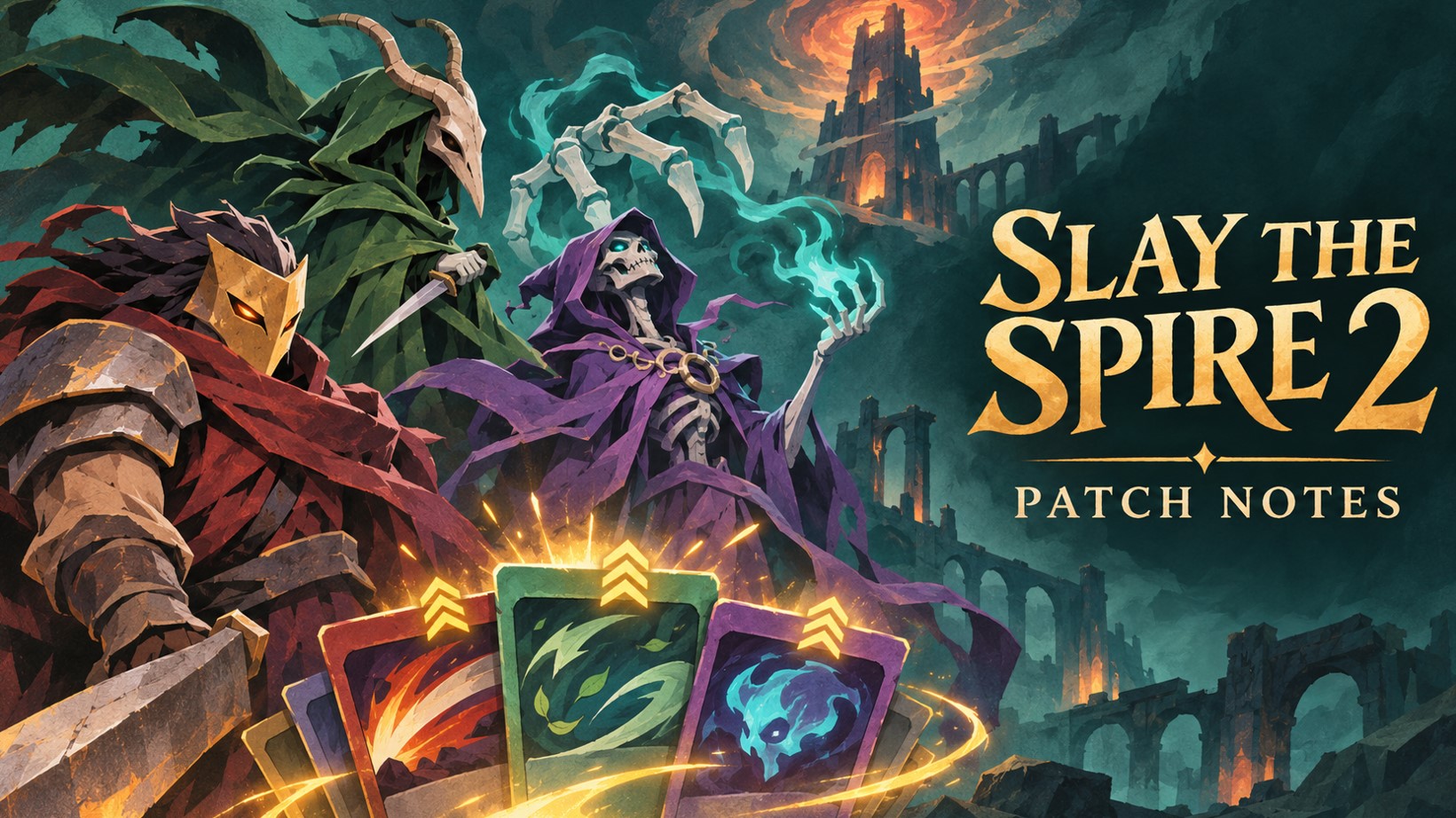
Slay the Spire 2 Patch Notes: v0.113.0 Is the Biggest Patch of Early Access Mega Crit opened its own notes with “At long last, the biggest (beta) patch yet is here!!!” – three exclamation marks, which for a studio this understated is roughly equivalent to setting off fireworks. They weren’t overselling it. v0.113.0 landed on the beta branch on November 12, and it changed 138 cards, 23 relics, and 3 potions. For scale, the previous Slay the Spire 2 patch notes (beta), v0.111.0 back in August 2026, touched 18 cards and 2 relics. It also added the first new character since Early Access began, two entirely new game modes, a pile of events, and a set of seeding fixes that competitive players have been asking about for months. Most coverage is just reprinting the notes top to bottom. That’s not useful when the list runs this long, so this breakdown sorts by what actually affects your next run – and what you can safely ignore. What Actually Landed on November 12? Addition What It Is How You Get To It The Fool Sixth playable character, a bard with a bow Available immediately on the beta branch Blitz Condensed deckbuilding mode, no map, gold is meaningless Opens after any Ascension run, at any difficulty Dread Maximum-difficulty mode, all ascension modifiers on Requires Ascension 10 on every character, Fool included One enormous caveat before you get excited: this is beta branch only. Mega Crit posted a reminder within twenty minutes of the announcement that the patch is exclusive to beta while the big content gets polished. The main branch is being brought up to v0.111.0 instead, which is a meaningful jump of its own but contains none of the above. The Fool Arrives: A Bard With a Bow and Some Very Silly Numbers The sixth character, and the first new one added during Early Access through the latest Slay the Spire 2 patch notes. Mega Crit describes The Fool as “a silly musician who wields a bow” and asks, “How can such a whimsical creature survive within the Spire?” The answer, based on about a day of community testing, is: extremely easily. More on that shortly. The mechanics are genuinely novel, which has become the thing Mega Crit is best at. There are four systems stacked on each other: Arrows. Certain cards fire an arrow, which applies a pierce effect to the target. You then have to hit that pierced enemy three times, or kill it, before you retrieve the arrow – and until you do, you can’t play cards that need one. It’s a resource loop built into your damage, and it makes targeting decisions matter in a way no other character’s does. Aim. Stacks that scale arrow damage, which is where the big hits come from. Melody. Manipulation of a melody track that feeds block engines and card combos. This is the defensive half of the kit. Sadness and Joy. A new status package, and the part the community has the least figured out so far. On top of all that, The Fool can generate tarot cards referencing other characters from the series, including the Hermit and the Watcher. The patch notes of Slay the Spire 2 don’t list a single card or relic for the character. That’s deliberate – Mega Crit left the discovery to players, and the community spent launch night reverse-engineering the whole kit. About Those “Absolutely Busted” Numbers and New Modes Within hours, the consensus formed and it was not subtle. One card circulating on Reddit costs 0 energy and deals 3 damage for every floor you’ve travelled. It Exhausts, so it’s a one-shot, but late in a run that’s upwards of 60 damage for free. Players described the tarot cards as “totally overpowered” and the character itself as “absolutely busted.” One Reddit comment that got quoted everywhere: “Who tf gave him the numbers lol it’s like he starts with 5 strength.” Here’s the thing – Mega Crit agrees. The patch notes state plainly: “We expect to make a great number of content and balance changes before the Fool is ready for the main branch.” That’s the whole purpose of a beta branch, and it’s worth keeping in mind before anyone writes think-pieces about power creep. The numbers you’re playing with this week are not the numbers that ship. Community feedback on the Steam forums has been warm on the mechanics and cooler on the presentation. Players repeatedly called the arrow system satisfying and the character the most expressive in the roster. The criticisms were about the pale yellow colour scheme, animations that didn’t quite land, and the bow and arrow icons on the left of the screen being clunky to read mid-fight. Blitz: No Map, No Gold, No Mercy The first of two new modes, and the one most people will actually spend time in. Blitz is described as “condensed and chaotic,” built entirely around deckbuilding. The map is gone. Gold no longer matters. The Merchant’s stock, per the notes, feels “a bit off” – the studio’s own italics. It comes with five levels of Ascension shared across every character, rather than per-character progression, and it opens after you complete a single Ascension run at any difficulty. That’s a deliberately low barrier; almost anyone who’s played seriously will have access immediately. The appeal is obvious if you’ve ever felt that a standard run spends too long on routing decisions and gold management before the interesting deck questions start. Blitz removes both and hands you the interesting part. Early Steam forum reaction has been straightforwardly positive. “Blitz mode is fun :D” was the whole of one post, which tells you something. Dread: The Mode You Probably Can’t Play Yet The other new mode, and it has a gate most players won’t clear for a long while. Dread requires Ascension 10 on every single character, including The Fool. Once you’re in, every ascension modifier is active simultaneously. Bosses are stronger and buff every enemy in their
Best Mobile Controller 2026: Picks That Actually Fit
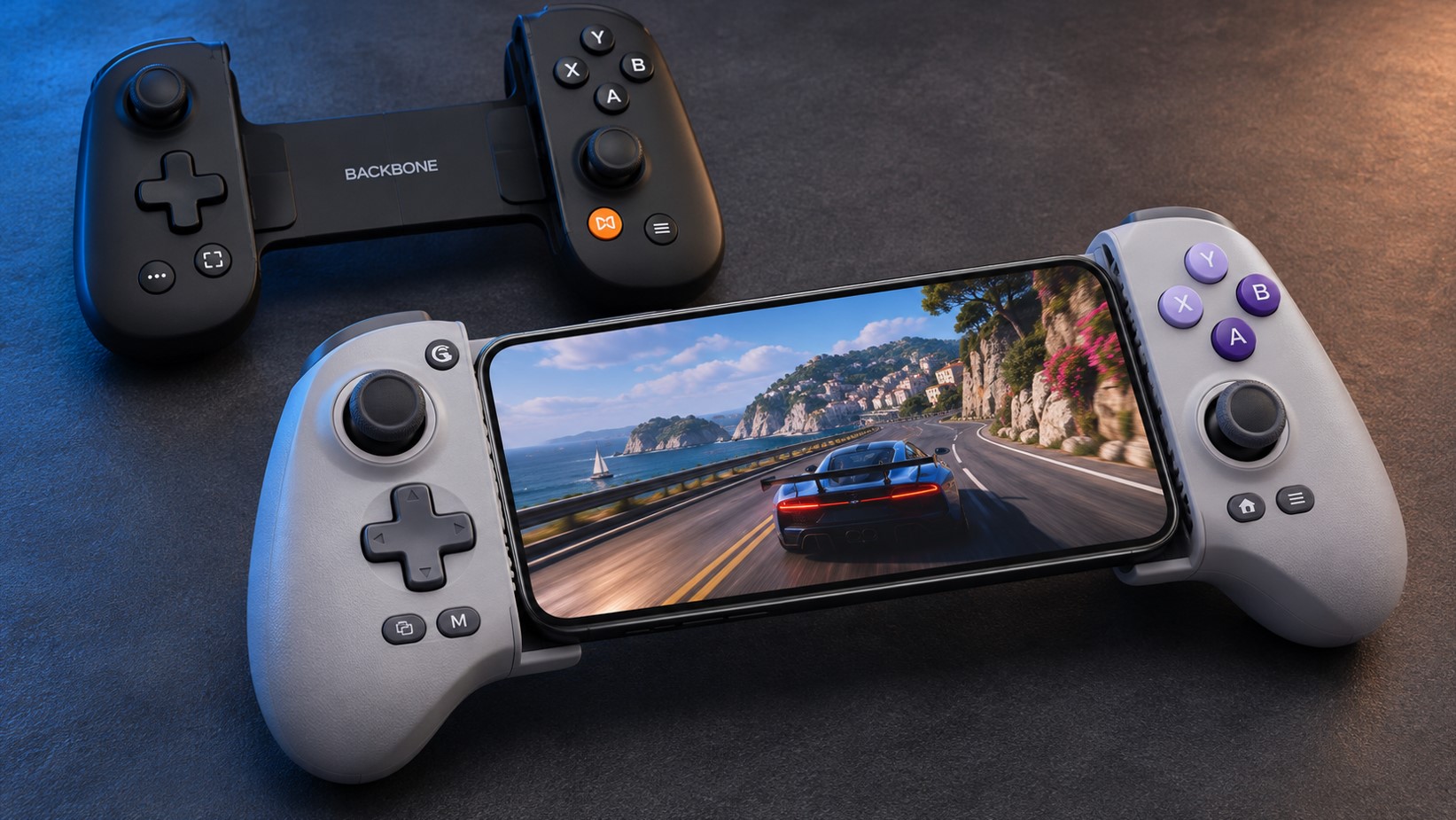
The Best Mobile Controller Is the One That Fits Your Phone, Not the One With the Best Review Score Every guide about picking the best mobile controller that you’ve read today has probably handed you a ranked list. Number one, number two, number three, buy link, done. The problem is that mobile controllers fail for reasons a ranked list can’t capture. Your case doesn’t fit. Your phone is a foldable. Your OS is a version too old. You bought the wireless one and then found out it doesn’t talk to your Switch. None of that shows up in a star rating. So this one works differently. Three questions first, picks second. Answer the questions and the right controller mostly selects itself – and you avoid the restocking fee. The Three Questions That Actually Decide This Before any brand names, settle these: How does it connect? Wired USB-C or Bluetooth. This single answer rules out roughly half the market for you. What is your phone wearing, and how big is it? Case thickness and phone size kill more controller purchases than any spec. Foldables narrow the field dramatically. What’s under the thumbsticks? Standard potentiometers, Hall effect sensors, or TMR. This decides whether your controller survives two years or develops drift. Everything below follows from those three. Fork One: Does It Plug In or Pair? Wired USB-C gives you the lowest latency, no charging to think about, and no pairing. The controller draws power from your phone, which is the trade-off – you’re eating battery while you play. The GameSir G8 Galileo, the Backbone One, the Razer Kishi V3 Pro and most of the clip-on field sit here. Bluetooth costs you a small amount of latency and adds a battery to charge, but it buys you something significant: the controller stops caring about your phone’s port placement. That’s why Bluetooth models handle foldables, thick cases and tablets so much better. The GameSir G8 Plus is essentially the wired G8 Galileo with Bluetooth instead, and that one change makes it work with large foldables and the Switch. Tom’s Guide tested it across a stack of games and reported input lag barely perceptible in practice. If you play competitive shooters where milliseconds genuinely register, go wired. For everything else – and that’s most people, most of the time – the latency argument is mostly theoretical in 2026. Fork Two: What Is Your Phone Wearing? This is the fork nobody warns you about, and it’s the leading cause of returns: Backbone’s controllers are the most compact in the category, which is exactly why thick cases often have to come off before the phone will seat properly. If you run a heavy protective case and you’re not willing to pull it every session, that’s a real daily annoyance. Razer built the Kishi V3’s entire pitch around fixing this. Case compatibility is the headline feature, and the V3 family handles the biggest phones with cases still attached. The Kishi V3 Pro XL goes further and accommodates proper tablets. The Kishi Ultra, the previous flagship at around $130, also fits 8-inch tablets including the iPad Mini – worth knowing if that’s your main screen. Foldables are their own category. A clip-on wired controller and a Galaxy Z Fold are not natural partners. Bluetooth is the sane answer there, which again points at the G8 Plus. One compatibility trap that catches people: the Razer Kishi V3 Pro requires Android 14 or newer, or iOS 18 or newer, per Windows Central’s review. Older phones are simply out. Check your OS version before ordering. Fork Three: What Is Under the Thumbsticks? Three technologies, and the difference matters more than almost anything else on the spec sheet. Potentiometers are the traditional design. Physical contact, physical wear, eventual drift. The Backbone One uses standard components here and doesn’t market Hall effect at all. Hall effect sensors read magnetic fields instead of scraping a contact surface. No wear, no drift. The GameSir G8 series built its reputation on this, and it’s why the G8 Galileo keeps winning value awards. TMR (tunneling magnetoresistance) is the newer magnetic approach, generally more precise and more power-efficient than Hall effect. The Razer Kishi V3 Pro is the main clip-on running TMR, and it’s a genuine part of what you’re paying for. If you keep accessories for years, this fork alone can justify spending more. A $150 controller that never drifts outlasts two $70 controllers that do. The Best Mobile Controller for Most People Right Now GameSir G8 series – roughly $80 The consensus across GamesRadar, Tom’s Guide, Pocket Tactics, and most tested round-ups this year lands in the same place, and it’s not close. GamesRadar’s review of the G8 Galileo called it “a certified Backbone breaker,” and its 2026 buying guide names the G8 Plus the best phone controller available for versatility. The reason is straightforward value. Hall effect sticks and triggers, full-size console-style grips, and a price around half what the premium options ask. Tom’s Guide described the G8 Plus as the closest thing to wrapping an Xbox Elite controller around a phone, and that’s the right comparison for how it feels in the hand. Two versions, and the split is clean: G8 Galileo is the wired USB-C model. Cheaper, includes a 3.5mm headphone jack, lowest latency. G8 Plus is Bluetooth. Costs a little more, adds Switch support and foldable compatibility, and carries magnetic faceplates you can lift off to swap thumbsticks or rearrange the face buttons between Xbox and Nintendo layouts. The downside is bulk. The G8 is a chunky thing, and it won’t disappear into a jacket pocket the way a Backbone does. If portability is your priority, this isn’t your controller. When to Spend the Extra: Razer Kishi V3 Pro The price is around $150 (£149.99, AU$269.95). This is the performance pick, and TechRadar’s review landed on “expensive but solid value” – which sounds like a hedge until you look at what’s included. TMR sticks. Console-grade ergonomics with full-size buttons. Four extra remappable

GTA 6 Achievements: The 55 Leak, Explained
GTA 6 Achievements: Everything Verified Nine Days Before Launch Preload opened this morning. 212GB is crawling onto my PS5 right now, and like every other trophy hunter I know, I’ve spent the past three days reading the same rumour from forty different angles. Here’s where we actually stand on GTA 6 achievements, as of November 10, 2026. There’s a real datamine. There’s also a completely invented list doing numbers on social media. Those two things keep getting mashed together in headlines, and it’s making people plan runs around trophies that don’t exist. Let’s Start With the Boring Truth Rockstar has published nothing. Sony has published nothing. Microsoft has published nothing. As of today, no trophy tracker carries a GTA 6 list. PSNProfiles returns results for GTA III, Vice City, San Andreas, GTA IV and GTA V – and an empty space where Grand Theft Auto VI should be. The Xbox store page confirms the game supports achievements, which, fine, every Rockstar release since 2008 has. It gives no count, no Gamerscore split, no names. So any site handing you a full GTA 6 achievements list today is making it up or repackaging someone else who made it up. That’s not me being cynical. That’s just the state of the data. What we do have is a datamine. And it’s worth taking seriously, with caveats. The Number Everyone’s Repeating: 55 GTA 6 Achievements On November 7, a dataminer called TexFunz2 posted findings on GTA Forums. The claim: 55 achievements configured in the game files. The post was picked up by the fan site iGrandTheftAuto, then by Insider Gaming on November 8, then by roughly everyone. Two details make this more interesting than the usual pre-launch noise. First, the structure. Of those 55 entries, 54 reportedly carry point values from 1 to 54 – one point, two points, three points, all the way up. The 55th sits at 1,000. Second, corroboration. The account PlayStation Game Size reported the PS5 build also showing 55 trophies, and dataminer iBocularVI has been named alongside TexFunz2 in coverage. Multiple sources landing on the same figure is the strongest thing this rumour has going for it. The original tweet has since been deleted, which is either damning or completely normal depending on how you feel about Rockstar’s legal department. GTA 6 Achievements and That Strange 1,000-Point Entry This is the bit people are chewing on hardest, and it’s genuinely fun to think about. A single entry valued at 1,000 points, sitting apart from a sequence of 1-to-54, doesn’t look like a normal achievement. It looks like a completion reward – the thing you get for having everything else. On PS5 that’s a Platinum. On Xbox, it could be a Mythic achievement, Microsoft’s newer top tier, the one that only shows up in first-party releases like Gears of War: E-Day. A third-party Mythic would be a first, and it would be a genuinely big deal for the Xbox side of the completionist crowd, who’ve watched PlayStation hog the prestige trophy for a decade. Could be. Could also be placeholder scoring. Several outlets covering the leak noted that the 1-to-54 incrementing values look exactly like what a developer sets while the real Gamerscore split is still being decided. The count of 55 is the solid part. The scoring almost certainly changes before the list goes public. The Hole Trophy Hunters Spotted Immediately Now here’s the detail that makes me cautious, and it came from the PSNProfiles forum rather than any news site. If Xbox has 55 achievements and PS5 has 55 trophies, the maths is off. PlayStation lists always carry one more entry than Xbox, because only PlayStation has a Platinum sitting on top. GTA 5 and Red Dead Redemption 2 both followed that pattern. A matching 55/55 would mean PS5 is missing its Platinum, or Xbox has an extra entry, or somebody’s reading the data wrong. That inconsistency doesn’t kill the leak. It might just mean the PS5 figure got copied over from the Xbox one somewhere along the chain of reposts. But it’s the kind of wrinkle that should stop you treating 55 as gospel. Then There’s the Completely Fake List Separate from the datamine, a full list of 55 trophy names started circulating on November 8 from an X account with no track record. Welcome to Vice. Partners in Crime. Leonida Dreamin’. Vice City Royalty. Florida Man. Gator Got Your Tongue. Honestly? Some of them are good names. Whoever wrote it has a feel for Rockstar’s sense of humour. It’s also obviously made up, and the community picked it apart in about an hour. Two entries give it away. One trophy is listed as completing the story on hard difficulty – GTA has never shipped with a difficulty selector, and nothing Rockstar has shown suggests GTA 6 adds one. Another references co-op story missions, in a game Rockstar has consistently described as single-player. The PSNProfiles thread discussing it is literally titled “[Probably Fake]”. So if you see a GTA 6 achievements list with actual trophy names attached, that’s the one. Scroll past it. Claim Source Where It Stands 55 achievements configured TexFunz2 datamine via GTA Forums Reported by multiple outlets, unconfirmed by Rockstar 54 entries valued 1-54, one at 1,000 Same datamine Reported, likely placeholder scoring PS5 also shows 55 trophies PlayStation Game Size Reported, conflicts with Platinum maths All entries are single-player Secondhand reporting, not the data Weakest link in the chain Full list of 55 trophy names Anonymous X post, Nov 8 Flagged as fake by the community Xbox Mythic achievement Community theory Pure speculation Rockstar published a list Nobody Has not happened What Rockstar’s Last Two Lists Actually Looked Like Precedent is the only honest yardstick we’ve got, so let’s look at it properly. Game Launch Trophies / Achievements Tied to Single-Player Completion Reward GTA 5 (PS5 base list) 51 trophies 33 Career Criminal, 100% completion Red Dead Redemption 2 52 PS4 trophies, 51 Xbox achievements 34 Platinum GTA 6 (reported) 55

God of War Laufey Release Date – Recent News
God of War Laufey Release Date Moved Yesterday, and the Calendar Explains Why Santa Monica Studio pushed it back on November 4. The new date is May 20, 2027, up from February 16, 2027 – a delay of just over three months, on PlayStation 5, for both North America and Europe. The studio gave the usual reason, and the usual reason is probably true. But there is a second explanation sitting in plain sight on a calendar, and it is considerably more interesting: February 2027 had become one of the most overcrowded release months in recent memory, and Laufey was scheduled into the middle of it. So this works outward from the date itself. What was announced and when, what the studio said, the month Laufey has just escaped, what the game actually is, and what changes if you have already pre-ordered one of the limited collector boxes. Date What Happened June 2, 2026 Announced at Sony’s State of Play with a 20-minute gameplay trailer July 2026 Sony confirms it will stop producing physical discs from January 2028; Santa Monica confirms Laufey ships on disc September 29, 2026 Pre-orders open at 10:00 am local time October 13, 2026 Collector Box pre-orders open, direct from PlayStation, in limited quantities November 4, 2026 Delayed from February 16, 2027 to May 20, 2027 May 20, 2027 New release date Note how far along this was. Pre-orders had been live for five weeks and a $149.99 collector box had been selling for three when the date moved. That is late in the cycle for a schedule change, which is part of why the reaction has been mixed. What Santa Monica Actually Said The statement was short, posted to social media under the heading “An update regarding God of War Laufey’s release date.” The studio said it had “made the decision to delay God of War Laufey’s release to May 20, 2027,” thanked fans for their enthusiasm – “we’ve been deeply grateful to see so much excitement for Faye’s journey through the Everywhen” – and said it does not take for granted the trust placed in the studio to make an extraordinary experience. On the reason, the operative phrase was that the team would make the most of each moment until then by “putting in the finishing touches and pushing the game to its fullest potential.” Which is polish. No technical problem named, no scope change mentioned, no restructure. For a first-party Sony title moving three months with pre-orders already live, that is about as mild an explanation as these announcements come. Why the God of War Laufey Release Date Change Makes Commercial Sense Here is the context nobody put in the announcement, and it surfaced immediately in community discussion rather than from the studio. February 2027 was already full. Date Release January 28, 2027 Witchbrook February 4, 2027 METRO 2039 February 12, 2027 Tomb Raider: Legacy of Atlantis February 16, 2027 God of War Laufey – as originally scheduled February 17, 2027 Persona 4 Revival February 23, 2027 Fable Six major releases inside four weeks, four of them inside eleven days. Commenters noted that Fable was set to arrive roughly a week after Laufey and that the early-2027 schedule looked crowded well before this delay – with Evercold also reportedly landing on February 23, the same day as Fable. Move Laufey to May 20, and it owns its window. Community discussion also pointed at Final Fantasy VII Revelation in April and a Metroid title around the same stretch, but mid-May remains conspicuously emptier than February. Worth being precise about the sourcing here: the crowding argument comes from players and from published release dates, not from Santa Monica. The studio said polish. Both things can be true at once, and usually are – a studio that needs eight more weeks and looks at a calendar like that one does not need much persuading to take sixteen. Push Square also noted the one genuinely reassuring detail: even after the delay, Laufey still launches within a year of its announcement, which is an unusually tight window for a first-party PlayStation title. What the Game Actually Is Worth establishing, because this is a bigger departure than the title suggests. God of War Laufey is the eleventh installment in the series and the first mainline entry not centred on Kratos. You play Laufey, called Faye – the Jötunn warrior known as Laufey the Just, former guardian of the Jötnar, rebel leader against the Æsir, and in the Norse games the dead wife of Kratos and mother of Atreus. The premise takes the one thing the Norse duology treated as settled and reopens it. Faye dies before the events of God of War (2018). After her cremation, she unexpectedly wakes in the Everywhen – a transcendent realm where magic is born and where gods from different mythologies go after death, and a place where power is actively contested. She learns the plans she left behind to protect Kratos and Atreus are in danger, and she fights through the realm looking for a way home. Two structural consequences worth understanding: It runs concurrently with God of War (2018) and Ragnarök. This is not a prequel or a sequel. It happens alongside two games you have already played, which means its ending has to fit inside a story whose outcome is already known. It opens the series beyond Norse mythology. The Everywhen continues Norse themes while introducing Egyptian and Mongolian mythology – with the antagonists being Sekhmet, the Egyptian god of war, and Begtse, the Mongolian god of war. After a trilogy in Greece and a duology in Scandinavia, that is the franchise widening its map rather than relocating it. How Faye Fights The combat is built from the Norse games and then pointed somewhere else. It develops the foundations of 2018 and Ragnarök with an emphasis on speed, control and momentum through chained attacks. Faye is more mobile than Kratos, and she can move between ground and aerial attacks without
Zelda Ocarina of Time Song of Storms: The Loop Guide
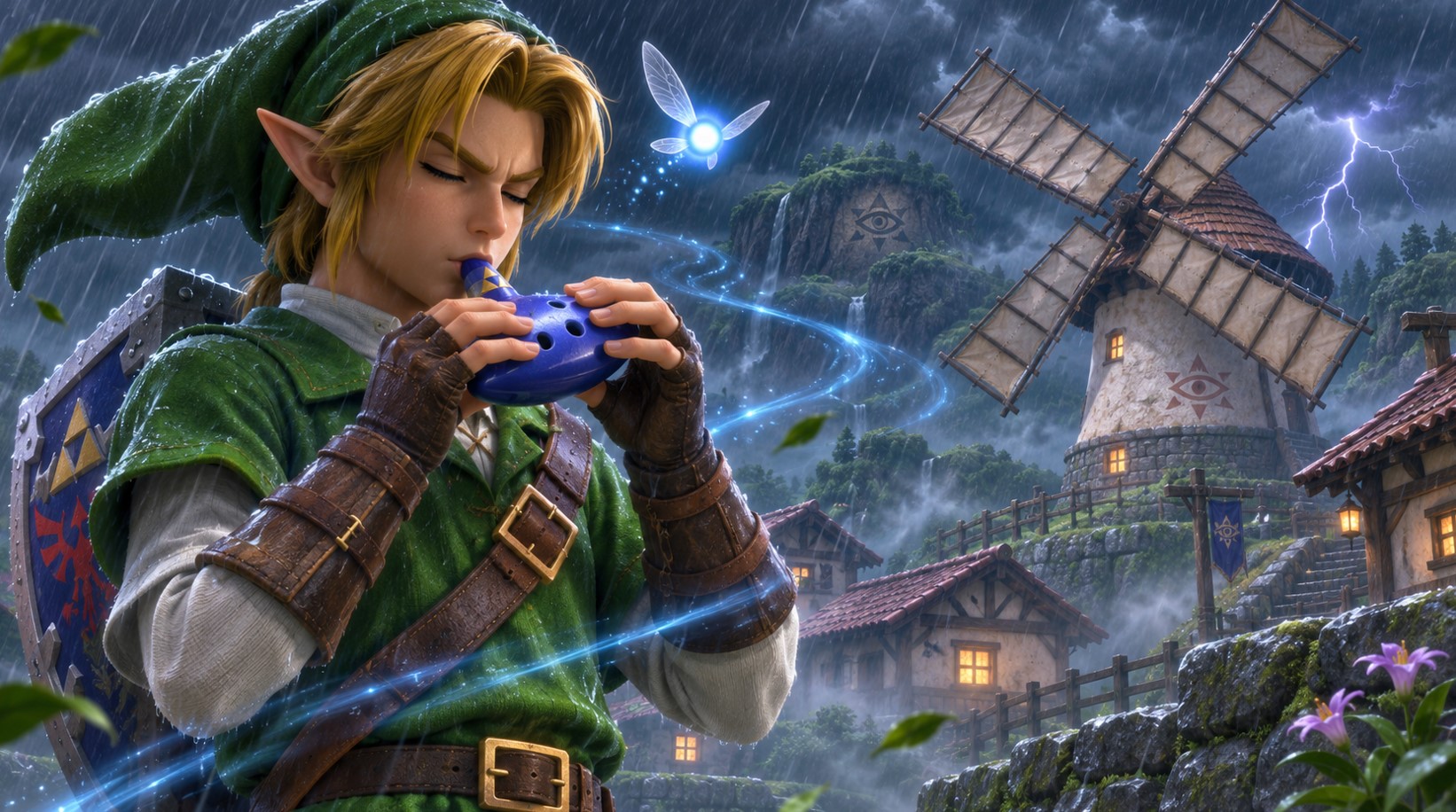
Zelda Ocarina of Time Song of Storms Is a Closed Time Loop and the Remake Makes You Walk It The remake landed today on Switch 2, and of its twelve melodies this is the strange one. L, R, X, L, R, X. Three buttons, played twice, in a rocking rhythm. That is the Zelda Ocarina of Time Song of Storms. But the notes are the least interesting thing about it, because the Song of Storms is the only melody in the game that has no origin. Adult Link learns it from an angry man in the Kakariko windmill who is still furious about a child who wrecked his machinery with that exact tune seven years earlier. Link then travels back seven years, walks into the windmill as a child, plays it, and wrecks the machinery. Link learns the song from the man. The man learned it from Link. Nobody wrote it. So this guide is arranged as the loop rather than as a checklist – in the order you actually close it, which is also the order that stops you wasting an hour standing in the wrong windmill in the wrong body. Then everything else the song does, and what the remake changes about playing it. Version Inputs Switch 2 remake (2026) L, R, X, L, R, X Nintendo 3DS (2011) L, R, A, L, R, A Nintendo 64 (1998) A, C-Down, C-Up, A, C-Down, C-Up A real ocarina D, F, high D – twice, quickly The pattern has never changed across three decades: three notes, rising then settling, repeated. Only the buttons move. Step One: Learn It From the Man You Are About to Annoy The song is not available early. You need the Master Sword first, which means you need all three Spiritual Stones and the Song of Time, which means this is a second-half acquisition. Go to Kakariko Village as Adult Link and enter the windmill. Inside, a man is turning a music box handle. Take out your ocarina and play for him. He will complain about a kid who turned up seven years ago and played a song that sent his windmill into chaos. Then, bitterly, he plays it back to you – and that teaches it to you. Follow the on-screen notes. Two things that trip people up: Entering the windmill as Child Link first does not teach you the song. The man has to have his grievance before he can hand you the cause of it. Child Link gets nothing from him. Knowing the inputs does not let you skip the lesson. You can hum or press L, R, X, L, R, X perfectly, and the game will not count the song as learned until the musician has taught it. The ocarina menu is the gate, not your memory. Once learned, it is playable as either Adult or Child Link. Zelda Ocarina of Time Song of Storms and the Well You Have to Drain Now the loop closes, and this is the single most important application of the song because it gates a required item. The steps, in order: Learn the Song of Storms as Adult Link in the Kakariko windmill. Return to the Temple of Time and put the Master Sword back to become a child again. Walk to Kakariko Village as Child Link and enter the windmill. Play the Song of Storms in front of the musician. Leave the windmill and climb down the now-empty well. What happens on step four is the whole point. The windmill spins violently faster, and the water it was holding drains out of the well outside. That opens the Bottom of the Well, which contains the Lens of Truth – the item you need for the Shadow Temple and for seeing through a great deal of the game’s later trickery. And on the way out, notice what you have just done. The furious man in the windmill, seven years from now, is furious about you. You did not break his windmill because the song told you to; he taught you the song because you broke his windmill. The causality has no beginning. The most common mistake here is playing it in the windmill as Adult Link. Nothing happens. The well is already drained in that timeline – or rather, it will have been, by the child version of you who has not done it yet. The drain only works from the past. The Four Other Things It Does The well is the required one. These are the four optional applications, and two of them pay out permanent rewards. The frogs at Zora’s River. As Child Link, go to the log platform in Zora’s River where the frog choir sits. Play the Song of Storms in Zelda Ocarina of Time Remake to them, and you are given a Piece of Heart. This is part of the frog minigame that runs across several songs, and Storms is one of the entries. The hidden grotto on the Hyrule Castle grounds. As Child Link, standing in the correct spot on the castle grounds, playing the song opens a concealed grotto holding a Gold Skulltula. Worth knowing for anyone going after the full hundred. Gossip Stones. Play the song beside any Gossip Stone and a fairy appears, which can be caught in a bottle. That turns every Gossip Stone in Hyrule into a free healing item on demand, which is quietly one of the most practical things in the game and almost nobody does it. Rain, anywhere outdoors. The song summons rainfall. Mostly atmospheric, occasionally handy, and genuinely lovely in a remake where weather and lighting have been rebuilt. What You Want Form Where Reward Drain the Kakariko well Child Link Inside the windmill Access to the Bottom of the Well and the Lens of Truth A Piece of Heart Child Link The log at Zora’s River, to the frogs Piece of Heart A Gold Skulltula Child Link The correct spot on the Hyrule Castle grounds Hidden grotto with a
PS5 Jailbreak Update: Five Gates Most Consoles Never Pass
PS5 Jailbreak Update: Sony Has Patched Three Times in Five Weeks On November 2, Sony pushed firmware 26.07-14.22.00 with a single line of patch notes: security fixes to the system software. It was the third security update in roughly five weeks, and it landed seventeen days before GTA 6. That cadence has generated an enormous amount of coverage, most of it implying a console under siege. The reality is close to the opposite, and it is worth laying out plainly, because the number of PS5 consoles that can actually do any of this is very small and shrinking by the week. Getting there requires passing a series of gates. Firmware eligibility, the absence of any way backward, the limits of what a working exploit even provides, network access, and the rising floor that new games demand. Almost every console on earth fails the first one, and no console passes all five. So this walks the gates in order, with the firmware timeline first, and then the parts of this story that are genuinely interesting: why Sony is patching this fast, what the much-discussed key leak actually established, and what any of it means if you simply own a PS5. Date Version What Happened Sept 16, 2026 14.00 Closed the browser vulnerability underlying the later public exploit chain; also ended the hypervisor bypass that homebrew projects relied on Sept 29, 2026 – The Relapse chain went public, reported to give kernel access on firmware 7.00 through 13.60 Oct 1-2, 2026 26.06-14.10.00 Security fixes plus performance and stability work. Established a minimum version for PSN sign-in Oct 21, 2026 26.07-14.20.00 A 1.2 GB update whose changelog mentioned only messages and on-screen usability, following a researcher’s demonstration of a new vulnerability Nov 2, 2026 26.07-14.22.00 Security-only patch, following another public exploit demonstration Gate One: Your Firmware Number The entire story hinges on one figure, and you can read yours under Settings, System, System Software, Console Information. The public exploit chain works on firmware 7.00 through 13.60. Every model, including the Pro. Firmware 14.00, released September 16, closed it – and the chain was published about two weeks after that, on September 29. Think about what that sequencing means. The hole was already patched before the public route to it existed. Any console with automatic updates switched on, which is the default, took 14.00 in September and was never eligible at any point. There is reported to be a private kernel exploit covering 14.00 and 14.10 that has not been released, and firmware 14.20 is reported to have closed that too. Even if it did appear, the hypervisor bypass these projects depend on reportedly stops working above 13.60. So gate one is not a hurdle. For the overwhelming majority of consoles it is a wall, and it was built before the door was found. Gate Two: There Is No Way Back This is the gate people most often assume does not exist, and it is absolute. Downgrading a PS5 is not possible. Sony has never shipped a downgrade path, and the console’s boot process refuses older system software outright. Whether your console qualifies for anything discussed here was decided, permanently, by whichever automatic update it last installed. There is no procedure, no workaround, and nothing that any amount of research will change on existing hardware. A console on 14.22 today will be on 14.22 or higher forever. Which makes this story unusual among console modding stories. Normally the scene’s problem is keeping up with patches. Here the population of eligible hardware is fixed and can only shrink, because every eligible console that connects and updates leaves the pool and cannot return. The PS5 Jailbreak Update Gates Nobody Mentions Three further limits that rarely make the headlines, and which change the picture considerably. Gate three: it does not survive a reboot. The exploit is tethered. It does not persist through a cold boot and has to be re-run every time the console starts. This is not custom firmware in the sense people remember from older consoles. It is a temporary state that evaporates when you turn the machine off. Gate four: the network is gone. Firmware 14.10, from October 1, set a minimum version for signing in to PlayStation Network. A console below that line loses a great deal. What You Lose Below 14.10 PlayStation Store access Online multiplayer Cloud saves Trophy syncing Messaging The ability to load titles whose digital licences cannot be verified A PS5Homebrew community report noted that consoles on 14.00 could no longer connect either, which is how sharp that line is. Gate five: the floor keeps rising. Game firmware requirements only ever go up. Store datamining indicates GTA 6 requires at least firmware 14.10.00.00 on PS5, which neither Sony nor Rockstar has confirmed, though third-party trackers report it consistently. If accurate, a console held below that line cannot install the biggest release of the decade on November 19, single-player focus notwithstanding. That is the trade-off in its clearest form. Staying eligible means an offline console that gets progressively worse at being a PS5. Why Sony Is Moving This Fast The patch cadence is the genuinely newsworthy part, and the pattern is legible. Each of the last two updates followed a public demonstration of a new vulnerability by an independent researcher – one preceding the October 21 patch, another preceding November 2 – and both shipped with changelogs that said almost nothing. A 1.2 GB update whose notes mention only messages and on-screen usability is a security update wearing a disguise, and security watchers read it that way at the time. Two forces are plausibly behind the urgency. The first is commercial. GTA 6 arrives November 19 on PS5 and Xbox Series X|S. A console platform wants its biggest launch in years to happen on hardware it controls, and firmware floors are enforceable at install. Sony has not drawn that connection publicly, and the November 2 patch notes do not mention it, but the timing has not gone unnoticed by
World of Warcraft Forever Release Date: Times and Setup
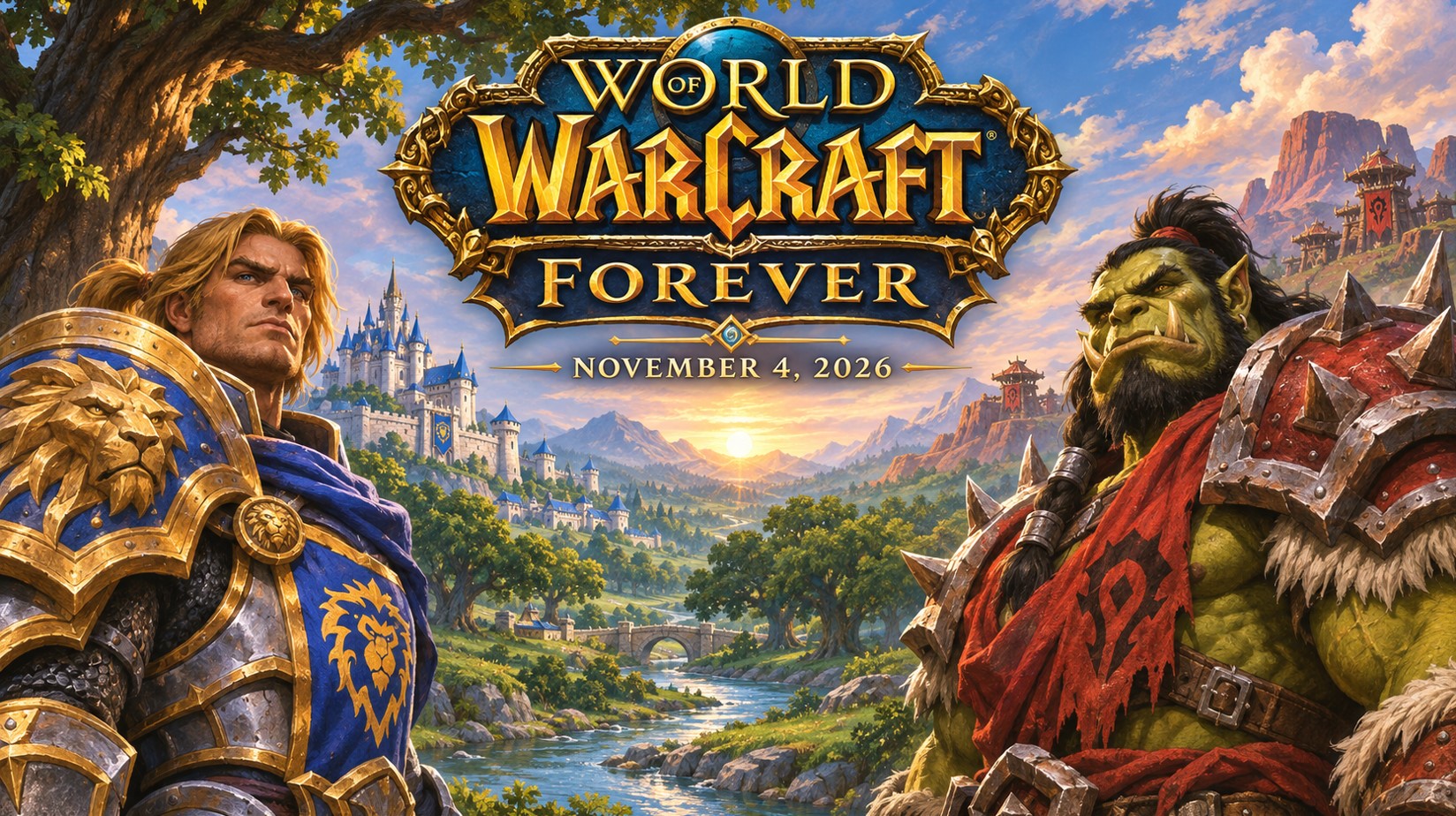
World of Warcraft Forever Release Date Is Tomorrow, and You Have Six Decisions to Make First Blizzard’s third branch of Azeroth goes live globally on November 4 at 3:00 pm PST, which for most of the world means the early hours of November 5. Unlike every previous World of Warcraft launch, you cannot simply log in and start playing. Forever has no realms. Instead, it asks you a series of questions the moment you create a character – about rulesets, presets, model fidelity, names, and race combinations – and some of those answers shape your whole run. So this is organised as the decision list in roughly the order the game will put it to you, starting with the only one that matters before midnight: when to be at your keyboard. Region Local Time Date Americas (PST) 3:00 p.m. November 4 Brazil (BRT) 8:00 p.m. November 4 UK (GMT) 11:00 p.m. November 4 UTC 23:00 November 4 Europe (CET) 12:00 a.m. November 5 Taiwan (CST) 7:00 a.m. November 5 Korea (KST) 8:00 a.m. November 5 Australia and New Zealand (AEDT) 10:00 a.m. November 5 Those are Blizzard’s own published times. Note that this is a genuine simultaneous global launch rather than a staggered regional rollout, which means the server load arrives everywhere at once. What Forever Actually Is? Worth settling before the decisions, because the premise is unusual. Forever is a permanent, realmless version of Azeroth that runs alongside both modern World of Warcraft and WoW Classic. Not a season, not a seasonal event, not a fresh-start server that eventually merges. A third branch, intended to persist. Its continuity is separate from the modern game’s. It sits after Warcraft III Reforged: Forsaken Kingdom and before Molten Core – the first year of World of Warcraft, told differently. You level from 1 to 60, and the cap stays at 60, with progression coming from new activities, stories, abilities and equipment rather than from expansions stacked on top. It was announced at BlizzCon on September 12, 2026, after long-running rumours of a “Classic Plus,” with beta starting September 17. Holly Longdale is executive producer, and the score comes from Adam Burgess, Brendon Williams, David Arkenstone, Neal Acree and Jason Hayes. It runs on Windows and macOS. Reportedly, team members were discussing a version like this as early as 2020, with the work on Classic and Season of Discovery feeding into it, and Blizzard committing to it as a full project around 2024. Decision One: Whether You Need to Pay Anything The short answer is no, and it is worth being clear about because the optional packs have confused people. Forever is included with an active World of Warcraft subscription or Game Time at no extra cost. There is no separate base purchase. If you already pay for WoW, you already have this. Edition Price What It Adds Skyborne Heroic Pack $29.99 The Skyborne race and the Zephras Isle starting experience, early name reservation, a ground mount, transmog, a toy, housing decor for modern WoW, one invite code Skyborne Epic Pack $59.99 Everything above, plus beta access, 30 days of Game Time from November 4, a bear mount, more transmog, pets and tabards, three invite codes Warcraft Forever Collection $79.99 Everything above, plus Warcraft III: Reforged with the Forsaken Kingdom campaign and extra decor; on sale until January 11, 2027 Collector’s Edition $150 A physical box via the Blizzard Gear Store with the Collection code, a 13-inch dwarf and bear statue, a mousepad, prints, pins, and a journal The detail that deserves attention: the new playable race sits behind the $29.99 Heroic Pack. The Skyborne and their Zephras Isle starting zone are not part of the subscription-included content, which makes this the most significant thing in the paid tiers and not a cosmetic decision. One genuinely generous element: Invite-A-Friend codes let people play without a subscription during launch week, November 4 to 11, with codes reportedly emailed from October 20. If a friend has an Epic Pack or above, they have three of them. A sourcing note on this section. Blizzard’s own launch post does not cover pricing, and the edition breakdown above comes from community guides that agree with each other rather than from a page I could verify directly. Treat the prices as reliable-but-secondhand and check the store before buying. The World of Warcraft Forever Release Date Decisions You Make at Login Now the part that is unique to this launch. Four settings, asked up front, replacing the realm list every WoW player has stared at since 2004. Decision two: Classic or Enhanced preset. On first login, you pick an experience preset. Blizzard’s guidance is explicit – Enhanced is the recommended option if you are unsure. Presets configure your starting options rather than locking anything permanently, and they can be changed later. Decision three: High Definition or Standard Definition character models. This affects appearance only, with no gameplay consequence. Standard Definition is there for players who want the original look. Decision four: your ruleset. This is the big structural change. There are no realms to pick between. Instead you select from Normal, Player versus Player, Roleplay, and Roleplay PvP, and that determines the rules you play under rather than which server you live on. A Hardcore ruleset is planned for sometime after launch rather than being available tomorrow. Decision five: your name. Characters have two-part names, unique within a region rather than within a realm. That is a notable shift – with no realms to spread names across, the pool is far more contested, which is exactly why early name reservation was bundled into the paid packs. Practical advice on all four: the ruleset is the one to think hardest about, since it governs whether strangers can attack you for the next however many months. The presets and the models are adjustable or cosmetic, and the name is the one you want decided before the queue starts rather than after. Decision Six: Which Race and Class Pairing Forever’s class list
CS2 Cases Explained: Why the Old Ones Cost More Than the New
Weapon cases have been part of Counter-Strike since 2013, and after more than a decade, they have turned into a small economy of their own. A container that once arrived free at the end of a match can now trade for the price of a full game. New players usually assume the newest case is the valuable one. It is almost always the opposite, and the reason has nothing to do with what is inside. This is a plain look at where CS2 cases come from, what they cost, and why those two facts drift so far apart over time. Where Does a Case Actually Come From? Cases drop to players at random while they are on official servers, subject to a weekly cap. Nobody buys them from Valve directly, so every container in circulation entered the economy through somebody’s match. Only a small number of cases are in the active drop pool at any point. Everything else has been retired, which means the supply of those older containers stopped growing on the day they were removed. Opening one also requires a key, which is bought separately and is not itself tradeable. That two-part structure is worth understanding before any of the pricing makes sense. It also means the case market and the key market are separate things that move independently. A container can double in price without the cost of opening it shifting at all. Why the Retired Ones Get Expensive? A retired case has a fixed and slowly shrinking supply. Every one that gets opened is destroyed, so the pool only ever moves in one direction while interest in the contents stays roughly constant. New cases behave in the reverse. Millions arrive in the first weeks, the price sits at the floor, and it stays there for as long as the container remains in rotation. The gap between those two curves is the entire story of case pricing. Age, not artwork, is the dominant variable. What the Numbers Look Like in Practice Because the containers are traded rather than sold at a fixed price, the current figure changes constantly and lives on marketplace listings rather than anywhere official. Plain explainer pages exist for exactly that reason, and one covering how much CS2 cases cost walks through the current spread, the age of each container, and what tends to sit inside them. The value of a page like that is not persuasion; it is having one place to check figures that otherwise sit scattered across listings, patch notes, and forum threads. Prices for currently dropping containers tend to sit in pennies, while the scarcest discontinued ones have climbed into the hundreds. The site also runs a free browser-based simulator using the published drop rates, which is a reasonable way to see how the distribution behaves without money changing hands. It is an independent project with no connection to Valve, and it makes no claim otherwise. Worth saying plainly: this is an adult hobby with real money attached, and the sensible position is to treat any of it as spending rather than investing. The Odds Are Published, and They Are Not Close Valve publishes the tier probabilities, and they are the same for every weapon case. The most common tier lands 79.92 per cent of the time, the next 15.98 per cent, then 3.20 per cent, then 0.64 per cent for the rarest weapon tier. A knife or a pair of gloves comes in at 0.26 per cent, which works out at roughly one in 385. That is the number most people are thinking about when they open anything, and it is also the one that gets rounded up in memory. Wear condition is rolled independently on top of the tier, so the same result can be worth very different amounts. Two people can unbox the identical finish an hour apart and end up with items that are not remotely comparable. Following the Changes Case pricing moves whenever the drop pool changes, and those changes arrive without much warning. The official Counter-Strike news hub on Steam is where retirements, additions, and trade rule updates get posted. Community trackers pick those changes up quickly, but the primary source is worth bookmarking if you care about the timing. A container leaving rotation is usually visible in the market within hours. Operation releases and major updates have the same effect from the other direction. A fresh container floods the pool, and everything already retired quietly benefits from the extra attention the game receives that month. Key Takeaways Old cases cost more because supply stopped and demand did not, which is a straightforward piece of arithmetic rather than anything mysterious. The contents of a container tell you very little about its price. If you are curious about the odds, a free simulator answers the question better than a purchase does, and it costs nothing to find out. The rest of our game guides and codes lists cover the more practical end of the same hobby.
Restaurant Tycoon 3 Codes (November 2026)
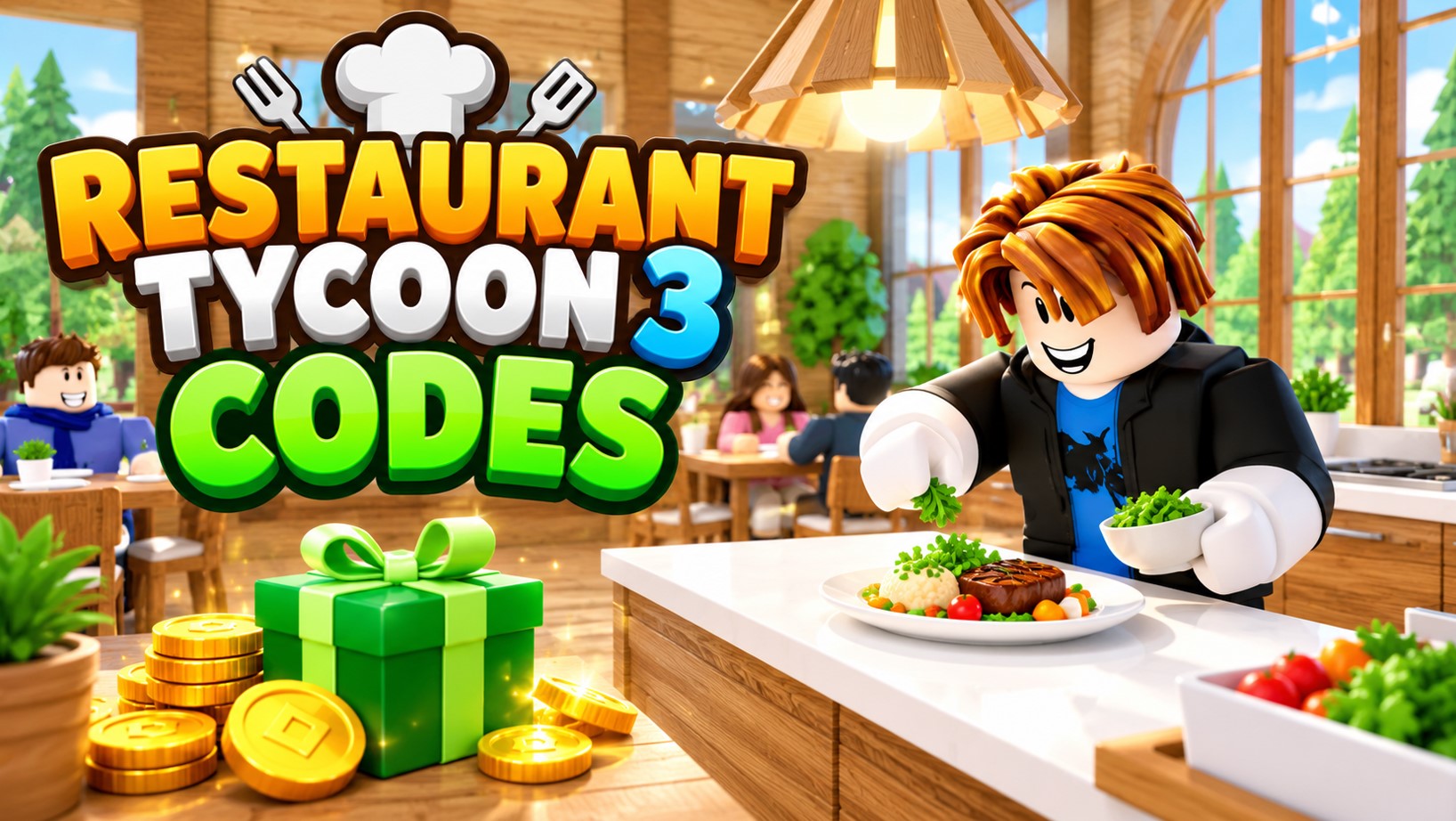
Active Restaurant Tycoon 3 Codes (November 2026) Let me save you from the mistake almost every new player makes with Restaurant Tycoon 3 codes. You find a working one, you’re excited, you paste it in the second you load up an empty restaurant – and you’ve just wasted most of it. Because here’s the catch nobody puts up front: most of these codes aren’t loot you bank. They’re timers. A 20% boost for ten minutes. A 50% boost for five. The clock starts the instant you hit submit, whether your tables are full or your diner’s a ghost town. So this isn’t really a list you skim and forget. It’s a timing game. The codes are a stopwatch, and your job is to squeeze every drop of value out of that short window before it runs dry. Get the timing right, and a single ten-minute code can bankroll a serious chunk of your next upgrade. Get it wrong, and you’re watching the multiplier tick away over empty chairs. Quick context first. Restaurant Tycoon 3 is a Roblox tycoon from Ultraw Games where you build and run your own eatery – a diner, a cafe, a full restaurant – cooking food, serving guests, and growing the business by keeping customers happy. It’s been a monster hit since its 2025 alpha, blowing past hundreds of millions of visits. And right now, timing matters more than usual, because the game’s mid-Halloween event. Let’s get into how to play the clock. How to Win the Ten-Minute Window Before we even get to the code list, this is the part that actually matters, so I’m putting it first. If your codes are mostly short boosts, the whole skill is prepping before you redeem. Here’s the drill: Fill your tables first. Get your restaurant packed with customers and your kitchen humming before you touch the code box. A boost multiplies what you’re already earning, so no earnings means no benefit. Stock up and staff up. Make sure your ingredients are topped off and your workers are in position. You don’t want the boost ticking while you’re scrambling to restock mid-rush. Only then redeem. With the place at full tilt, paste the code and let the multiplier rain down on a busy, productive restaurant. That’s when a 20% or 50% boost actually pays off. See the logic? A boost code dropped on an idle restaurant is money left on the table – pun fully intended. The players who treat these codes as a “flip the switch when I’m already slammed” tool get multiples more value than the ones who redeem on autopilot. It’s a small habit that completely changes what these codes are worth. Every Active Restaurant Tycoon 3 Code Right Now Time for the honest part, because this game’s code situation is messier than most. Ultraw churns codes fast – many expire within days – so a lot of lists floating around are stuffed with dead codes. I’m going to split what’s live into confidence tiers instead of pretending a 20-code pile all works. The Confirmed Working Restaurant Tycoon 3 Codes These are the ones backed by the developer’s own recent update notes or confirmed across multiple fresh checks. Highest confidence, redeem these first: Code Reward Type beast123 20% boost for 10 minutes Timed boost 2spooky 20% boost for 10 minutes Timed boost cannon1 10 Diamonds Instant currency beast123 is the standout, pulled straight from the official Halloween event notes, so it’s the one I’d trust most. 2spooky is reported working across trackers with the same 20% ten-minute boost, and it fits the spooky-season theme. cannon1 is the odd one out in a good way – it’s instant Diamonds, not a timer, so there’s no rush-prep needed. Just claim it and bank the gems. The “Might Still Work” Codes Here’s where honesty matters. A bunch of older codes get listed as active on some sites but flagged expired on others, and readers regularly report several of them failing. They cost nothing to try, so paste them in – but set your expectations low, and don’t be surprised when half bounce. Code Reward fall2026 50% boost for 5 minutes alora Cash multiplier for 10 minutes vivaldi 400 Cash tiki7 250 Cash pizza123 250 Cash rig2 10 Diamonds craig 10 Diamonds That fall2026 code is worth a shot specifically because of its juicier rate – a 50% boost beats the standard 20%, even if the window’s only five minutes. If it’s still live, prep hard and redeem it on a rammed restaurant for a serious payday. Just know it’s in the shakier tier, so no promises. My blunt advice on this second table: blitz through it fast. These codes die quietly and often, so the sooner you try them, the better your odds of catching a straggler before it lapses. And if one fails, shrug and move on – that’s just how this game rolls. The Weekly Code Habit You Should Build Here’s a detail that changes how you should treat this game entirely. Ultraw has said they drop a fresh code every week, usually a ten-minute cash multiplier, through their Roblox group. Weekly. That’s not a rare event you stumble on – it’s a routine you can plan around. So the smart move isn’t hunting frantically for a big stash of codes. It’s building a small weekly habit: check in, grab that week’s boost code, prep your restaurant, and cash it in during a rush. One well-timed multiplier a week, consistently, adds up to far more than a one-off scramble through a list of expired junk. This also explains why the expired pile is so enormous. A game handing out weekly timed codes burns through them fast by design – each week’s code makes last week’s obsolete. So when you see a list claiming dozens of working codes, be skeptical. The real active set is almost always small and fresh, which is exactly what you’d expect from a weekly cadence. Halloween Part III and the Code
Arasaka Academy Codes (November 2026)
Latest Arasaka Academy Codes (November 2026) Here’s the thing that makes Arasaka Academy codes refreshingly simple: every single one gives the same reward. Rerolls. That’s it. No juggling a dozen currencies, no decoding what a “Perfect Cube” does versus a “Trait Shard.” Just rerolls, in bigger or smaller piles. Which means the only question that matters is – how many does each code give? So instead of the usual scattered list, I’m ranking them. Biggest payout at the top, smallest at the bottom, like a leaderboard. Redeem from the top down, and you’ll bank the fattest reroll stacks first, which is exactly how you should approach it when your time’s worth something. Quick scene-set for the uninitiated. Arasaka Academy is a Roblox game dripping with Cyberpunk flavor – Night City, corporate overlords, cyberware, the whole Edgerunners aesthetic. You’re a student navigating academy life, keeping corpos and classmates happy while tooling up with advanced cyberware for tactical combat, all with the goal of graduating into a life in Night City. The rerolls these codes hand out let you reroll your character – appearance, cyberware, fighting style, accessories. So the more you’ve got, the more you can tinker until your edgerunner looks and plays exactly how you want. Let’s rank ’em. The Full Leaderboard: Every Active Code by Reroll Count Below is every confirmed-active code, sorted from the heaviest reroll drop to the lightest. No requirements on these, no gates – just paste and claim. Start at the top. The Top-Tier Arasaka Academy Codes These are the heavy hitters, the codes worth redeeming before anything else because they dump the most rerolls into your account in one go: Rank Code Rerolls 1 UPD1 100 2 UPDOnePointFive 96 3 Capri 69 4 LikeSixteen 50 4 CYBERDECKED 50 4 LOTSOFLIKES 50 4 WhatKindOfEdgerunnerAreYou 50 4 CodeLikeCodeLIke 50 4 LikeFifteen 50 4 LikeFourteen 50 4 LikeThirteen 50 4 Twelveklikes 50 UPD1 is the champion at a clean 100 rerolls, with UPDOnePointFive right on its heels at 96 – both tied to major game updates, which tend to bring the most generous drops. Capri sits in third at a quirky 69. After that you hit a big cluster of 50-reroll codes, most of them “Like” milestone codes celebrating the game crossing another like threshold. There are so many of these fifties that redeeming the lot nets you a serious reroll war chest on its own. The Mid and Lower-Tier Codes Smaller payouts, but still free, so sweep them up once you’ve grabbed the big ones: Code Rerolls Tired 35 PumpkinSpice 35 BadGame 35 KarmaBad 35 SorryForDelay 35 ONEPOINTSEVEN 25 Guts 25 SANDWHICHES 25 TWENTY 25 THANKS 20 FOR 15 THOUSAND 15 LIKES 15 A couple of fun details hiding in here. PumpkinSpice is the seasonal one, almost certainly tied to the Halloween period, so grab it before autumn’s out. And notice THANKS, FOR, TWENTY, THOUSAND, LIKES? Chain them together and they spell “THANKS FOR TWENTY THOUSAND LIKES” – a milestone celebration broken into five bite-sized codes. Cute touch, and each one’s a separate redeem, so don’t skip any of them thinking they’re duplicates. Add it all up and you’re looking at well over 900 rerolls across the full active list. That’s a mountain of free customization, enough to reroll your edgerunner again and again until every detail clicks. The “Verify In-Game” Codes Now for the honest caveat. A handful of codes sit in a grey zone – reported active by one tracker but flagged as uncertain or expired by another, thanks to the usual code churn. They cost nothing to try, so paste them in, but don’t be surprised if one or two bounce. Code Rerolls Note RELEASED 100 Status varies by source ArasakaAcademySeasonTwo 50 Status varies by source UPDZeroPointFive 50 Status varies by source FREEMODCORE Rewards May require level 10 RELEASED is the tempting one here – if it’s still live, that’s another 100 rerolls to match UPD1. FREEMODCORE is the odd one out, reportedly needing you to hit level 10 before it’ll pay out, so newer players may find it locked. My advice: try all four early, because codes this uncertain can flip to dead overnight, and the sooner you attempt them the better your odds of catching a live one. Why It’s All Rerolls, and Why That’s Good Let me take a quick detour into why this single-currency setup actually works in your favor. In a lot of Roblox games, codes shower you with half a dozen resource types, and you end up paralyzed deciding what to spend where. Arasaka Academy sidesteps all that. Rerolls are the whole economy, as far as codes go, and rerolls do one clear job: they let you re-roll your character’s build and look. That matters because this is a game with real customization depth – appearance, cyberware loadout, fighting style, accessories. Cyberware’s even optional, so you can go full chrome or stay mostly human depending on the edgerunner fantasy you’re chasing. Every reroll is another spin at landing the combination you actually want, whether that’s for the aesthetic or for how your fighting style performs in the academy’s tactical combat. So when I say redeem from the top of the leaderboard down, here’s the practical upshot: you’re not optimizing across competing currencies, you’re just maximizing one number. More rerolls equals more freedom to experiment. Grab the 100s and 96s first, bank the fifties, mop up the small ones, and you’ll have enough spins to craft a character you’re genuinely happy with instead of settling for the first roll the game hands you. How to Redeem Arasaka Academy Codes Redemption is quick, but there’s a prerequisite that trips people up: you need to join the game’s Roblox group first, or the codes simply won’t register. Do that before anything else. Redeeming Arasaka Academy Codes Step by Step Here’s the full sequence: Join the Ordinance Games community group on Roblox – this is required for codes to work. Launch Arasaka Academy and wait to load in fully. Open