Angela in Silent Hill 2: Four Scenes, and the Game’s Cruellest Truth
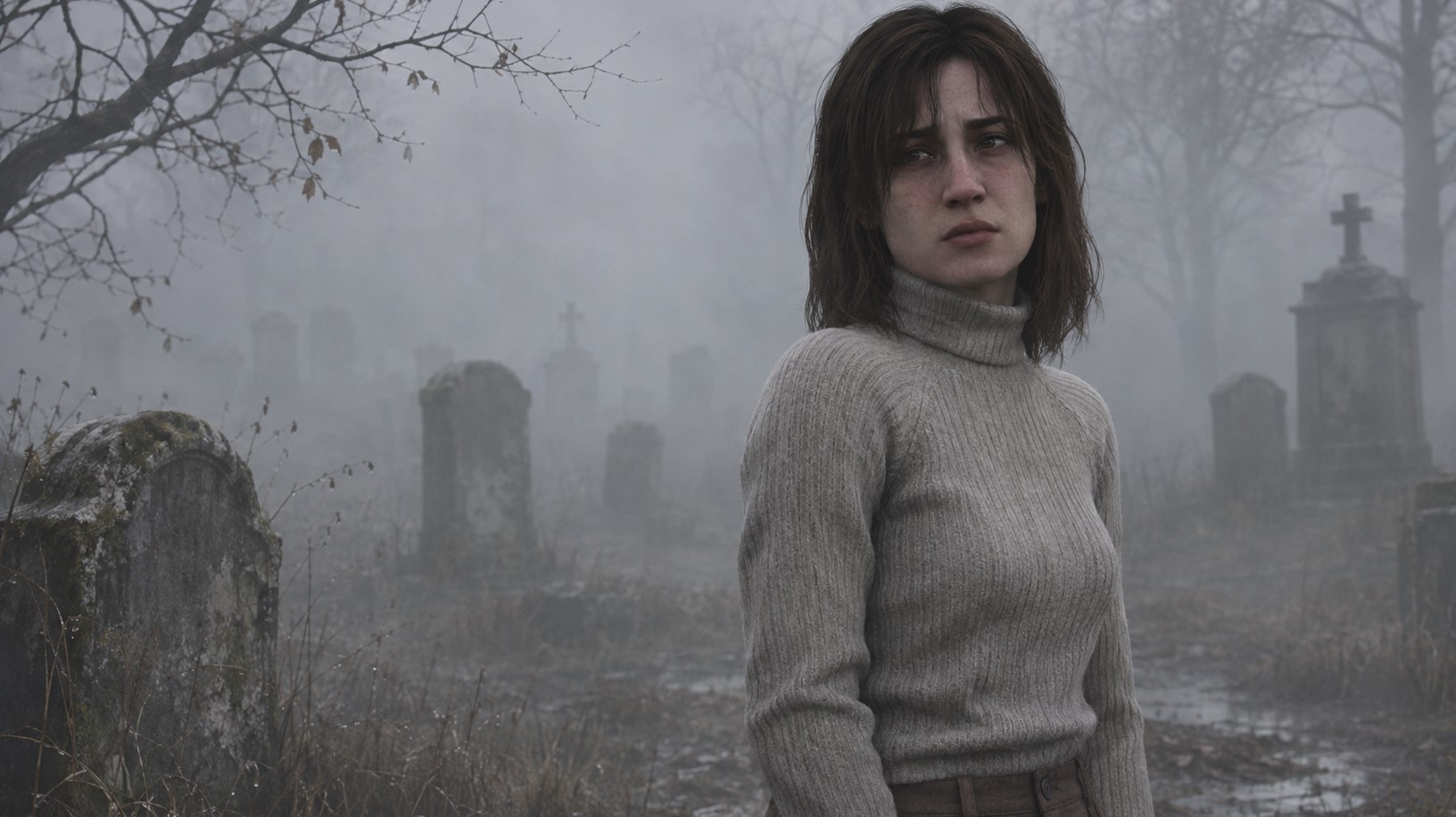
She’s on the North American cover. She’s the first person James meets. She appears in maybe fifteen minutes of a twelve-hour game. And twenty-five years later, Angela Orosco is still the character people write essays about. That’s not an accident of nostalgia. Angela in Silent Hill 2 is the point where Silent Hill 2 stops being a ghost story about a man and his dead wife, and becomes something much harder to shake off. Her scenes are short, sparse, and structured so that each one takes something away from you.
Here’s a close reading of all four, what her monster actually represents, and why the 2024 remake’s version of her started an argument that’s still running.
Who Angela Orosco Actually Is?
| Detail | Information |
|---|---|
| Age | 19 |
| First appearance | Silent Hill 2 (2001), in the cemetery |
| Stated reason for being there | Searching for her mother |
| Original character design | Takayoshi Sato |
| Voice (original, 2001) | Donna Burke |
| Voice (HD Collection) | Laura Bailey |
| Voice (2024 remake) | Gianna Kiehl / Risa Shimizu (JP) |
| Her monster | Abstract Daddy |
| Her Otherworld | Fire |
Nineteen is the number that matters most, and the game never says it out loud. Everything about how she’s written – the stammer, the flinching, the inability to hold a normal conversation – reads as someone whose development stopped somewhere much earlier.
Scene One: The Cemetery
James meets her before he ever reaches the town. She’s in the graveyard, and she’s already apologising for existing. What’s remarkable about this scene is how much it tells you without telling you anything. She stammers. She avoids eye contact. She reacts to James’s ordinary presence with a startle response that’s wildly disproportionate. When he offers to help, she declines in a way that suggests the offer itself frightens her.
Nothing is explained. The game simply presents a young woman who cannot be near a man without bracing for impact, and trusts you to understand later.
She says she’s looking for her mother. She’ll say that again, every time. It’s the only safe thing she has to say.
Scene Two: Blue Creek Apartments, and the Knife
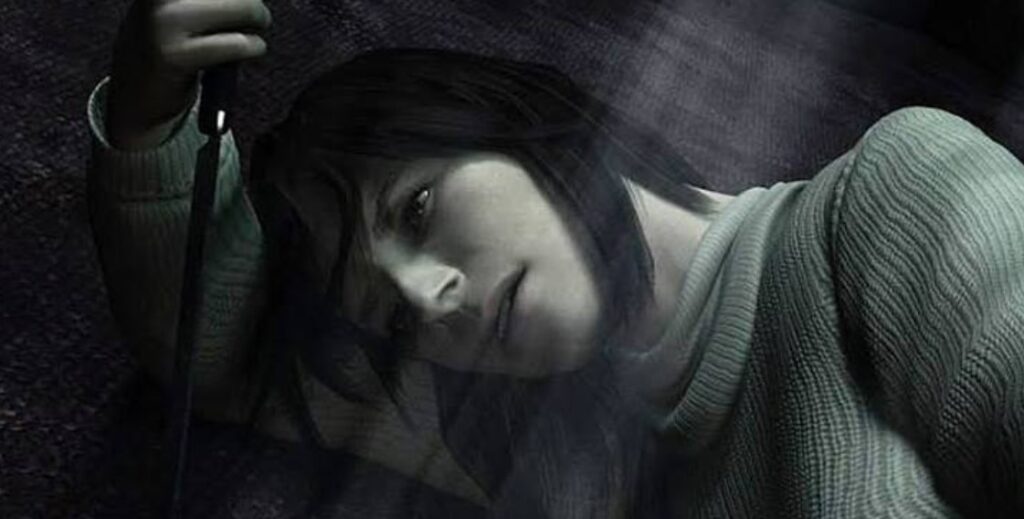
The second encounter is where the cracks widen. James finds her in an apartment, on the floor, holding a knife. The implication is unambiguous, and the game doesn’t dwell on it – it doesn’t need to.
What follows is the most quietly devastating exchange in the Silent Hill game. She refuses to go with him. She becomes agitated when he presses. And then she hands him the knife and leaves.
That gesture has been read a hundred ways. The most convincing reading is also the simplest: she’s giving away the thing she can’t be trusted with, by the only person who’s shown her any interest in a long time. It’s an act of self-protection she can’t sustain, and the knife finds its way back to her later.
It’s also worth noting what the knife is. She brought it with her from home, and it’s the weapon she used on her father. She’s been carrying the instrument of both her escape and her guilt around like a keepsake.
Scene Three: Abstract Daddy
This is the scene that makes Silent Hill 2 unlike anything else from its era.
Every monster in the game is a manifestation of someone’s psyche, and James’s are about desire and punishment. Angela’s is about something else entirely. The Abstract Daddy is a shape built from a bed frame and two figures locked together, moving mechanically, inescapably.
It isn’t subtle. It isn’t meant to be. It represents her repeated sexual abuse at her father’s hands, rendered as a machine: emotionless, rhythmic, impossible to stop.
The staging is what elevates it. James fights the creature, which places the player in the role of someone fighting a stranger’s trauma on her behalf. And when it’s dead, the scene doesn’t resolve the way you expect. Angela attacks the corpse, kicking it, dropping a television on it.
James tells her to relax. She bristles – because it sounded like an order, and orders are what she’s spent her life obeying. He protests that he wasn’t bossing her around. She doesn’t fully believe him. She’s not wrong not to.
The creature also carries a second meaning: it’s tied to James’s memory of Mary as well. Silent Hill doesn’t build separate hells. It builds one hell, and the residents share the plumbing.
Scene Four: The Staircase
The last time you see her, she’s standing on a staircase consumed by fire, with disturbing images lining the walls. This is her Otherworld – not fog or rust, but hell, because she believes that’s where she belongs.
She mistakes James for her mother. For a moment she speaks to him as though he’s the woman she came here to find.
Then she realises. And she asks him the question that the entire game has been building toward: whether it’s hot here, or whether it’s just her. For her, she says, it’s always like this.
She climbs the stairs into the flames. The game cuts away.
What makes this scene unbearable isn’t the fire. It’s that she corrects herself. For one second she had her mother back, and then her own mind took it away, and she went back to the only destination she thinks she’s entitled to.
Why Angela Is the Game’s Thesis Statement
Silent Hill 2 is about guilt, and it gives you three people carrying it. James killed someone and buried the memory. Eddie killed someone and is in the process of deciding he enjoyed it. Angela killed someone – and she’s the only one of the three whose act most people would call justified.
That’s the trap the game sets. By any reasonable moral reckoning, a teenager who kills the man who spent her childhood abusing her is not the villain of that story. The town disagrees. Or rather, she disagrees, and the town is only ever a mirror.
Her famous line to James – that he’s the same as her – lands differently depending on when you hear it. First time through, it sounds like projection. On a replay, it’s the most accurate thing anyone says in the entire game.
And unlike James, she gets no ending where things resolve. The game offers James several possible conclusions. Angela gets one. The mechanism of Silent Hill 2 is that the town gives each person what they believe they deserve, and Angela believes she deserves fire.
The Line That Explains the Whole Town
If you want a single sentence that explains how Silent Hill works, it’s hers. The heat she’s describing isn’t the staircase. It’s her ordinary condition, the thing she’s been living inside since childhood, and the town has simply made it visible.
James can’t feel it because it isn’t his. That’s the whole system, stated plainly by the character least equipped to articulate anything.
The Silent Hill 2 Remake Changed Her, and the Argument That Followed
Bloober Team’s remake arrived on October 8, 2024, and Angela became a flashpoint before anyone had played it.
| Aspect | Original (2001) | Remake (2024) |
|---|---|---|
| Appearance | Severe, drawn, often read as far older than 19 | Softer, rounder, closer to a believable 19 |
| Voice | Donna Burke | Gianna Kiehl |
| Outfit | Largely unchanged between versions | |
| Abstract Daddy scene | Effective, but her performance reads broader | Described by critics as considerably more harrowing |
| Fan reaction | – | Sharply divided |
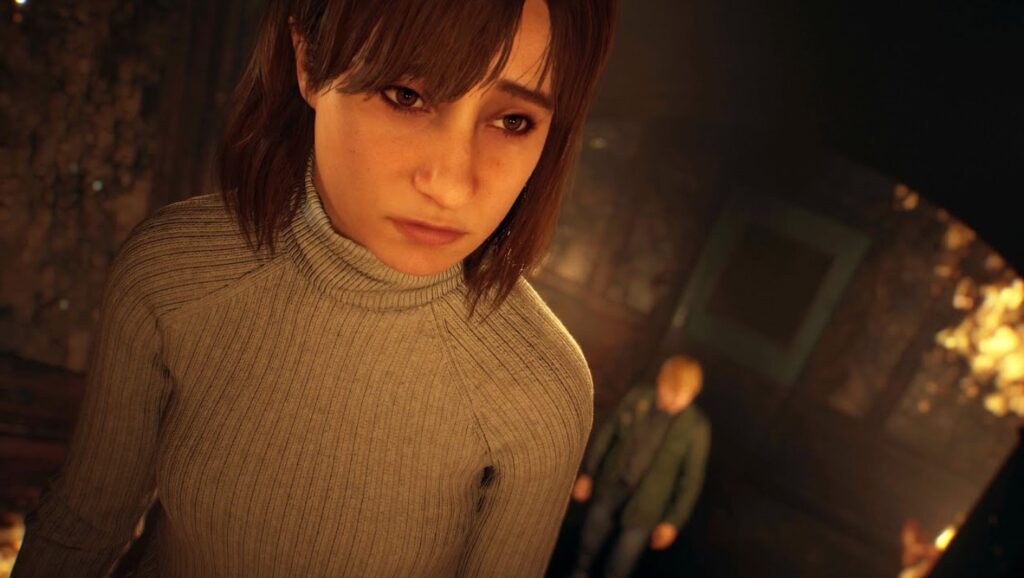
The controversy centred on a handful of unflattering screenshots. Some fans argued the new model looked too young and too soft to carry the character’s pain – that the original’s haggard appearance was itself a statement about how trauma ages you. Others pointed out, reasonably, that the original rarely looked like a 19-year-old at all, and that giving Angela her actual age back is a correction rather than a dilution.
Some of the reaction was straightforwardly ugly, descending into mockery of the model’s face. Kotaku noted at the time that Angela had in fact received the most minimal rework of any character in the remake – her outfit is nearly identical – which made the volume of the backlash harder to explain on design grounds alone.
The irony that several writers pointed out: a character defined by being objectified and dismissed, being objectified and dismissed by an audience that considers itself devoted to her.
What the Remake Got Right
Reactions to the design overshadowed what’s genuinely improved, which is the performance and the staging:
- Gianna Kiehl’s delivery is measured rather than broad, surfacing the anger running underneath the shame rather than only the fragility.
- The Abstract Daddy fight hits much harder. Critics described it as powerfully nauseating, where the original’s version risked reading as one more monster in a town full of them.
- The final staircase is played with control. She walks up with sober deliberation rather than hysteria, which reframes the moment as a decision rather than a breakdown.
- She reads as a teenager, which recontextualises every scene she’s in and makes the backstory land with the weight it should always have had.
For a lot of players – including writers who identified personally with her – that version of Angela felt like being seen properly for the first time.
How She Compares to James and Eddie
The three guilty figures in Silent Hill 2 form a deliberate structure, and it’s worth laying out:
- James repressed what he did and the town forces it back. His guilt is about an act he chose.
- Eddie never repressed anything. He’s not seeking atonement; he’s sliding toward enjoying it. He’s what happens when guilt is refused entirely.
- Angela never repressed anything either – but she took on guilt that wasn’t hers to carry. Her abusers transferred it to her, and her mother sealed it by telling her she deserved it.
Laura, the child, is the only human in the game with nothing to atone for, which is why the town is just an ordinary place to her. She sees no monsters. There’s nothing in her to reflect.
Angela’s Legacy
A few reasons she’s still being written about a quarter of a century later:
- She’s on the cover. Konami put the game’s bleakest character on the North American box art, which still reads as an extraordinary decision.
- She predates the vocabulary. Silent Hill 2 came out in 2001, long before mainstream games engaged with trauma, dissociation or abuse with any seriousness.
- She isn’t redeemed. There’s no arc where understanding fixes her, no moment where James’s kindness repairs anything. Writers who’ve covered her specifically praise the refusal to turn her story into an uplifting one.
- She refuses likeability. She’s prickly, unpredictable, and says cruel things to a stranger. The game never softens her to make her easier to care about.
That last point is the most important. Angela isn’t written to be comforting. She’s written to be accurate.
FAQ
Who is Angela Orosco?
A 19-year-old woman James meets in the cemetery at the start of Silent Hill 2, ostensibly searching for her mother. She’s a survivor of prolonged childhood abuse and one of the game’s three guilt-carrying figures.
What does Abstract Daddy represent?
Angela’s father and the abuse she suffered, rendered as a mechanical, inescapable shape. It’s also tied to James’s memories, since the town’s manifestations overlap.
Why is Angela’s Otherworld on fire?
Because she believes she deserves hell. The town shapes itself to each person’s self-image, and fire is hers.
What happens to Angela at the end?
She mistakes James for her mother on a burning staircase, realises her error, and climbs into the flames. The game cuts away and leaves it there.
What does “you’re the same as me” mean?
She recognises in James the same buried guilt she carries. On a first playthrough it sounds like projection; by the end, it’s accurate.
Who voices Angela?
Donna Burke in the 2001 original, Laura Bailey in the HD Collection, and Gianna Kiehl in Bloober Team’s 2024 remake, with Risa Shimizu in Japanese.
Why did Angela’s remake design cause controversy?
Her updated model looks younger and softer, closer to her canonical age of 19. Some fans felt it undercut the original’s visibly weathered appearance; others argued it finally matched the character as written.
The Character Who Stays With You
James gets the plot. Pyramid Head gets the posters. Angela gets the thing you think about on the drive home. Four scenes, a knife, a monster shaped like a bed, and a staircase. Silent Hill 2 spends most of its runtime building an elaborate psychological machine, and then hands its clearest statement of purpose to the character with the least screen time and the fewest words.
If you’re replaying it – in either version – pay attention to how little she actually says. Almost everything you know about Angela, you worked out yourself. That’s the craft.
If this gave you a new angle on a character you already loved, pass it on – share it, bookmark it, send it to whoever’s about to play the remake. And if you’ve got a creative or commercial project that deserves to be read this closely, YaninaGames is listening.