The Famous 9×9 Block Puzzle – How to Play Smart?
Every few years, a simple game format quietly takes over phones and browsers without any marketing push – and the 9×9 block puzzle is one of the clearest examples. It looks almost too basic to be interesting: drop shapes onto a grid, clear full rows and columns, keep going. Yet it’s become one of the most-played casual formats around. There are real design reasons for that, and they’re worth understanding whether you’re a player or someone who builds games.
The Rules Take Ten Seconds to Learn
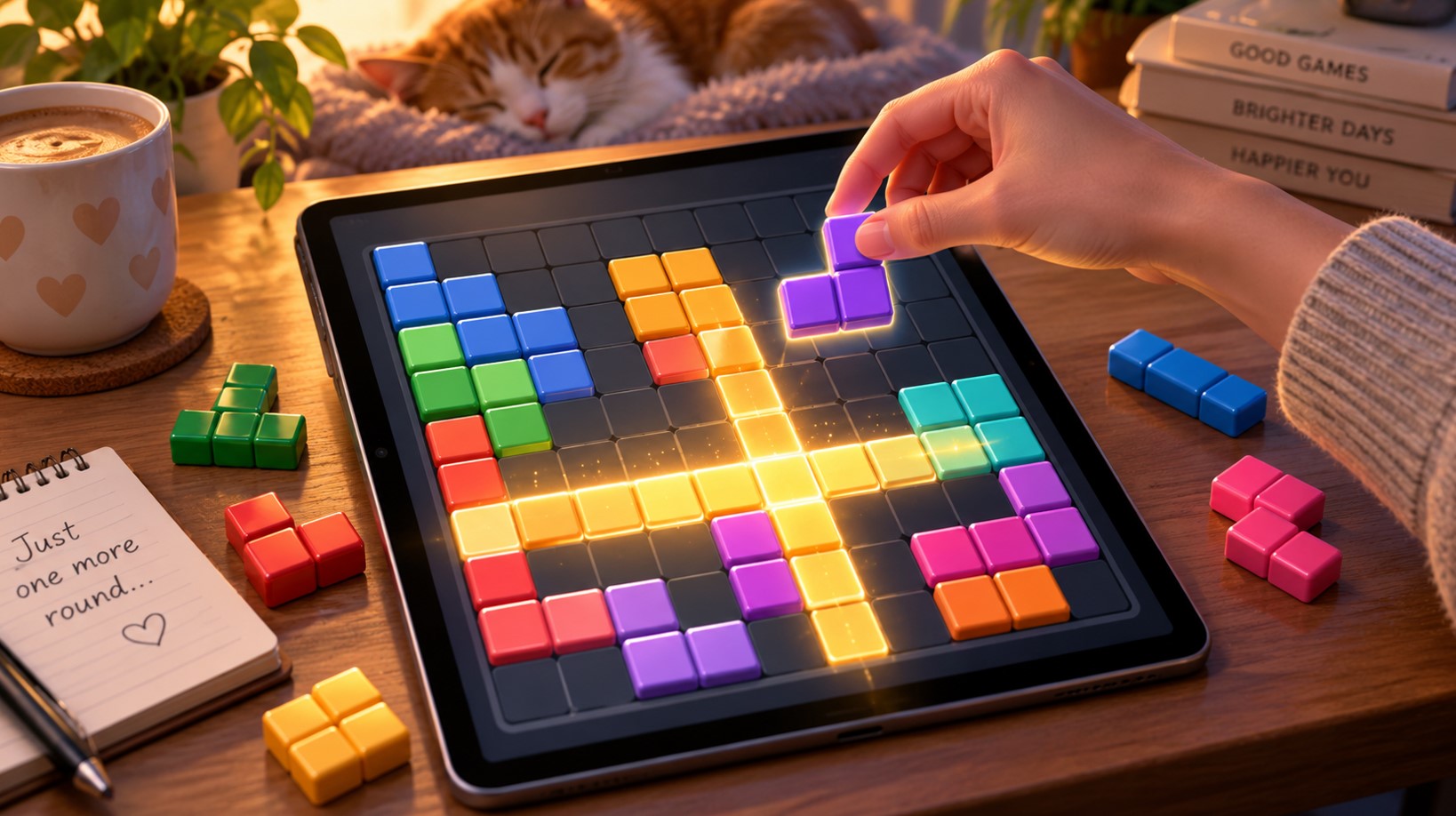
The entire ruleset fits in a sentence: place the pieces you’re given anywhere on a 9×9 grid, and any complete row or column clears. There’s no timer, no falling pieces, no penalty for taking your time. That instant comprehension is a huge part of the appeal – there’s zero friction between opening the game and actually playing it, which is exactly what a casual game needs.
Where Does the Depth Actually Hide in the 9×9 Block Puzzle?
What makes it more than a toy is that clearing lines isn’t the hard part – not running out of room is. Unlike a falling-block game, nothing forces your hand, so every loss is entirely your own decision-making. The strategy emerges naturally:
- Keep the board open. The core skill is placing pieces so you always leave space for the awkward shapes – the long bars and big squares that will otherwise end your run.
- Set up multi-line clears. Clearing a row and a column in one placement is where high scores come from, and it takes real planning.
- Think about the next pieces. You typically see three shapes at once; the best players place the current one with the other two already in mind.
That gap between “trivial to learn” and “genuinely tricky to master” is the sweet spot that keeps people coming back.
The 9×9 Grid Is a Deliberate Choice
It’s not an accident that the classic size is nine by nine. A smaller grid fills too fast and feels cramped; a bigger one drags and loses tension. 9×9 is large enough to plan on and small enough that a couple of careless placements matter. It’s the same instinct behind sudoku’s 9×9 layout – a size that stays readable while still holding real complexity.
Why Does It Work in The Browser?
A lot of people know this format as a mobile app, but it’s arguably even better as a browser game. There’s nothing to install and no account to make; you open the tab and play. A 9×9 block puzzle that runs straight in the browser fits perfectly into the way the game is actually played – a quick round on a break, closed when you’re done, with no notifications trying to pull you back.
The Takeaway
The block puzzle’s staying power comes from an old design truth: the simplest rules often produce the most replayable games. Ten seconds to learn, no pressure while you play, and a strategic layer that rewards the players who look ahead. That combination is why “just one more round” turns into twenty – and why the format isn’t going anywhere.
The YaninaGames team works for you, so please support by sharing this post online! Thanks for the feedback.