Why Forgetting Is Not an Option When You Play Casual Browser Games?
Casual browser games are the digital equivalent of a quick coffee break – short, sweet, and surprisingly addictive. These games do not require investing dozens of hours from you; just play for fun. But these games are not just brain-rotting activities like browsing social media endlessly and pointlessly. Games like Google Memory Game, NYT Connections, or Wordle can actually be useful for boosting your memory skills naturally. Hooking you with simple mechanics like recalling words, patterns, and quick thinking, these games tickle your brain in the right way. The YaninaGames explains the importance of memory mechanics implemented properly in casual browser games.
Memory Mechanics Are the Backbone of Casual Browser Games and Here is Why
The casual games live on accessibility. Wordle or Connections do not require a PhD in game design to get into them. So what brings you back? It is how these games mess with your memory, and each round is a little exercise for the brain. The invisible scaffolding to hold these games together is the memory mechanics in casual browser games.
They do not merely involve recalling a word or a pattern since they involve using your mind in a manner that is satisfying but not taxing:
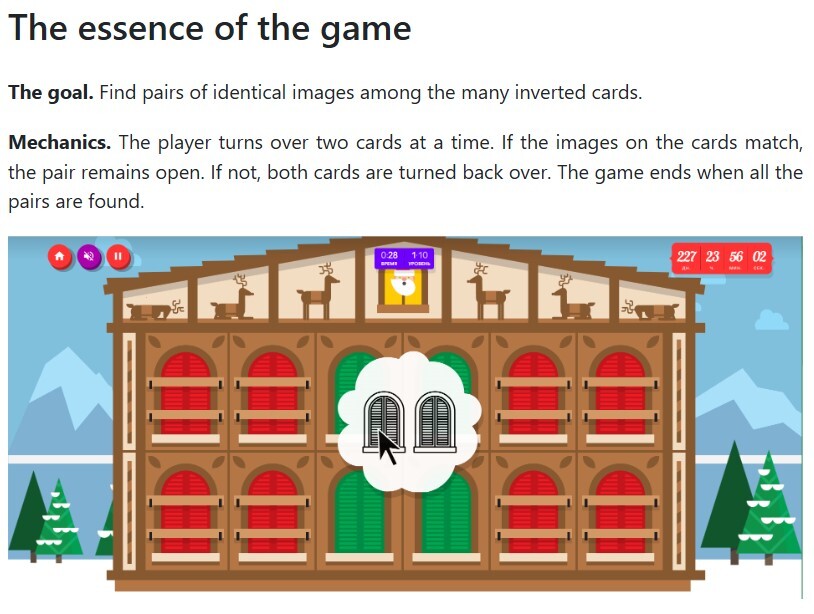
- For instance, take Google Memory Game. It is an electronic version of the traditional game of matching the cards. You turn over tiles in an attempt to match sounds or images, and your brain is racing to recall where that chirping bird or buzzing bee was two moves back. It is easy, yet it is also a tricky short-term memory test.
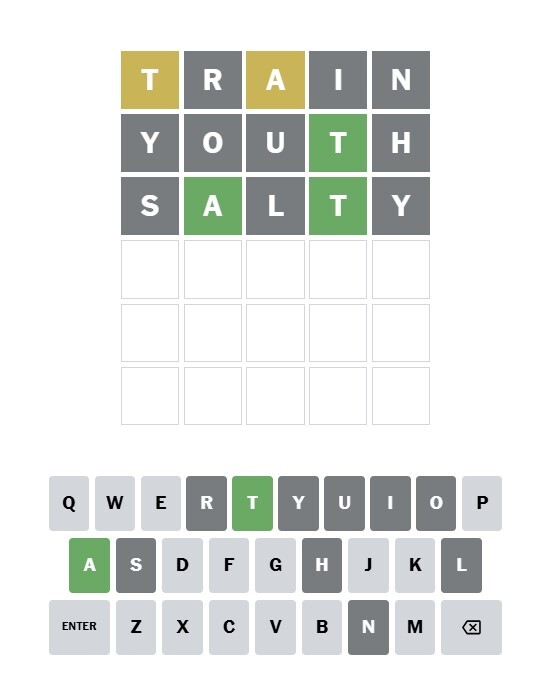
- In the same way, NYT Wordle makes you remember what letters you have already tried, which ones were successful, and which ones failed you, as you are solving a puzzle with five letters.
- And NYT Connections takes it to the next level, making you sort words by obscure connections, and it is up to you to keep several things in mind simultaneously.
These mechanics are not only fun, they are necessary. They exploit a universal human characteristic: the urge to show that you are smarter than you imagine. The memory games provide you with that flash of insight as you make a difficult connection or finally recall where you had that one card. It is a dopamine rush covered in pixelated minimalism.
Check in the table how memory mechanics are implemented in popular casual browser games.
| Title | Core Memory Mechanic | How The Game Hooks Players |
| Google Memory Game | Matching pairs of sounds or images by recalling positions | Quick rounds, satisfying “match” moments |
| NYT Wordle | Remembering letter positions and their status (correct, misplaced, absent) | Builds suspense as you narrow down possibilities |
| NYT Connections | Grouping words by recalling shared themes or traits | Rewards creative thinking and obscure recall |
Summing up all these games’ attractiveness, here is why casual gamers love memory mechanics in browser games:
- Low barriers for entry. Casual gamers do not need to rely on lightning-fast reflexes or a 10-page manual to learn how to play. Memory mechanics in games like Google’s Memory Game or NYT Connections are simple to grasp – match this, recall that, and connect these. Anyone can play – from your 90-year-old grandma to a professional CS :GO player.
- Mental stimulation happens without any stress. Casual browser games can challenge you without making you rage-quit. Your brain gets a workout without any frustration like in an average FromSoftware game.
- Appeal is quite universal despite the gaming preferences. Whether you are 10 or 70 years old, you’ve got a brain that naturally loves to be tested. Games like Connections or Wordle feel personal because they lean on the universal human brain’s skills.
- Shareability is another factor in casual browser games with memory mechanics. You can boast your Wordle’s grid on X feed. Flexing your mental victories is especially satisfying. It is not just about solving the puzzle – it is about proving your memory helped you to remember the right stuff at the right time.

The Psychology Behind the Fun – How to Approach the Development of Memory Games
Memory mechanics are not a gimmick of a game designer, but are based on the ways our brains operate:
- Playing NYT Connections is not just categorizing words such as apple, banana, and orange into fruits. You are accessing your semantic memory, which is the concept and relationship storage area of the brain.
- Flipping cards in Google Memory Game means that you are relying on your working memory to keep track of positions on a grid.
These games are the equivalent of mental yoga–exercising your brain in a pleasurable way.
It is not only about bare memory, though. The games also toy with pattern recognition, which humans are hard-wired to do:
- You are not guessing letters in Wordle; you are observing patterns of where letters belong.
- In Connections, you are connecting words that appear to have nothing in common with a flash of inspiration.
That is the reason these games are so gratifying because of this pattern-hunting instinct. They put you in the mood of a detective who is solving a case, although the case is a five-letter word.
Memory mechanics do not only imply flipping cards or guessing words, but they can also narrate stories. The categories in NYT Connections seem to be small stories. When you put together the words fire, ice, wind and earth, it is like you are calling up a fantasy world by calling it elements. The process of going through a series of random guesses to a successful five-letter answer in Wordle is a micro-epic. Even Google Memory Game is an amusing game, as animal sounds produce a light-hearted, even nostalgic atmosphere.
And there is the aspect of flow. Psychologist Mihaly Csikszentmihalyi defined flow as the point at which a task is neither too difficult nor too easy and keeps you in the zone. Memory mechanics hits this one. They are hard enough to think and soft enough to keep you addicted. Lose a game of Google Memory Game? No problem-just do it again. Missed a Wordle? Tomorrow is another day. This equilibrium makes casual players want to come back
Memory mechanics allow game designers to create subtle narratives that appeal to the players. They do not hit you over the head, no cutscenes or lore dumps, but they appeal to your imagination. For example, solving a difficult NYT Connections puzzle is not about classifying words; it is about creating a mental story about why words like pen, pencil, marker, and crayon go together. It is a tale-telling of the mind, and it is wonderfully understated.
Pros and Cons of Memory Mechanics in Casual Browser Games
One of the biggest challenges for casual browser games is being replayable for a long time. Without new levels, storylines, or graphics, how can game devs keep players hooked? Check our comparison of pros and pitfalls a game dev will face when creating such games.
| Pros | Cons |
| Randomization makes these games spicy. No identical rounds or fresh puzzles daily – such games rely on new challenges as the major attractive factor | The risk of repetition, even with randomization, memory mechanics can feel the same if not paired with new content or creative twists |
| Scalable difficulty – newbies may face some challenges, but experienced players will sniff out those tricky puzzles faster | Balancing this difficulty can be a real challenge. If the game is too easy, players get bored. If the game is too hard, they may bounce. |
| Engagement of the community. Casual browser games with memory mechanics spark discussion on social media | Accessibility is still an issue since memory games heavily rely on cognitive skills. Game developers need to ensure the games are inclusive for the majority of players |
| Replayability is the major factor for casual games. Memory mechanics deliver this in spades |
Conclusion
Casual browser games like Google’s Memory Game, Wordle, and Connections are not just for time-passing or brain-rotting. They serve as proof that memory mechanics have staying power. Manage to learn how to tap into something primal – the human’s love of solving puzzles, cracking codes, and proving the mental chops. You will be able to create truly addictive and interesting casual games for everyone.
If you have found this post interesting, do not forget to bookmark and follow. Also, we encourage you to contact us in case you seek collaboration and want to share creativity with fellow game devs.