The Free‑to‑Play Revolution in Mobile Games and Slots
Honestly speaking, the free games you download are not going to be a success by mere chance and good karma. The industry of mobile games and slots has become a multi-billion-dollar business, and developers have become quite efficient in keeping the lights on. No matter if it is the crushing of candy in match-three games or the spinning of virtual reels in casino applications, there is much business going on behind the scenes. How then do these games make money? The following overview of the monetization strategies will help game devs understand how to make mobile gaming and online slots successful.
The mobile gaming scene has transformed with the developers realizing that free-to-play games were not a bad concept- it was clever. The F2P or the free-to-play model transformed the entire industry. Rather than being expensive initially, as with the old console games, F2P games generate revenue by playing and making optional purchases. You may understand better how it works if you were into Richard Casino withdrawal (or similar platforms) at least once, since most slots use this monetization model.
This shift to F2P was intentional. Developers have finally noticed that eliminating the initial cost would enable their games to be downloaded by millions more people. When the players are already in the game, it is to influence them to spend, not to insist on it at the beginning. It is a psychological strategy as well as a business one, and the most successful mobile games have mastered it through time with constant experimentation.
The Season Model and the Battle Pass
Despite the rise of the F2P monetization model, the battle pass is one of the most effective monetization models in contemporary mobile games, which were inspired by popular mobile multiplayer games as Fortnite and Call of Duty. Battle passes introduce new seasonal content and rewards, which players obtain through play. The revenue is earned by players who can pay to accelerate their movement through the levels or to obtain special items. It gives them leverage compared to the “free” category of players.
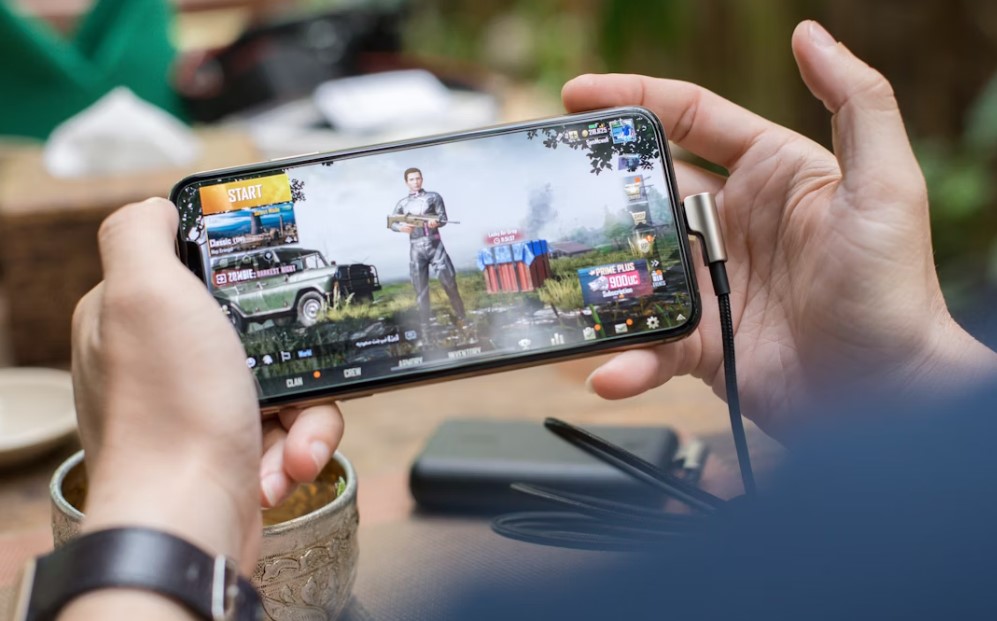
The reason why battle passes succeed is due to the element of FOMO – fear of missing out. Seasons are fixed and last approximately 10 weeks, which adds urgency. Players are aware that they will not be able to receive rewards that they would not receive in months or even years unless they play this season. The urgency makes them continue playing and spending, as they do not want to be left behind in the content. The psychological attraction is great, and it is effective in most games.
The Premium Currency Trap
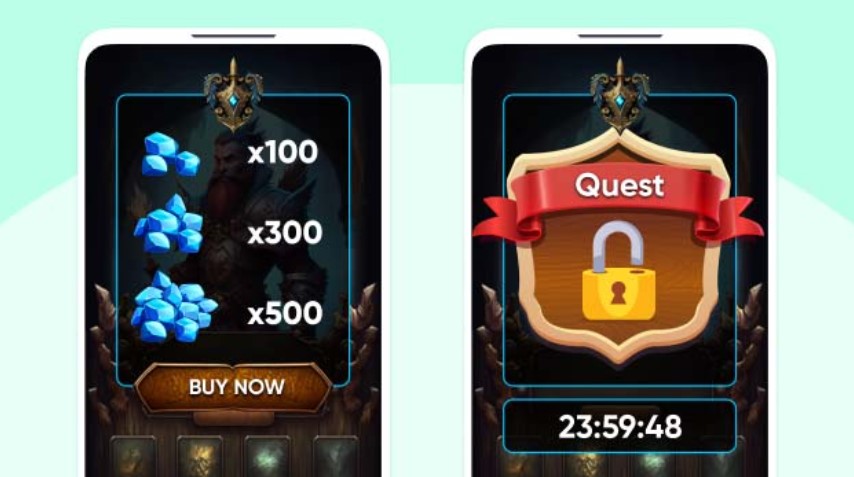
Premium currency, shiny gems, tokens, or coins that can only be purchased with real money are used in almost every worthwhile mobile game. Premium currency connects your wallet to the game world, and developers are smart about the way they sell it.
The common gimmick in mobile games and slots is to appear to make high-end purchases cheaply when you peek in the store. You will find prices as $0.99 on a small bundle that is not very bad, but the price levels are arranged in a way that makes you want to spend more. You can purchase a better value of a $4.99 package per unit, or go to the extreme of a $19.99 super pack that is an excellent deal. This level pricing is effective since human beings believe that larger purchases are more valuable, even though the profit margin may be greater among larger buyers.
The genius behind this is that even premium currency does not split up evenly into the price of items. Or you can complete a purchase with 100 gems left, and you cannot do anything with that, but it makes you feel that you still have to buy something.
Fashion Economy and Cosmetics – Paid Customization in Mobile Games and Slots
Cosmetic items do not alter the gameplay, and you may still believe that they are not important. Reconsider – thousands of players use real money on skins, outfits, and custom options. The “cash cow” of contemporary mobile games and slots is cosmetics. And it is profitable due to its low cost of development in comparison to new gameplay elements.
Cosmetics have created fashion economies in mobile games. The developers release limited-time content based on the season, events, or collaboration with franchises and celebrities. Scarcity is a big factor. When you know that something is only going to last a week, you will most likely purchase it compared to when it is always there. This is why the term limited edition is used; it is a premeditated money-making tactic.
The Stamina System and Time-Gating
One of the major differences between mobile games and other platforms is the stamina or energy system. In nearly all F2P mobile games and slots, there is some version of this: a finite amount of stamina, which allows you to play. When you are out, you can wait until it refills itself or use premium currency to get it refilled immediately.
This initially appears to be game balance – endless grinding is avoided. However, it is a clever revenue strategy. Developers build a never-ending temptation by restricting free play. You could have 30 minutes until your energy is replenished. Though you can spend 2 dollars to continue playing at present. To the casual players, it is small, and when you add millions of players who make small purchases, it becomes a monster revenue stream.
The grind does not seem as eternal with time-gating. The developers can make the progression timers and levels difficult since the players simply cannot do everything in a single session. Rather than a wall, it is like a natural game pace. It is a psychological gimmick, and a good one.
The Gambling Parallels Between Mobile Games and Slots
The casino slot games apply a mental trick that is not common in normal mobile games. However, they generate money in the same way. Slots are largely reliant on fast money and a reward system that varies every time, and this is what makes them addictive in real casinos.
Casino apps (including mobile slots) tend to generate revenue through:
- Providing spin packages with virtual coins or tokens at various price points, like premium currency systems.
- Earning bonuses and free spins daily, which makes you continue playing, returning to the app each day.
- Loyal and VIP programs will award you additional bonuses to spend – they offer a progress system which is not based on actual wins.
The only difference is that casino games are designed in a way that will keep you spinning. They do not make you think that you are improving in something. The math is always on the house. Players are aware that they can lose money. And this is why regulators are paying more attention to casino games. Particularly in terms of age checks and responsible gambling messages.
The Live Event Hustle
Mobile games usually rely on short-term events to enhance repeat purchases. You can see an event appearing on a week with special rewards or challenges, and you have another reason to play even when you have stopped. These events are usually connected to stores that sell cosmetic products or power-ups temporarily.
The beauty of events in mobile games and slots lies in the fact that they place transparent points of spending at the appropriate time. You are not merely browsing a store, but instead being presented with a time-based experience. As a result, you get a new experience. The feeling of urgency is a must-have for competitive games and casino slots.
Revenue Models in Mobile Games and Slots Compared
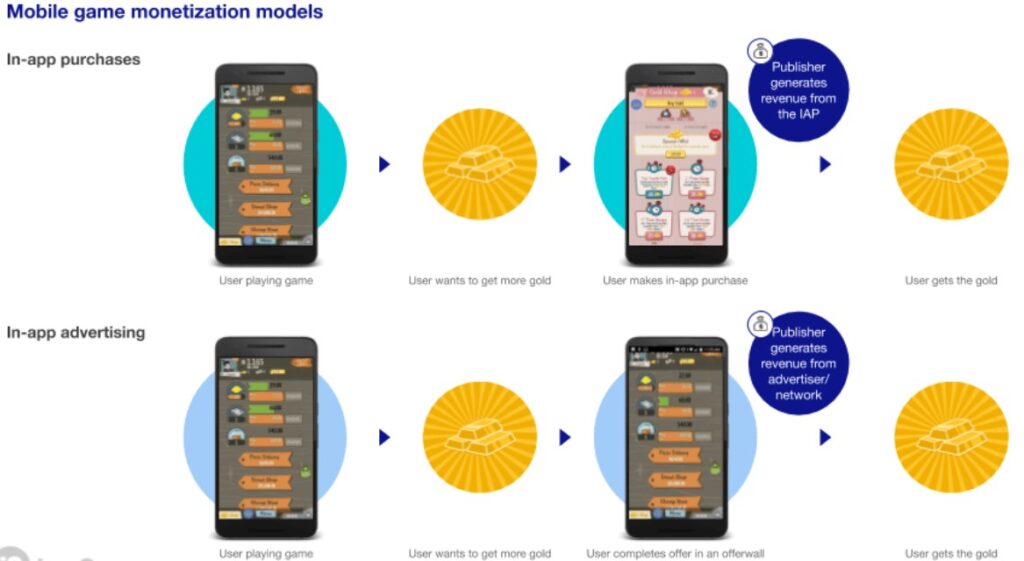
To get a full picture of mobile monetization, it is useful to compare the various approaches we’ve mentioned earlier. In such a way, it would be easier to pick the greatest monetization strategy for a game dev.
| Monetization Method | Implementation | Player Impact | Revenue Potential |
| Premium Currency/Shop | Cosmetics and boosters | Cosmetic only, no P2W | Very High |
| Battle Pass System | Seasonal tiers with exclusive rewards | FOMO-driven engagement | High |
| Pay-to-Win System | Stat boots, power-ups and direct advantages | Skill gap increases | High (but risky) |
| Ads/F2P | Banner ads, video rewards | Occasional irritation and boring effect | Medium |
| Energy/Stamina System | Limited plays or time per session, refills for premium | Slowed progression, encourages money spending | High |
As it turns out, the most sustainable mobile games rely on more than a single method of generating revenue, and they integrate them thoughtfully. An average free-to-play game may include a cosmetic store that one can use without being annoyed. While a battle pass keeps a person returning, advertisements provide optional rewards. And a fair, free way that allows a person to go through the game without having to spend money.
This is a middle ground between earning money and retaining players. When a game overworks money, it receives negative reviews, fewer downloads, and the customers drop it. Unless it earns sufficient money, the player can’t afford new content and updates.
The Psychology of Spending
You must think of human psychology to know why people purchase in mobile games. The developers use such tricks as:
- anchoring (pricing something so it appears reasonable when compared to another thing);
- loss aversion (making you think you will miss out);
- variable rewards (such as a slot machine) to get you to spend money.
Most of these tricks do not even require you to know. You may not be making a decision that is fully considered; you are responding to the game as it has been programmed to do. It does not make developers evil; it is simply smart business with proven concepts on how people act. But when you spend a lot, it is well to know how it works.

Conclusion
Mobile games and slots are transforming with the new ways they generate revenue. Though loot boxes and cosmetic items are being monitored by more countries. And this might result in more transparent regulations. Subscriptions, such as Apple Arcade, are also under test by developers as an alternative to surprise purchases, which provide a steady stream of monthly revenue.
At this point, the hybrid free-to-play model remains the leader since it is effective. It allows millions of people to play high-quality mobile games for free. And still earn money to maintain those games and keep them going. Mobile games and slots have created a system to accommodate all levels of spending, whether you are a casual player or a player who spends hundreds a month.
The YaninaGames team posted another content for game developers – we hope you like it as much as we do! Support by sharing this content online via social media. Or add to the bookmarks. Also, please feel free to contact us if you are searching for collaboration.