Is Minecraft worth buying? It depends on how you want to play
Minecraft can be worth buying for a player who enjoys creating, exploring, or sharing a world with other people. It may be a poor match for someone who mainly wants a fast-paced action game, a tightly authored story, or a clear challenge that does not depend on the player setting goals. The price alone does not decide the question. The better test is whether its central play activities match the time and attention you are willing to give it.
That distinction matters because Minecraft is a sandbox with several overlapping forms of play. Creative mode supports large building projects, survival mode adds resource gathering, hostile environments, and progression, while multiplayer can turn those activities into a social routine. A player who does not enjoy any of those systems may finish a small portion and feel that the purchase was wasted. Someone who enjoys experimenting with them can keep creating new objectives without waiting for the game to prescribe every step.
Older player discussions capture the central tension clearly. In one archived Steam Community thread titled Is Minecraft worth the $30.00?, participants described both the appeal of continual building and the risk of a player losing interest after reaching familiar milestones. Those comments describe personal experiences rather than a universal verdict, but they remain useful reminders that the game’s value comes from what the player does with it.
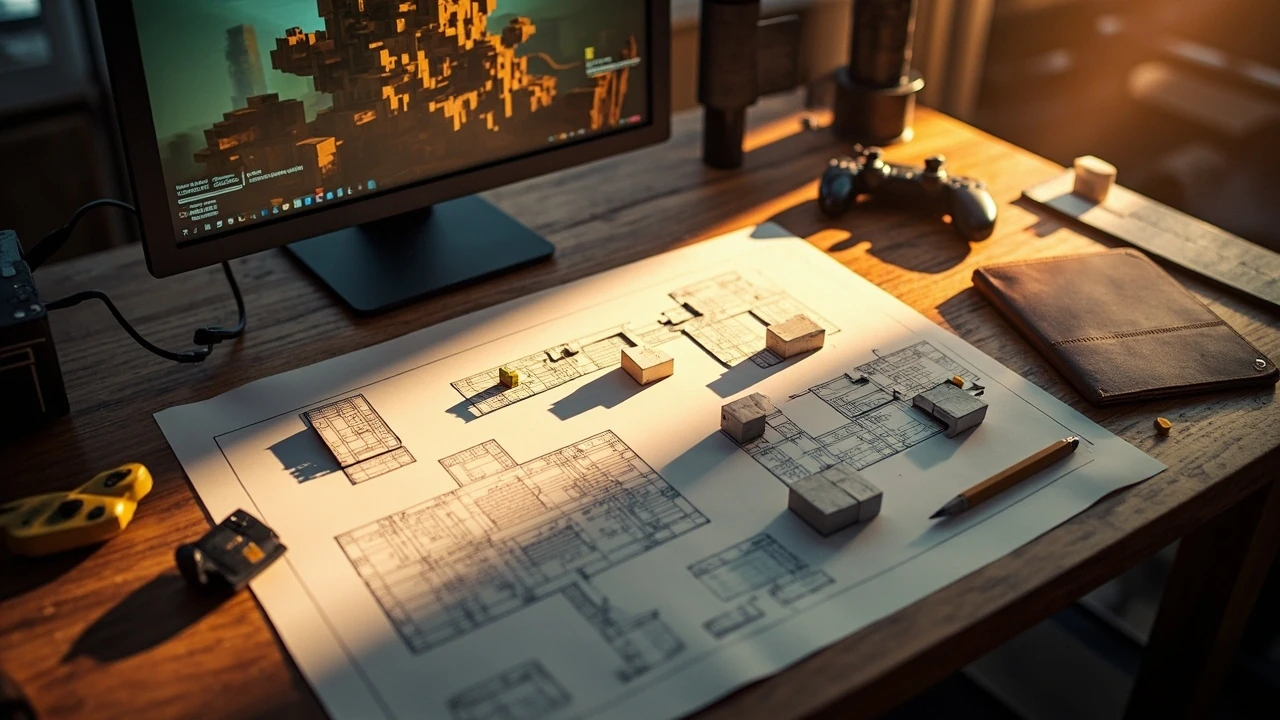
There is also a production angle behind that question. Minecraft demonstrates how a simple set of interacting systems can support a very large content space. For designers, its worth is not only the size of the player community. It is also a case study in procedural space, readable block forms, player-authored goals, community modification, and long-term platform support.
What makes Minecraft worth the price
Minecraft is most likely to justify its price when you enjoy at least one of its core loops and can see yourself returning to it. The strongest reasons to buy are not tied to a fixed quantity of content. They are tied to the game’s ability to produce a new challenge, project, or shared activity without requiring a completely different product.
Think about the following player profiles:
- The builder: You want to design structures, decorate environments, reinterpret a location, or turn a practical plan into a visible result.
- The survival player: You enjoy gathering resources, preparing equipment, navigating danger, and choosing what to attempt next.
- The social player: You want to build or explore with friends and are willing to coordinate around a shared world.
- The systems tinkerer: You like experimenting with mechanics, customizations, or modifications and tolerate some setup and troubleshooting.
- The curious player: You like discovering how the world works, finding unusual locations, and setting your own tests rather than following one route.
If none of those profiles feels compelling, the core game may struggle to justify the purchase. The defining feature of Minecraft is player-created purpose. If you do not want to make a farm, construct a base, explore a cave, test a redstone contraption, or complete a self-imposed challenge, its freedom can feel empty rather than liberating.
The game also has an unusually large range of activities, but the earlier article on Minecraft bee spawning, behavior, breeding, and farm design illustrates an important point. Even a small mechanic becomes a meaningful subject when players understand its rules, plan around them, and decide how much effort the result deserves. The value comes from the interaction between system knowledge and player intent.
Creative, survival, multiplayer, and mods: compare the actual value
The best way to assess Minecraft is to compare the parts of the experience that could sustain your interest. Each mode offers different benefits and different sources of friction.
| Minecraft activity | What can keep it engaging | Common source of disappointment | Best fit for |
|---|---|---|---|
| Creative mode | Building, decorating, experimenting with forms, and managing large visual projects | Starting with no clear idea, limited construction skills, or low interest in visual design | Players who enjoy making and refining creations |
| Survival mode | Resource planning, equipment progression, exploration, and self-directed goals | Repetitive early gathering or a preference for immediate action | Players who enjoy persistence and incremental progress |
| Multiplayer | Cooperative building, shared discoveries, competition, and recurring sessions | Finding compatible players, managing different play styles, or dealing with moderation issues | Players who already have friends or a community to join |
| Mods and customization | New behaviors, visual changes, altered progression, and experimental play | Installation, version compatibility, performance, and support requirements | Technically curious players who accept maintenance |
Creative mode often creates the clearest answer for builders, but it can expose the difference between having tools and having a concept. A player who wants to improve their environmental design will find the empty materials valuable. A player who only wants combat may find the same lack of direction unsatisfying.
Survival mode adds meaningful pressure through resources and danger, although the pace is deliberate. It rewards planning and lets the player set targets such as constructing a secure base, finding particular materials, or preparing for a dangerous area. The approach of the practical guide to finding smooth stone in Minecraft shows how a specific goal can turn exploration into a focused activity. This is one of the game’s strongest design patterns: a broad world contains many self-contained objectives.
Multiplayer changes the cost-benefit calculation. The purchase may be more worthwhile if you already have people to play with because the world becomes a shared project. It may be less worthwhile if you expect the game to create a social group for you. A compatible group can provide a reason to return, but finding one takes time and may require accepting different schedules, rules, or communication styles.
Mods can extend the game, but they should not be the only reason to buy. The archived discussion included conflicting experiences: some users valued customization and easier installation, while others reported frustration with compatibility, performance, or servers that did not support modified play. The sensible approach is to treat modifications as an optional layer rather than an unverified promise of extra value.
How much content does Minecraft contain?
Minecraft contains more than a fixed campaign, so content becomes difficult to count. Survival includes exploration, resource acquisition, equipment, structures, hostile environments, and bosses. Creative mode provides the tools and space for unlimited player-defined construction. Multiplayer adds community-created goals, social stories, and server-specific rules. Mods introduce further variation, although each addition also creates its own compatibility and maintenance questions.
That makes the relevant question less “How many hours are there?” and more “How often will I have a reason to play?” A finite campaign can be excellent for a player who enjoys a clear ending. For additional context, Minecraft is different because it can remain open-ended, but an open-ended game requires more initiative from the player.
| Player situation | Likely value of Minecraft | Reason |
|---|---|---|
| Has a clear building idea | High | The game provides materials, scale, and feedback for an open-ended project. |
| Enjoys setting personal goals | High | Exploration and survival can supply changing targets without a prescribed route. |
| Plays regularly with compatible friends | High | Multiplayer gives the sandbox an ongoing social reason to return. |
| Wants a fast action loop | Low to moderate | Combat exists, but pacing and structure differ from a dedicated action game. |
| Expects a complete authored story | Low | Story is distributed through play, settings, and player interpretation rather than one central narrative. |
| Does not enjoy creating objectives | Low | Without a purpose, the large set of systems can feel repetitive or directionless. |
For a player who enjoys resource gathering, the earlier guide to how to obtain smooth stone in Minecraft serves as a useful example of specific progression. The content is not a checklist of isolated tasks. It is a set of methods that lets the player create a more capable base, understand the world, and decide whether the investment is worthwhile.
For a creative-focused player, quantity is less important than expressive range. The ability to place, remove, recolor, and combine blocks creates a broad construction system. The challenge shifts from finding content to deciding what to make and learning how to execute the design. That is worthwhile when process is itself enjoyable. It is not worthwhile if the player wants a tightly controlled challenge and dislikes iterative construction.
Is Minecraft worth it for different types of players?
The value changes substantially with play style, available time, and expectations. Instead of treating the purchase as one universal decision, compare your needs with the game’s strongest features.
- For a creative builder: The answer is often yes if you can imagine spending time refining a build, experimenting with materials, or recreating a location. The value comes from a flexible construction process.
- For a survival-focused player: It is worth considering if you enjoy gathering, preparing, and taking on self-selected risks. You should accept that progress may be gradual.
- For a social player: The answer improves when you already know whom you will play with. Test the group and its rules before expecting a strong long-term return.
- For a competitive action player: It is less compelling. Combat and goals exist, but the game does not prioritize the tempo, precision, or match structure associated with many action titles.
- For a narrative-driven player: It can work if you value emergent stories and interpretation. It is unlikely to satisfy a need for a tightly directed plot with reliable pacing.
- For a technical experimenter: It may be valuable if you enjoy understanding systems, testing mechanics, or adapting tools. The cost is time spent troubleshooting and maintaining your setup.
Available time is another overlooked factor. Minecraft can be sampled in a short session, but many of its stronger benefits require repeated visits. A large build, a survival project, or a multiplayer community develops across multiple sessions. Someone expecting a complete narrative in one evening may judge the game incorrectly.
You should also separate a dislike of the graphics from a dislike of the game. The block-based visual style is deliberate, and some players need time to accept it. The earlier discussion included a player who took time to get past the graphics but still found the gameplay good. That is a personal reaction, but it highlights a sensible test: determine whether the presentation is merely unfamiliar or whether it prevents you from enjoying the underlying activity.
What should you check before buying Minecraft?
Before paying, run a short compatibility check. The goal is not to predict exactly how many hours you will play. It is to identify whether the game offers activities you genuinely want and whether its costs match your preferences.
- Choose one activity you would do without a tutorial. A building project, cave expedition, farm, redstone experiment, or shared world is more useful than a generic list of features.
- Consider whether you enjoy setting your own milestones. If you need constant direction, check whether the version you are considering offers enough structure for your preferred play style.
- Decide how you feel about the visual language. Block-based forms, simple textures, and visible grid geometry are central to the presentation, not just a superficial skin.
- Assess multiplayer expectations. If social play is important, identify who you would play with and what kind of server or session length suits you.
- Treat mods as optional. Do not purchase the game on the assumption that it will function like a different game after installation. Verify each modification, its supported version, and its effect on performance.
- Check your hardware and display comfort. The game is often associated with customization, but the broader ecosystem can contain higher requirements, especially when modified.
- Define a stopping point. If you only want a brief experience, buy for a specific project. If you want a long-term sandbox, consider how regularly you will return to it.
A useful pre-purchase question is not “Will this be my favorite game?” It is “What would I do in this game on a day when I have free time but no new game has caught my attention?” If you can name two or three plausible activities, the purchase has a clearer basis. If every answer depends on discovering something completely new, the risk is higher.
How Minecraft’s value appears in game design
From a development perspective, Minecraft is worth studying because it demonstrates how a small, reusable rule set can generate a large variety of play. Its block-centered world, resource progression, procedural terrain, construction tools, and player-set objectives create different experiences without requiring every activity to be authored as a separate mode.
Several mechanisms drive that flexibility:
- Reusable primitives: A limited family of block types can serve as terrain, tools, construction materials, and environmental storytelling elements.
- System interaction: Exploration becomes more useful when the player can process its resources, while construction becomes more meaningful when materials have functional roles.
- Player-authored goals: The game supplies systems, but the player defines many objectives. This reduces the need for a prescribed sequence while increasing the demand for meaningful choices.
- Differentiation by perspective: The same world can support a base builder, a resource planner, an explorer, or a social organizer.
- Layered extension: Multiplayer and modifications can add social rules or new behavior without requiring the base systems to change completely.
For a designer, the lesson is not that every game should imitate Minecraft. It is that flexibility needs supporting structures. Tools must make creation practical, feedback must reveal progress, and the player must be able to form a meaningful intention. A sandbox with no strong materials, no usable construction rules, and no meaningful consequences can feel empty. Minecraft combines simple representations with systems that repeatedly make player actions consequential.
The design also has trade-offs. A game with many emergent outcomes gives players freedom, but it cannot guarantee that every session feels purposeful. Large worlds may create a sense of possibility while also producing a substantial search space. Mods and servers add breadth, but they introduce compatibility, moderation, and performance costs. The same openness that enables long-term engagement can weaken onboarding and short-term pacing.
That balance explains why player opinions differ so sharply. Someone who understands how to give the sandbox a purpose can receive tremendous value. Someone seeking a prepared challenge may see the same systems as empty space. A useful evaluation must therefore ask what kind of design problem the player wants the game to solve.
Common reasons to skip Minecraft
Minecraft is not worth buying for every player, even when it is an excellent fit for others. Clear reasons to skip it include:
- You want tightly authored story scenes and a predictable narrative structure.
- You mainly want rapid combat, precise movement, or competitive round-based rules.
- You dislike block-based visuals and do not expect the systems beneath them to change your mind.
- You want a game to supply new objectives without requiring you to invent them.
- You are buying mainly for mods but cannot identify a specific modification and its supported version.
- You expect multiplayer to produce a good community automatically, without checking the server or group.
- Your available time consists of short sessions and the main attractions require sustained projects.
Another mistake is judging the game by its launch price without considering the platform, edition, or current availability of the product you are evaluating. Prices and bundle contents can change over time and by region. The decision should use the actual listing you intend to buy, including the edition, included products, and platform requirements.
It is also reasonable to wait if the purchase would be driven by popularity rather than a planned activity. Knowing that Minecraft has a large community is not itself a reason to buy. A community becomes useful when it gives you compatible players, useful knowledge, or a place to publish creations. Without that connection, you are buying the sandbox, not the social layer.
Frequently asked questions
Is Minecraft worth buying for a beginner?
Yes, if you enjoy building, exploration, gathering resources, or playing with others. A beginner can begin with a small goal such as constructing a shelter, finding specific materials, or creating a simple farm. If you prefer games that direct every objective and reward fast action, begin with a trial or demo first.
Is Minecraft worth it if I only play occasionally?
It can be. Short sessions work for exploring, building a modest structure, crafting, or joining a multiplayer server. The value is lower if the content you enjoy requires months of continuous progression, because long-lived projects and communities require regular participation.
Is Minecraft worth buying without mods?
For many players, yes. The base game includes building, survival, exploration, crafting, and multiplayer. Mods can add valuable changes for players who want them, but they are not required for the core experience. Do not assume that mods will fix a mismatch with the game’s pacing or structure.
Do I need friends to get value from Minecraft?
No. Single-player play supports exploration, survival, and construction. Multiplayer can increase the value when you have compatible people to play with because shared projects and recurring sessions provide additional motivation. It is not a substitute for a group that already exists or for a server whose culture you enjoy.
Is Minecraft worth it for someone who wants a story?
It may be if you prefer emergent stories created through exploration, environment, and player decisions. It is less suitable if you want a fixed plot, cinematic set pieces, and tightly controlled pacing. Consider a story-focused game if narrative direction is your main reason to play.
How long does it take to finish Minecraft?
There is no single completion point for every play style. A player can defeat major survival goals, explore the world, finish selected projects, or continue creating indefinitely. The relevant measure is whether your chosen activities keep producing worthwhile changes after the early progression milestones.
Is Minecraft suitable for younger players?
Its block-based building, exploration, and cooperative play can suit younger players, but the right choice depends on the child, the edition, and the available family controls. Check the current platform and edition details before purchasing, particularly regarding account features, communication, and purchases.
Can Minecraft be expensive after buying the base game?
The total cost can depend on the edition, platform, and any additional products you choose. A base purchase does not require extra spending to use the core modes. Before adding items, identify exactly what you want and check whether the platform’s official store provides the relevant details.
What is the strongest reason to buy Minecraft?
The strongest reason is a specific activity you already want to perform, such as building a world, surviving through self-imposed goals, exploring with friends, or experimenting with systems. A concrete planned activity is a better buying signal than a general belief that the game is popular or highly regarded.