Minecraft Coal and Why It’s the Real MVP of Survival
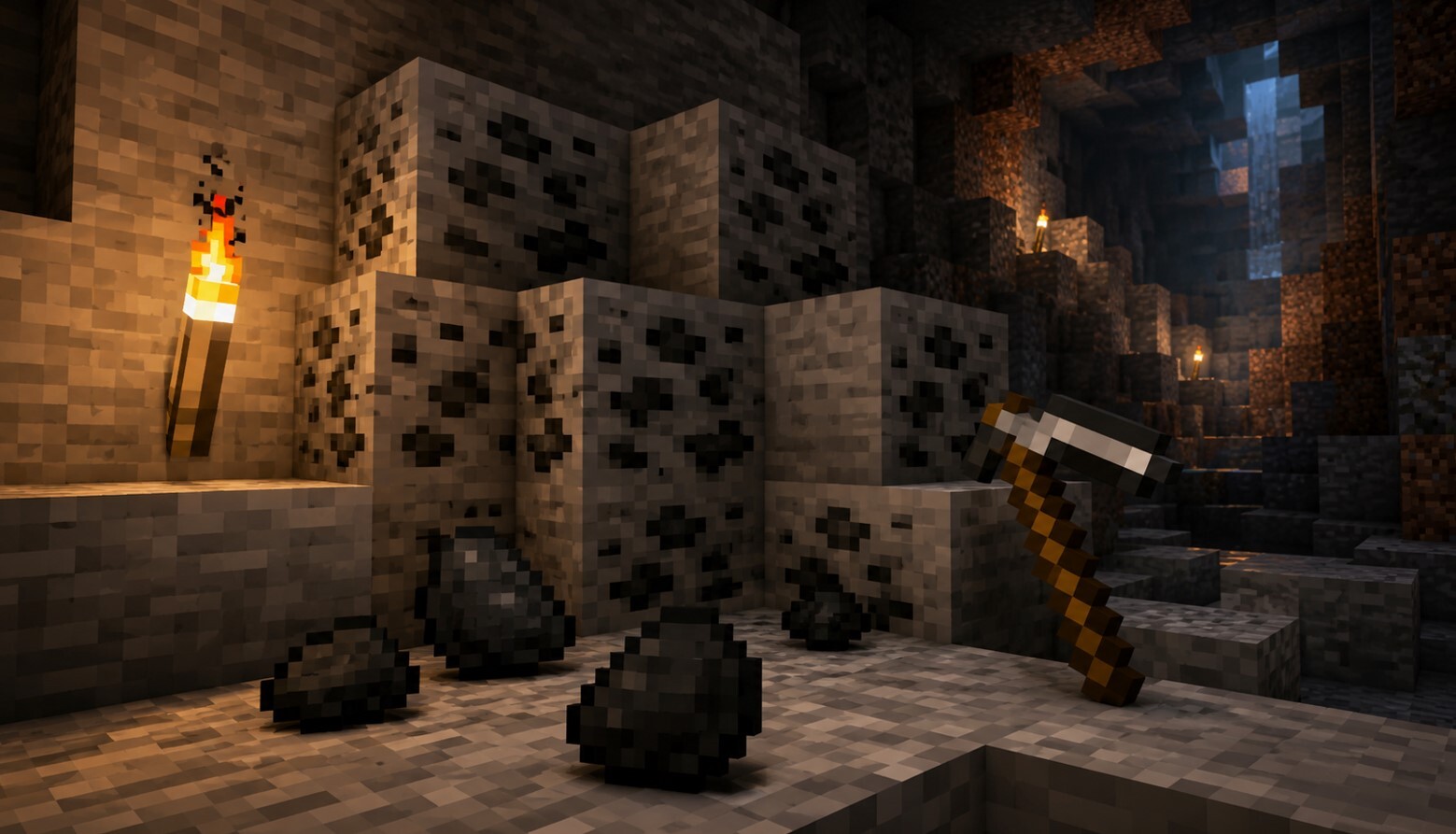
Let’s give it up for the unsung hero of every survival world. Minecraft coal. It’s not flashy like diamonds. It won’t make you netherite armor. But try surviving your first night without it – good luck. Coal is the block that quietly powers everything. Your furnace? Runs on it. Your torches that keep the creepers away? Made with it. That cozy campfire outside your starter dirt hut? Yep, coal again. It’s the OG ore, the first thing most players ever mine, and honestly it never stops being useful.
Here’s the thing though. Most players mine it wrong. They dig at bad Y levels, they follow cave walls instead of solid stone, and they leave a ton of coal on the table without even knowing it. So let me break down how this stuff actually works – the spawn levels, the drops, the trades, all of it.
Stick around. There’s more to this black rock than you’d think.
Where to Find Minecraft Coal?
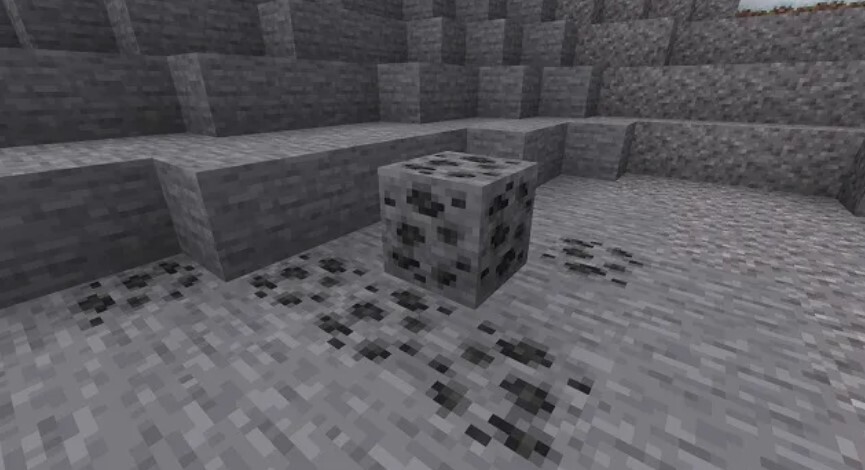
Good news first: coal is the most common ore in the game. It spawns across a massive range, roughly from Y=0 all the way up to Y=320. You’ll spot it in caves, on cliff faces, and especially plastered across mountainsides. It’s genuinely hard to avoid.
But “common” doesn’t mean “efficient.” If you want maximum coal per hour, the level matters.
Coal uses a two-batch generation system that’s been in place since the Caves & Cliffs update (1.18) and hasn’t changed through recent versions. Here’s the quick version:
- A triangular batch that spawns coal most densely around Y=95 to Y=96 and tapers off above and below.
- A uniform batch that spawns coal evenly from roughly Y=136 up to Y=320.
- The two overlap at Y=136, which is why that’s the statistical sweet spot.
At Y=136, you’re catching the tail end of the triangular batch and the full uniform batch at the same time. Double the sources, double the coal. If you’d rather not tunnel deep, Y=95 to Y=96 is still fantastic and lines up perfectly with mountain height.
Speaking of mountains – don’t sleep on them. Windswept Hills and Stony Peaks biomes are covered in exposed coal. No tunneling required, just walk up and mine. It’s the lazy player’s dream, and there’s zero shame in it.
The Air Exposure Trick Most Players Miss
Okay, here’s a genuinely useful bit that a lot of miners overlook. Since Minecraft 1.18, ores have what the community calls an “air exposure discard” mechanic.
What does that mean in plain English? When a coal vein generates right next to an air block – like a cave wall – there’s a chance those exposed blocks get skipped entirely during world generation. So the coal you’d expect to see on cave walls? Some of it never spawned in the first place.
The takeaway is simple but powerful. Branch mining through solid stone yields more coal than following open caves. Dig your own fresh 1×2 tunnels rather than trailing along cave systems if raw coal output is your goal. Experienced miners swear by this, and once you know it, you can’t unsee it.
Branch mine every couple of blocks for maximum exposure, and you’ll pull way more coal than the folks wandering cave walls hoping for the best.
How to Get the Most Minecraft Coal Per Block?
Mining coal is easy – it breaks with any pickaxe, even the humble wooden one. But if you want to squeeze more out of every block, enchantments are your friend.
Fortune is the big one. A Fortune III pickaxe can yield up to 4 coal per single ore block instead of the usual 1. Over a long strip-mining session, that adds up to a mountain of coal. If you’re planning to trade or craft coal blocks, Fortune pays for itself fast.
One heads-up though – if you want the ore block itself (say, for decoration), you’ll need Silk Touch instead. Fortune gives you raw coal; Silk Touch gives you the actual coal ore block. Can’t have both on one tool, so pick based on your goal.
And don’t forget coal isn’t only found by mining. Here are the other sources worth knowing:
- Wither Skeletons in Nether fortresses have a 1/3 chance to drop coal when killed.
- Chests in structures like mineshafts, dungeons, shipwrecks, igloos, and villages often hold coal.
- Villager trading – some villagers sell coal, and you can buy it if mining isn’t your thing.
What Can You Actually Do With Minecraft Coal?
This is where coal earns its keep. It’s woven into so many recipes you’ll be reaching for it constantly.
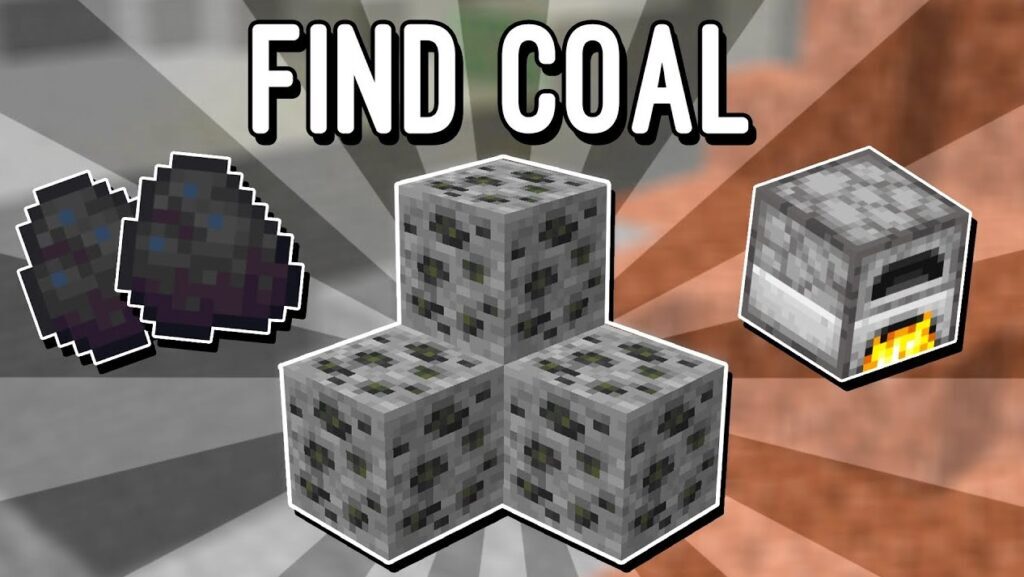
The obvious use is fuel. One piece of coal burns for 80 seconds in a furnace, smelting up to 8 items. That makes it one of the most efficient fuel sources in the game, way better than burning wood.
But here’s a pro move for big smelting operations. Craft 9 coal into a block of coal, and that single block smelts 80 items – the equivalent of 10 coal, not 9. So you’re literally getting free efficiency plus saving inventory space. For automatic farms and large-scale smelting, coal blocks are the way to go.
Beyond fuel, coal is a crafting staple:
| Recipe | What You Need | Result |
|---|---|---|
| Torch | 1 coal + 1 stick | 4 torches |
| Block of Coal | 9 coal | 1 block (smelts 80 items) |
| Campfire | 3 logs + 3 sticks + 1 coal | 1 campfire |
| Fire Charge | coal + gunpowder + blaze powder | 3 fire charges |
| Soul Torch | coal + stick + soul sand/soil | 4 soul torches |
There’s also a sneaky economic angle. Coal is tradable with villagers – armorer, toolsmith, and weaponsmith villagers will buy it for emeralds, roughly 15 to 24 coal per emerald depending on their level. In a big mining haul, that’s dozens of emeralds waiting to happen. Charcoal, by contrast, can’t be traded at all.
Minecraft Coal vs Charcoal: Which Should You Use?
Ah, the eternal beginner question. And it’s a good one, because these two look almost identical and do nearly the same job.
Here’s the honest breakdown. Both Minecraft coal and charcoal burn for exactly 80 seconds and smelt 8 items each. Identical fuel value. The difference is all in how you get them and what else they can do.
Charcoal is made by smelting any kind of wood log in a furnace. It’s renewable, safe to produce without ever entering a cave, and perfect for surviving those first few nights. But – and this is key – charcoal can’t be traded with villagers, can’t be crafted into a block, and won’t stack with coal in your inventory.
So what’s the smart play the community recommends? Use charcoal for your everyday torches and fuel, and save your mined coal for trading and coal blocks. Best of both worlds. You keep your emerald pipeline flowing while never running short on light. Simple.
FAQ
What’s the best Y level for Minecraft coal?
Y=136 is the statistical best, where two generation batches overlap. Y=95 to Y=96 is also excellent and matches mountain height.
Does Fortune work on coal?
Yes. A Fortune III pickaxe can drop up to 4 coal per ore block instead of 1, making it great for stocking up fast.
Why is there less coal on cave walls?
Since 1.18, ore blocks next to air can get skipped during generation. Branch mining through solid stone yields more coal.
Is coal or charcoal better?
They have identical fuel value. Coal can be traded and made into blocks; charcoal is renewable from wood but can’t be traded.
Can you trade coal with villagers?
Yes. Armorer, toolsmith, and weaponsmith villagers buy coal for emeralds, around 15 to 24 coal per emerald.
Where else can you find coal besides mining?
Wither Skeletons drop it at a 1/3 chance, and it appears in structure chests like mineshafts, shipwrecks, and villages.
Is a block of coal worth crafting?
For large-scale smelting, yes. A coal block smelts 80 items, which is more efficient than 9 loose coal and saves space.
Wrapping It Up
So there’s the full story on Minecraft coal. It might be the first ore you ever mine, but it stays essential from night one all the way through the endgame. Fuel, torches, campfires, emerald trades – this humble black rock does it all.
My honest advice? Mine at Y=136 or grab exposed coal off mountainsides, slap Fortune on your pickaxe once you can, and branch mine through solid stone instead of chasing cave walls. Save your coal for trading, lean on charcoal for daily torches, and you’ll never be caught in the dark again.
Coal’s easy to take for granted. But once you mine it smart, you’ll wonder how you ever played without a plan. Now go stock up – those furnaces won’t fuel themselves.
P.S. If this guide helped you mine smarter, throw us a little support – share the post across your socials and drop it into your bookmarks so it’s handy next time you’re deep in a mineshaft. Every share genuinely helps our team keep the guides coming. And if you’re after creative or commercial collaboration, reach out to the YaninaGames team directly – we’d love to hear from you.