How Do Indie Teams and AAA Dev Studios Fund Game Development Projects?
The indie success tales are something to be amazed at. From a single developer can come a genre-defying hit that he put together in his room on one PC. But there are countless others that we never hear about, disappearing into the abyss of obscurity. Similarly, AAA titles invest millions and sometimes redefine genre, and at other times flow spectacularly. Where’s the catch? The YaninaGames explains how to fund game development projects without losing precious time, nerves, and money.
iGaming Providers and Their Unique Formula for Funding Game Development
Larger providers in the iGaming sector fund game development projects through continuous cash flow from existing titles. Profits from one release are rolled straight into the next. Smaller studios rely on partnerships with casino platforms or aggregators to secure distribution and upfront fees. In many cases, those contracts work like silent investments: predictable, steady, and transactional.
Some of the best online casinos in the USA have to compete with the entire world, and here it’s all about the added features. Online casinos, if they wish to stay competitive, must invest in more than just games, balancing investment costs with revenue. Reputable casinos combine fast payouts in 24 hours with superior security, global reputable licensing, fair terms, and decent game selection (check the source – https://n4g.com/articles/online-casinos/). This may sound like a tough balancing act, but the bar in the industry is high and only the best can match, or even go over it.
Unlike indie creators chasing originality, iGaming developers focus on reliability. Every release must meet strict mathematical standards and jurisdictional rules. The money behind it is stable but conservative, built for function rather than surprise. It’s a different corner of the same industry, where creativity serves structure, not the other way around.
The Indie Route to Fund Game Development Projects
Government grants and small industry funds fill another corner of indie survival. In some regions, local authorities recognize game development as art or cultural export, offering modest sums to help cover production. It’s rarely enough to finish a project, but sometimes enough to get noticed by a small publisher willing to share the risk.
Early access sales blur the line between funding and the development process. Players buy unfinished versions, and their feedback shapes the next updates. It’s risky but strangely democratic. The studio gets a stream of cash, and players feel like part of the creative loop. When it works, both sides win. When it fails, it can bury a reputation.
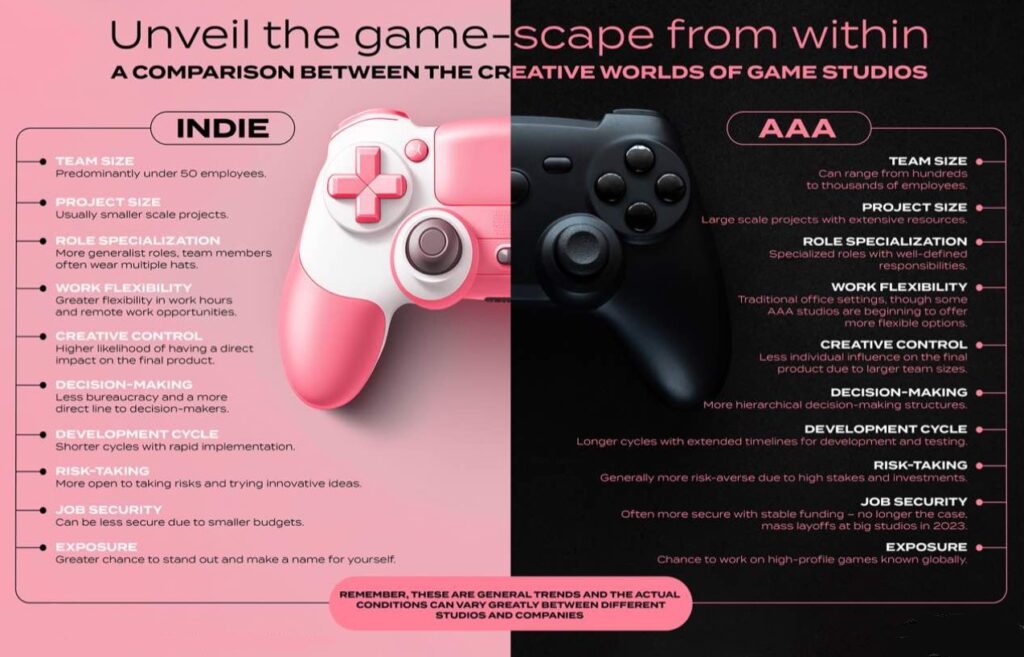
Most indie games cost under five hundred thousand dollars to make, but that number hides endless unpaid labor and compromises. People stretch budgets by skipping salaries, reusing assets, and cutting features. It’s survival through persistence. But still, all being said, it’s the indie developers that might save and rejuvenate the whole industry by themselves, with their creativity, vision, and drive.
The Big Studio Funding – Heavy Structure, Heavier Bills
At the top, big AAA game studios operate on another planet. Budgets rise into tens or even hundreds of millions. Marketing can double that. A new open-world title might take five years, hundreds of developers, use of complex technologies like UE5 engine and global coordination. Knowing how to fund game development project of that scale looks more like a corporate blueprint than a creative vision.
AAA game publishers need to handle the investment, often pulling from earlier profits or shareholder capital. They treat each release like a product line, complete with forecasted return on investment and risk mitigation. Financial departments decide timelines as much as creative directors do.
These companies rely on franchise ecosystems. Profits from one successful installment fund game development projects coming next. Cross-media licensing keeps revenue stable between launches. Preorders, exclusive deals with console makers, and merchandise partnerships add layers of financial insulation.
It’s an efficient system when it works, but it comes with chains. With hundreds of millions on the line, failure isn’t acceptable. Risk-taking becomes scarce. You’ll see safe sequels, familiar mechanics, and story templates reused to protect the bottom line. Creative decisions often bend toward what’s already been sold before.
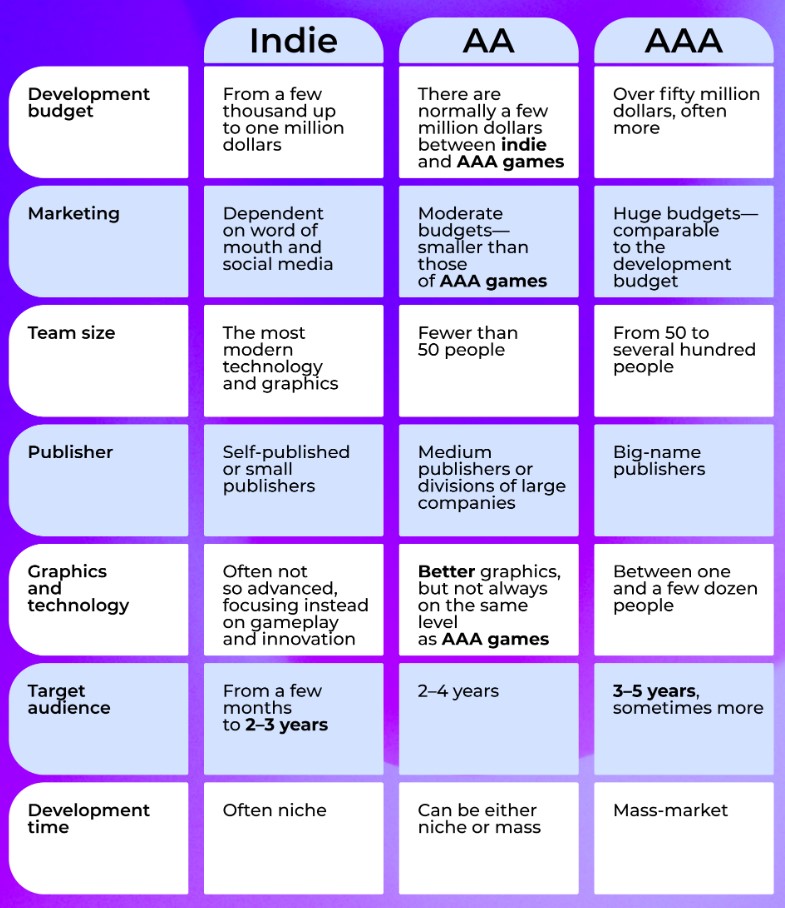
Still, that funding power fuels progress. AAA studios push technology forward: new engines, advanced physics, motion capture that borders on film production. The budgets keep growing because audiences now expect cinematic quality in every detail. It’s a cycle of ambition that feeds itself but costs a fortune to sustain.
The Middle Layer That Barely Survives – AA Game Funding
Between those two extremes sits the thin AA space, often overlooked. These studios are big enough to hire real teams but small enough to feel every financial shake. Their budgets range from a few million to maybe twenty million. They might partner with mid-tier publishers or strike distribution deals that trade creative freedom for financial safety, like with A Plague Tale: Innocence or Hellblade: Senua’s Sacrifice. Rarely do AA games get the credit they deserve, but should the perception of them change, the industry could blossom.
But that balance is fragile. Too big for crowdfunding, too small for massive investors, AA studios walk a narrow bridge when they fund game development projects. One delay or market dip can break the budget completely. Still, they’re vital for the industry because they show that mid-scale production can still deliver quality without excess.

Conclusion
One truth remains: money shapes art more than anyone wants to admit. Indie developers take personal risks for the sake of freedom. Big studios spend fortunes to maintain predictability. Funding a game is never just business. It’s belief, stubbornness, and sometimes blind hope that enough people will care when the screen finally lights up.
The YaninaGames can’t emphasize enough the importance of proper planning and using different sources to fund game development. Even if your budget is defined for a few years of development, it is still worth learning the basics of how to fund game development projects. Leave your feedback when sharing this post online – we humbly appreciate your support. Contact us for creative and commercial collaboration!