New Challenges for Game Testing and QA Specialists
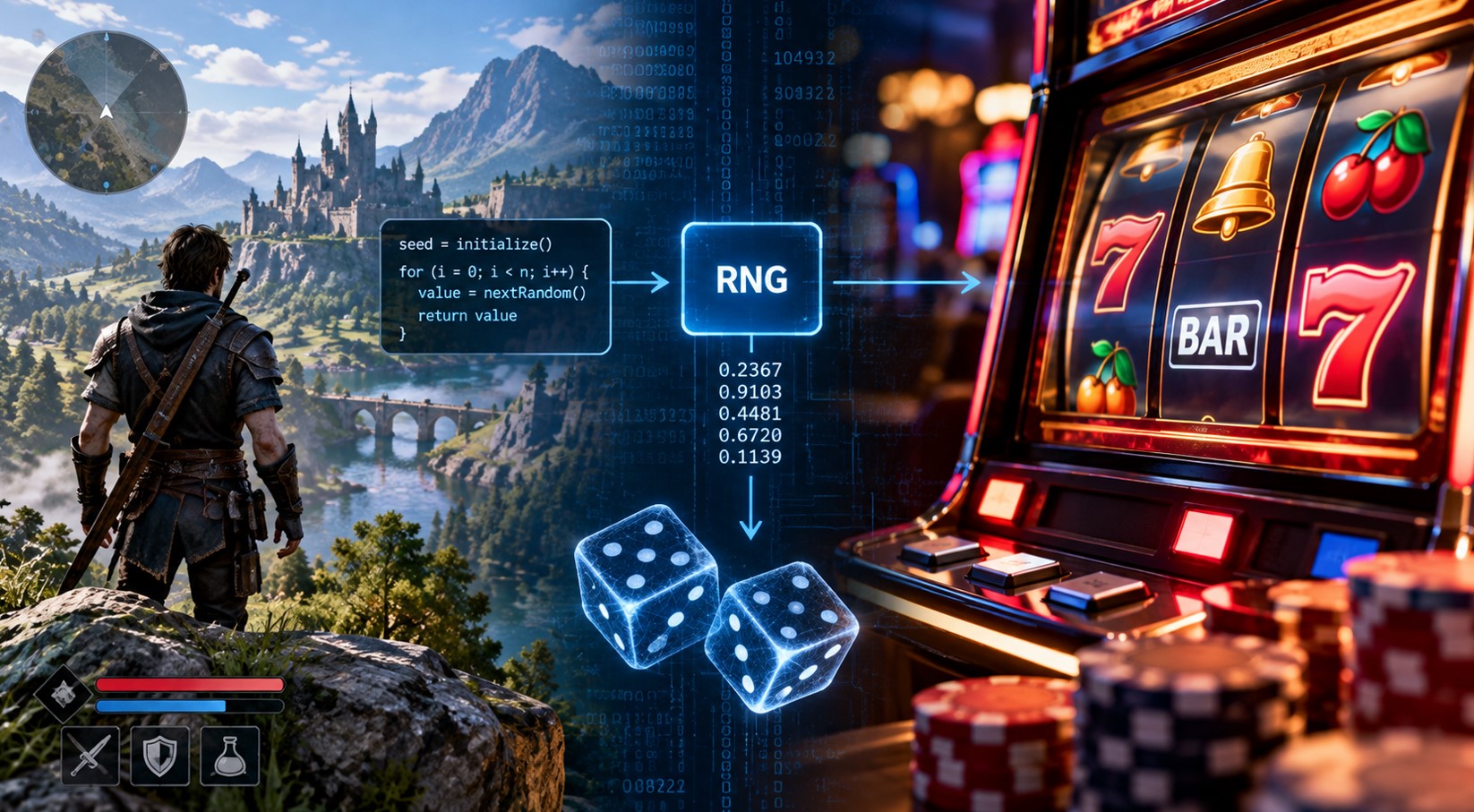
Modern games are driven by randomness. Probability is utilized in loot boxes, gacha pulls, critical hits, and matchmaking. This also renders them difficult to test. Normal QA assumes that the same input will yield the same output, but random systems do not. The game testing niche faces many new challenges, though.
Probability-driven systems in games like Genshin Impact do not provide the same results as they used to. A system may operate according to the rules and still be perceived as broken, unfair, or manipulated by players. If random bugs pass through testing, the damage extends beyond code problems. They may lead to money wastage, dissatisfied gamers, and mistrust.
The following text will be useful for QA engineers, game developers, and designers who have to deal with systems that are heavy in RNG. You will get a realistic picture of game testing. Understand better the common issues that come with verifying and safeguarding such probability-driven systems before the problems are noticed by the players.
Why Are Random Systems Especially Difficult in Game Testing?
Random systems are not in line with the way testers are accustomed to working. Most QA relies on certainty. You do something and anticipate a particular result in game testing. Random systems don’t. A test can be repeated many times and yield varying results, and all of them could be correct.
This is where perception becomes critical. A system can be mathematically sound and still feel unfair. Anyone who has spent time playing online pokies has experienced long dry streaks followed by sudden wins and patterns that feel suspicious even when they are not. Gamers tend to determine whether something is fair or not by their emotions rather than by the numbers. QA teams should consider this difference.

These systems are far more difficult to find bugs in. A bug, an edge case, or a simple misfortune may be an unusual outcome. It is complicated by such factors as random number settings, the condition of the player, timing, and changes in the server. The process of debugging becomes more of a guessing game than an answer.
The size of the system is the major challenge. Uncommon issues may not manifest in small tests but may manifest quickly when millions of people play the game. The issue is not only technical, then. The probability of game testing is not about the occurrence of a single failure but about the probability of a large number of failures occurring. It demonstrates that the system can be fair in the long run even though some outcomes may be unfair.
Importance of Trials in Game Testing
When we do game testing for projects involving chance, we have to carry out numerous experiments since small experiments do not often reveal what is happening.
In statistics, larger samples provide more accurate figures and reduce random errors. With an increase in sample size, results stabilize. This assists us in determining whether the design is in line with the chance outcomes.
As we do many thousands or millions of trials, the results are brought nearer to our expectations. That is according to the law of large numbers. It is important for systems that have random rewards, matchmaking, or loot. Equity is only realized when a large number of people are put to the test.
The fact that many simulations can be run also allows QA to identify large differences between actual and expected chances. Those disparities are concealed in small tests but become evident when numerous tests are performed. In the case of chance systems, large simulations are necessary.
Discovering Statistical Anomalies
Identification of statistical anomalies involves the identification of instances where random systems are not operating within expected boundaries. A little variation is healthy, but excessive variation or unjust variation is a sign of trouble.
Examinations such as chi-square compare the observed to the expected. In case of excessive differences, the test raises a red flag. This assists teams in distinguishing between normal chance and real bugs.
Control charts also help in game testing. They overplot outcomes with time to identify trends that are outside the norm. Such charts are used in quality control and provide early warnings. When combined, these tools allow QA to discover concealed issues prior to the players noticing them.
Automated Checks of Results
Automated checks allow the system to self-check when a large number of tests are done. Tools do numerous tests and compare them with what we expect instead of humans doing so.
Automation reduces human error and makes repeated testing feasible. Scripts can run continuously, providing rapid feedback and detecting regressions early in the development process. Notable changes that are particularly significant include changing loot tables, random number formulas, or matchmaking rules.
Property-based testing goes a step further to establish rules that ought to always be true. To ensure that those rules remain correct, the system makes numerous different inputs. The approach is effective in identifying edge cases that are not detected by normal test cases.
Automation does not eliminate human judgment, but it significantly increases the amount that can be tested and makes it consistent. It allows the QA to concentrate on the interpretation of the outcomes rather than conducting manual inspections.
Best Practices of Game Testing: Logging and Telemetry
Good logging and telemetry allow us to observe the behavior of probability-driven systems in gacha games based on chance in actual play, not in tests alone.
Important things such as random seeds, results, player state, and timing are recorded in clear logs. Telemetry collects such data on a large number of players to allow teams to analyze real-world trends with time.
This information is quite helpful to verify the assumptions made in testing. It demonstrates whether actual outcomes are equal to anticipated opportunities, which means that it is simpler to look into player grievances. In the absence of good telemetry, teams are usually forced to make guesses as to whether there is a real problem or merely a perception.
Combined with automatic alerts and dashboards, logging and telemetry transform probability testing into an ongoing task.

Game Testing of Chance Is Built on Trust
Game testing chance does not involve achieving ideal results. It establishes trust in information, trends and figures. Randomness does not seem dangerous when QA considers long-term trends rather than isolated results. Players feel that the game is fair even when they are not lucky, when it is done right.
Help boost our vision by sharing this post across your social media channels and saving it to your bookmarks for future reference. If you see a potential partnership on the horizon, reach out to the YaninaGames team directly to discuss creative or commercial collaboration opportunities.