
How Indie Game Dev Teams Use Unity 6 and UE5 Assets? Do you want to start creating another indie game hit like Hades or Stardew Valley? But what about the budget and cost-effective technologies? You have to think about this aspect first to prevent the indie game development stretching for years (we look at you, Hollow Knight: Silksong!). That is when the marketplace with pre-made Unity 6 and UE5 assets. These are secret weapons for any indie game dev startup. Epic’s marketplace dropped AAA-level assets that even an aspiring solo indie developer can use. The same is relevant for Unity 6 assets since 2024. Find out how to use Unity & Unreal Engine assets free download with maximum cost-effectiveness and benefits for you. Unity 6 Assets in Indie Game Dev – Where Budget Meets Brilliance Unity 6 is the most user-friendly engine that lets you slap together a mobile endless runner in a weekend or scale up to console bangers like Cuphead. The latest installment combined the best parts of previous versions, cranked the performance dial to 11, and sprinkled in features that scream “save my development time and cash”. Released in October 2024, Unity 6 engine is all about smarter workflows that play nice with assets, making your projects run silky smooth without guzzling resources. Core Features At the heart of it is the revamped Universal Render Pipeline (URP), optimized for mobile and lower-end rigs. As a result, you get better visuals at a fraction of the GPU cost – perfect if you’re targeting Android hordes or Switch ports. Assets The Asset Store is a treasure trove, packed with thousands of free and paid goodies from indie creators to professional gamedev studios. You can get Unity 6 assets for every project – from modular city builders for cyberpunk shooters or AI-driven NPC packs that script basic behaviors out of the box. Diving deeper, let’s talk specifics on asset types. Character assets in Unity 6 benefit hugely from the upgraded Humanoid rig system, which now supports blend trees for fluid combos without custom scripting. Snag a $15 melee fighter pack, and you’ve got idle-to-dodge transitions that rival God of War minis. For environments, the new GPU-driven rendering means foliage assets sway realistically on mid-range hardware – ideal for open-world indie gems where hand-crafting every leaf would bankrupt you. AI Tools In Unity 6, integration is smoother than ever thanks to enhanced AI tools and the new Entity Component System (ECS) upgrades. You can import a character model, rig it with a single-click animation retargeting, and have it pathfinding through your level without writing a line of code. Multiplayer’s Netcode If you want to add multiplayer features, then Unity 6’s Netcode for GameObjects got a glow-up. It is dead simple to synchronize the asset-heavy scenes across peers. Drop in a weapon skin pack, and your co-op battle royale feels premium without the server-side headaches. For cost-effectiveness, this means less time debugging netcode, more time polishing that sweet loot drop system. You can pair that with Unity 6’s WebGPU support for browser-based testing – upload an asset, playtest on any device, iterate fast. No need for pricey hardware farms. Collaboration The real cost-killer is Unity 6’s cloud build service lets remote teams share asset variants instantly, slashing travel or tool costs. It is possible to cut the dev cycle by 30% just by hot-swapping concept art assets in shared projects. It works like GitHub for your game world, but with drag-and-drop ease. In short, Unity 6’s asset ecosystem is a love letter to bootstrappers. It’s forgiving, flexible, and packed with features that multiply your dollars. UE5 Assets That Punch Above Their Price Tag Fortnite’s wild builds, The Matrix Awakens demo – Unreal Engine 5 really breaks the concept of how video games can look. UE5.6 is the current king of visual assets and technologies. This is achievable through Nanite’s virtual geometry and Lumen’s global illumination, making hyper-real assets a reality. Assets Unreal’s always skewed toward visuals that make jaws drop, and its assets reflect that. The Marketplace boasts pro-grade packs of assets – you can find photoscanned ruins or Niagara particle systems for explosive FX. Some UE5 assets are often free during monthly giveaways. Assets in Unreal also shine for VR/AR. Check their MetaHuman pack – hyper-real faces with emotion rigs. You can plug into UE5.6’s OpenXR support. No need for mocap rigs, since you can bake in expressions for your narrative adventure, saving thousands on animation contracts. Content Browser In UE5.6, the redesigned Content Browser is a game-changer for asset wrangling: smoother thumbnails, better organization, and seamless folder syncing that keeps your library from turning into a digital hoarder den. Out-Of-The-Box Power Cost-effectiveness here means leveraging Unreal’s out-of-the-box power to minimize custom work. Drop in a modular vehicle pack, and Chaos Physics handles the crashes with zero setup. For a racing game prototype, that’s weeks of simulation coding you just skipped. Multiplayer For multiplayer-heavy titles, UE5’s replication tools and the existing pipeline make asset syncing a breeze. Share a weapon model across clients, and it replicates behaviors flawlessly. Upcoming UE6 could amp this with Verse scripting enhancements, making custom asset logic as easy as Fortnite mods. Less code, fewer bugs, quicker ships. Audio Assets in UE5 Audio assets hook into Unreal’s MetaSounds for procedural tweaks. It is possible to layer a free weapon SFX pack with reverb nodes for arena-specific booms. Improved UI UE’s Coherent GT integration lets web-tech HUDs overlay your imported icons, scalable across resolutions. Collaboration Collaboration’s strong too, with Unreal’s source control tying assets to Perforce seamlessly. Remote teams version-control a castle pack, merge changes without overwrites. Indie game devs can halve their asset pipeline time this way, freeing budget for marketing. UE5 assets are about leverage – grab pro tools, tweak minimally, ship maximally. As UE6 looms with its anti-stutter architecture, it’ll make these packs even more potent, reducing dev cycles across the board. The Real Case – How Did Clash of Titans Use Unity 6

How to Fund Game Development – Indie Devs vs Big Teams
How Do Indie Teams and AAA Dev Studios Fund Game Development Projects? The indie success tales are something to be amazed at. From a single developer can come a genre-defying hit that he put together in his room on one PC. But there are countless others that we never hear about, disappearing into the abyss of obscurity. Similarly, AAA titles invest millions and sometimes redefine genre, and at other times flow spectacularly. Where’s the catch? The YaninaGames explains how to fund game development projects without losing precious time, nerves, and money. iGaming Providers and Their Unique Formula for Funding Game Development Larger providers in the iGaming sector fund game development projects through continuous cash flow from existing titles. Profits from one release are rolled straight into the next. Smaller studios rely on partnerships with casino platforms or aggregators to secure distribution and upfront fees. In many cases, those contracts work like silent investments: predictable, steady, and transactional. Some of the best online casinos in the USA have to compete with the entire world, and here it’s all about the added features. Online casinos, if they wish to stay competitive, must invest in more than just games, balancing investment costs with revenue. Reputable casinos combine fast payouts in 24 hours with superior security, global reputable licensing, fair terms, and decent game selection (check the source – https://n4g.com/articles/online-casinos/). This may sound like a tough balancing act, but the bar in the industry is high and only the best can match, or even go over it. Unlike indie creators chasing originality, iGaming developers focus on reliability. Every release must meet strict mathematical standards and jurisdictional rules. The money behind it is stable but conservative, built for function rather than surprise. It’s a different corner of the same industry, where creativity serves structure, not the other way around. The Indie Route to Fund Game Development Projects Government grants and small industry funds fill another corner of indie survival. In some regions, local authorities recognize game development as art or cultural export, offering modest sums to help cover production. It’s rarely enough to finish a project, but sometimes enough to get noticed by a small publisher willing to share the risk. Early access sales blur the line between funding and the development process. Players buy unfinished versions, and their feedback shapes the next updates. It’s risky but strangely democratic. The studio gets a stream of cash, and players feel like part of the creative loop. When it works, both sides win. When it fails, it can bury a reputation. Most indie games cost under five hundred thousand dollars to make, but that number hides endless unpaid labor and compromises. People stretch budgets by skipping salaries, reusing assets, and cutting features. It’s survival through persistence. But still, all being said, it’s the indie developers that might save and rejuvenate the whole industry by themselves, with their creativity, vision, and drive. The Big Studio Funding – Heavy Structure, Heavier Bills At the top, big AAA game studios operate on another planet. Budgets rise into tens or even hundreds of millions. Marketing can double that. A new open-world title might take five years, hundreds of developers, use of complex technologies like UE5 engine and global coordination. Knowing how to fund game development project of that scale looks more like a corporate blueprint than a creative vision. AAA game publishers need to handle the investment, often pulling from earlier profits or shareholder capital. They treat each release like a product line, complete with forecasted return on investment and risk mitigation. Financial departments decide timelines as much as creative directors do. These companies rely on franchise ecosystems. Profits from one successful installment fund game development projects coming next. Cross-media licensing keeps revenue stable between launches. Preorders, exclusive deals with console makers, and merchandise partnerships add layers of financial insulation. It’s an efficient system when it works, but it comes with chains. With hundreds of millions on the line, failure isn’t acceptable. Risk-taking becomes scarce. You’ll see safe sequels, familiar mechanics, and story templates reused to protect the bottom line. Creative decisions often bend toward what’s already been sold before. Still, that funding power fuels progress. AAA studios push technology forward: new engines, advanced physics, motion capture that borders on film production. The budgets keep growing because audiences now expect cinematic quality in every detail. It’s a cycle of ambition that feeds itself but costs a fortune to sustain. The Middle Layer That Barely Survives – AA Game Funding Between those two extremes sits the thin AA space, often overlooked. These studios are big enough to hire real teams but small enough to feel every financial shake. Their budgets range from a few million to maybe twenty million. They might partner with mid-tier publishers or strike distribution deals that trade creative freedom for financial safety, like with A Plague Tale: Innocence or Hellblade: Senua’s Sacrifice. Rarely do AA games get the credit they deserve, but should the perception of them change, the industry could blossom. But that balance is fragile. Too big for crowdfunding, too small for massive investors, AA studios walk a narrow bridge when they fund game development projects. One delay or market dip can break the budget completely. Still, they’re vital for the industry because they show that mid-scale production can still deliver quality without excess. Conclusion One truth remains: money shapes art more than anyone wants to admit. Indie developers take personal risks for the sake of freedom. Big studios spend fortunes to maintain predictability. Funding a game is never just business. It’s belief, stubbornness, and sometimes blind hope that enough people will care when the screen finally lights up. The YaninaGames can’t emphasize enough the importance of proper planning and using different sources to fund game development. Even if your budget is defined for a few years of development, it is still worth learning the basics of how to fund game development projects. Leave your feedback when sharing this post online – we humbly appreciate

Current Trends in Ukrainian Game Development
How Is Ukrainian Game Development Doing? For the last 10 years, software development in Ukraine has been evolving. The IT industry in Ukraine is not only growing, but is already moving towards the world market. Ukrainian game development also shows a high level of competition, technology-oriented, and great opportunities for international cooperation. In this case, it is worth reviewing closely those factors that affect the attraction of the Ukrainian IT environment, in particular, to the world market. The YaninaGames team continues to explore the perks of European game development, and Ukraine is a must-choose if you seek a quality/cost ratio. The Core of Ukrainian Game Development – Technological Infrastructure It’s one of Ukraine’s technological advantages. Places like Kyiv, Lviv, Kharkiv, Dnipro, and Odesa are technological hubs. Local IT companies actively develop their business due to high-speed Internet, modern offices and access to international markets. Meanwhile, state subsidies for digitalization and developing new technologies generate further incentives for FDI attraction and establishing startups. Educational Programs And Talent Development Ukraine is known for its strong technical staff. More than 200 thousand programmers, developers, engineers, and IT specialists are actively working in various market segments. A high level of STEM education, support for innovative educational programs, and English-language training of students allows for providing international projects with qualified specialists. Ukrainian universities and private educational initiatives actively cooperate with companies to train specialists in such areas as artificial intelligence, machine learning, cybersecurity, and corporate systems development. International Recognition and Investments Ukrainian IT companies do not step over the international ratings, awards, and high assessments of high software development quality. The country ranks in the top 20 of general offshoring according to A. T. Kearney Services Location Index (SLI) and became the offshoring destination of the year by GSA. And there are also companies that contribute to building the image of the local IT market and Ukrainian 2D/3D game development in particular. Such teams develop quality standards and attract investment to the industry. This is the very reason why Ukraine draws international corporations, startups, and investors searching for a trustworthy partner to grow their global projects. Active Startup Ecosystem It is a rapidly moving market in the Ukrainian startup space. Local companies are being funded by venture capital firms, going global, and releasing new products. Besides the active market of outsourced Ukrainian game development services, there are already many vibrant local start-ups in fintech, e-commerce, IT security, and medical technologies, among others. There is full reason to believe that if Ukrainian start-ups can do more outsourcing, with a mindset for global products. Implementation of Modern Technologies Artificial intelligence, blockchain, Internet of Things (IoT), Big Data, and other innovative technologies are widely used by the providers of Ukrainian game development services. This approach empowers organizations to deliver revolutionary new services that enhance business efficiency and unlock fresh revenue streams for customers. N-iX is one of those firms, and shares the full set of services available to help launch an AI initiative from development to execution: data analytics; business process automation; machine learning. Industry Expertise and Vertical Specialization Specific industries are the niche for many Ukrainian IT companies, including finance, retail, health care, telecommunication, and logistics. Verticalization makes it possible to understand the needs of the customer’s business category seriously, in order to deliver a product completely adjusted for them. This turns Ukrainian game developers not into executors, but into strategic partners in technology creation. Benefits of Cooperation With Ukrainian Game Development Teams Cooperation with Ukrainian game dev teams provides businesses with a number of important advantages that make them competitive in the global market. The main advantages include. Advantage Description High level of technical expertise Ukrainian developers have modern technologies and methodologies, including AI, ML, blockchain, and DevOps Flexibility and adaptability Companies quickly respond to market changes and customer needs, which allows them to implement projects effectively Competitive prices The ratio of price and quality of services makes Ukrainian companies attractive to international partners Support for international standards Most companies adhere to ISO certifications and Agile practices, which ensure the reliability and quality of projects Strong educational base and talented personnel Ukraine offers a large pool of qualified programmers ready to work on complex technical tasks Partnership and International Cooperation Ukrainian game development teams actively collaborate with international companies, providing outsourcing services, team scaling, and custom solutions development. The cooperation with foreign clients helps Ukrainian dev companies to share experience, prescribe best practices, and localize new technologies for various markets. Due to this, Ukraine becomes a predictable and trustworthy partner in software. Social And Infrastructure Factors In addition to technological advantages, Ukraine offers a favorable geographical location and a favorable time zone for European and American companies. Cities with developed infrastructure, convenient transportation, and access to international airports make cooperation fast and efficient. At the same time, the country is actively investing in the development of IT hubs and technology parks for the comfortable work of both local and international teams. Conclusion The Ukrainian game development scene in 2026 demonstrates a high level of development, innovation, and global recognition. A strong technical base, educational programs, an active startup ecosystem, international recognition, and flexibility of companies allow Ukraine to remain one of the leading software centers in the world. Most local IT companies and game dev studios actively support these processes by investing in education, technological projects, and international cooperation. Such an approach makes the Ukrainian IT scene even more competitive in the global market. Thanks to these factors, Ukraine continues to confirm its status as a reliable partner for international business and a promising market for innovative technologies.

Monitoring Game Dev Teams Without Killing Creativity
What Game Dev Teams Actually Need To See Each Day? Studios thrive when the build stays green, assets stay safe, and people can focus. That balance gets tricky once teams split across apartments, co-working rooms, and office pods. The answer is not blanket surveillance. The answer is clear work signals tied to game workflows – build health, branch activity, task flow, and time on toolchains – with fair guardrails. Done right, monitoring game dev teams reduces chaos: fewer broken branches, fewer last-minute fixes, faster bug triage, and a calmer cadence for animators, engineers, designers, and QA. The point is to protect the flow, not hover over it. Useful visibility in a studio looks like this: who is on which branch, which builds passed, where playtests crashed, and how much time disappears into tool waits or asset pulls. A lead wants to spot a red flag early – shader compile queues ballooning, Perforce syncs choking, a spike in crashes on a new mobile target – and act before a sprint derails. Raw keystroke logs say nothing about that. Practical tracking connects to the places work happens: engines (Unity, Unreal), version control (Perforce or Git LFS), CI, task boards, and playtest crash reports. When those signals surface in one view, managers steer, and contributors see how their work lands. To keep this honest and simple, many studios pair their pipeline dashboards with employee monitoring software that captures time on tools and apps at a light touch. The goal is not to police. The goal is to learn where hours vanish – long import times, flaky VPN sessions, duplicate exports – then fix the system. A designer noticing a two-hour daily wait on light bakes can flag it; a producer seeing test hours slide after 6 p.m. can shift priorities. When tracking feeds the craft instead of punishing it, morale rises and the build improves. Respecting Privacy While Tracking Work Signals Trust is the fuel that keeps a studio moving. Guardrails make that trust visible. First, define scope: work devices and work hours only. Second, state what is tracked and why: time on engines and DCC apps, task switch frequency, build and branch events, and crash telemetry. Third, give every staffer access to their own dashboard, so a level artist can spot context-switch traps or a programmer can see how much time goes to code reviews versus actual feature work. Turning the lights on should help people self-correct and advocate for better tools: Track work activity on studio devices and hours – never personal devices. Mask content – collect metadata such as app names and durations, not private text or screenshots. Publish a one-page policy and show individual dashboards by default. Set retention windows and purge schedules; store the least data needed. Run a quarterly review to adjust the scope with staff feedback. Protect Builds and IP Across Remote Machines Game assets are valuable, and hybrid setups widen the attack surface. Monitoring game dev teams earns its place when it helps stop leaks and accidental damage without ruining daily flow. Tie access events to your identity provider, log pull and push actions on big binary files, and alert on odd transfers – a 3 a.m. export of a full character set, a sudden sync of restricted branches, or an unapproved tool pulling raw audio packs. Pair that with workstation hygiene – OS updates on a schedule, encrypted drives, and a check that build tools run on patched versions. When the pipeline shows who changed what and when, rollback is quick and post-mortems are calm. Security also means safer delivery, especially when hiring new developers in game dev teams. If cloud builds push to external playtesters, require signed links that expire and watermark test sessions. For internal tests, route crash dumps to a shared inbox and tag by platform so fixes land in the right sprint. These steps sound ordinary, and that’s the point – basic discipline beats drama. With clean logs and clear access rules, teams move fast without risking spoilers, leaks, or corrupted branches that eat a week. Use Data To Fix Scope, Not Game Dev Teams Game dev teams burn out when bad scope meets silent bottlenecks. Monitoring game dev teams should expose the bottleneck, not blame the person stuck there. If animators spend hours waiting for retargeting, schedule a tools pass. If programmers lose mornings to slow CI, add runners or trim tests that don’t catch real bugs. If QA time shifts late into the night, adjust hand-off times so builds land earlier. A weekly review of time-on-tool plus build metrics often reveals small wins – caching textures in a closer region, pre-computing nav meshes, or splitting a monster scene into streams – that give back hours every sprint. Over a release, those hours become a real budget. Data also helps balance roles. Designers swamped with capture requests can hand them to a dedicated capture lead. Engineers pulled into support can rotate that duty with a clear cap. Artists pinged for micro-fixes can collect them and batch them. The scoreboard is the game, not the person: green builds, rising playtest minutes, steady task burndown, and fewer late-evening commits. A Clean Rollout Plan For Mid-Size Game Dev Teams Start with a pilot across one cross-functional slice – one feature team with engineering, design, art, audio, and QA. Publish the policy, switch on app-level time tracking, and connect the CI/build feed: In week one, check only two things: tool waits over 20 minutes and failed builds by cause. Fix the top three “killers”. In week two, enable individual dashboards so people can trim context switches and batch deep-work blocks. In week three, add asset access alerts focused on outliers rather than volume. Keep meetings of mid-sized game dev teams short: one 20-minute stand-up to scan metrics, then back to work. By week four, the pilot should show fewer broken builds, shorter waits, and steadier QA hours. Roll out to a second team, keep the same rules, and resist bloat. Monitoring game
Slovenian iGaming Scene of Casino Online Games
Where to Play Casino Online Games in Slovenia Offline? Slovenia has become an important stop for gamblers looking for high-stakes games and immersive resort experiences. The combination of historical locations and modern gaming technology gives it a unique appeal for international visitors. Many developers of casino online games relocate to this beautiful European country because there are many legal options for developing game software for both offline/web platforms. The great thing is that the online market continues to grow in Slovenia, giving players access to slots, live dealer tables, and sports betting from anywhere in the country. Many users compare licensed platforms and welcome bonuses through reliable review sources such as casinoonline.si before deciding where to play. Slovenian users can pick from offline venues and online casino sites to gamble legally. Let’s start with offline locations where you can also play casino online games: 1) Venue in Ljubljana Ljubljana, the capital city, offers an accessible entry point to the Slovenian gaming scene. While the venues are smaller than some international hubs, they focus on quality and a central location. The most prominent location where you can play casino online games and get the traditional gambling experience is Casino Rio Central. 2) Venue in Portorož Portorož, a notable coastal resort town, is recognized for its Mediterranean appeal and long history. Here, local gamblers and tourists can visit the oldest casino in Slovenia – The Grand Casino Portorož. 3) Venue in Nova Gorica Nova Gorica, situated on the border with Italy, is a major European center for casino entertainment. Perla Resort is one of the country’s largest casino and entertainment centers in Europe. They work 24/7 with extensive gaming choices, including casino online games like poker and roulette. 4) Venue in Bled Bled, famous for its lake and castle, offers a combination of natural beauty and leisure. The casino here provides an opportunity to pair the tranquility of the Julian Alps with casino entertainment. One of its famous gambling locations is Casino Bled at Hotel Park, with a long history since 1927. The Digital Landscape of Slovenian Casinos Although the brick-and-mortar casinos of the country, frequented by cross-border tourists, are well-established, the domestic online casino market is highly regulated and has traditionally been dominated by state-owned companies. This leaves the local players with a choice of international licensed operators to have more variety, superior bonuses, and an easier experience. According to the provisions of the Law on Gambling (Zakon o igrah na sreco), only the companies that have a license to operate physical casinos or the traditional lottery games (such as Loterija Slovenije and Sportna Loterija) may seek an online license. Due to this reason, the list of officially licensed Slovenian online casinos is extremely short. The two state-owned monopolies on classic gambling and sports betting have been Loterija Slovenije and Sportna Loterija, which are the main providers of fully compliant domestic online services. A large number of Slovenian players thus tend to gravitate towards the large European online casinos that are licensed by credible bodies like the Malta Gaming Authority (MGA) or the Government of Curaacao. These foreign licensed locations are completely open and have numerous choices, such as thousands of slots, extensive live casino areas, and bigger welcome bonuses. Among the most popular casinos in Slovenia that offer a great number of online slots, one can single out MegaPari, 22Bet, BetLabel, and so on. These sites appeal to players due to their various libraries, favorable chances of sports betting (which is highly popular), and the ease of playing them via mobile. Casino Online Games that Slovenian Gamers Like The Most The situation in the online casino market of Slovenia, where licensed local casinos are combined with popular international web-based platforms, demonstrates that Slovenian players are fond of a range of casino online games. Slot Machines (Reze/Igralni avtomati) The most popular type of casino online games is slots. They are entertaining, feature numerous themes, and offer big jackpots. They are simple to play and require no prior experience, and are thus attractive to a large number of people. Games such as the traditional slot games and the latest video games with high graphics and numerous bonus games. Popular titles that Slovenian players frequently refer to and are common in Europe are: Book of Dead. Gates of Olympus. Divine Fortune. Classic Table and Live Dealer Games The traditional table games and particularly those played with live dealers come right after slots. Live dealer games are becoming popular because people desire a more realistic and interactive experience. These games are broadcast live and have professional dealers: Blackjack. It is popular since it combines both luck and skill. It is a classic game because it has a low house advantage to competent players. Roulette (Ruleta). Live Roulette, in particular that makes the spinning wheel and a variety of betting choices exciting. Preferably, European Roulette is used with a lower house edge. Poker. Competitive poker tournaments (such as Texas Hold’em and Omaha) are also popular, as well as casino-style table games (such as Three Card Poker), and attract both serious and casual players. Other Interesting Categories of Casino Online Games Crash and Mine Games. The new high-action games, such as Aviator, are gaining popularity among tech-savvy players, particularly younger men. Progressive Jackpots. This type of casino online game accumulates significant amounts of prize money and is one of the biggest draws in all genres, particularly slots, as it provides players with the opportunity to win life-altering amounts. Slovenian online gamers are fond of the excitement and the simplicity of online slots, but they are also fond of the strategic nature of the classic table games like Blackjack and Roulette, particularly when played with Live Dealers. Conclusion The gaming industry in Slovenia is two-sided. It has managed to incorporate its conventional land-based casinos into its national tourism plan as it grapples with the dynamics of the new online market. The local online environment is still state-owned, but the necessity to have a greater choice of

Basics of Digital Privacy for Gamers and Devs
Digital Privacy for Gamers is As Important As Ever in 2026 Gaming is more connected than ever. From multiplayer battles and livestreams to in-game purchases and personal profiles, players are sharing more than just gameplay. They’re sharing pieces of their digital identity. Hackers, advertisers, and even other players see your personal data as valuable. No matter if you are using a console, mobile, or PC, every click, login, and message adds to a growing digital footprint. That is why we’ve gathered the basics of digital privacy for gamers and devs in 2025-2026 so you could protect your personal, creative, and commercial data from prying eyes. Digital Privacy for Gamers – Start From KYC and Data Collection Most modern games and platforms collect many data. It’s not just usernames and scores. We’re talking real names, email addresses, device details, IP location, payment info, chat logs, and even how often you log in and what games you play. Some apps can even track what other software is installed on your device, supposedly for “compatibility” or “anti-cheat” reasons. And yes, a lot of this data is used to recommend new games, improve service, or offer discounts. But it’s also often shared with third-party advertisers, data analytics firms, and other unknown players behind the scenes. So the baseline of digital privacy for gamers – filter sources of data accurately. Even platforms with solid reputations can get caught in data leaks. And that makes you a target, especially when money’s involved, like in iGaming. Fortunately, you can find no KYC casino sites, where you can play without linking sensitive financial details or going through identity checks. Many gamers turn to these platforms that use decentralized systems like blockchain and cryptocurrencies for the added privacy layer they provide, reducing the personal info that’s typically required when signing up. Not only is privacy secured, but transactions and games are transparent and fair. Your Gaming Account is a Goldmine for Hackers You may not think your account is worth much, but hackers see it differently. Some games let you earn or buy skins, weapons, or rare items. Other accounts are packed with personal data and payment info. To cybercriminals, that’s a digital jackpot. When a hacker accesses your account, he or she can purchase items using your associated credit cards and digital wallets. They are also able to steal your email address, password, and real name to initiate more attacks that are serious attacks. In case a hacker bullies other people with the help of your profile, you might be banned or reported. Even your Steam, Discord, and Netflix accounts can be at risk due to a leakage of a gaming site that you have never even signed up to, and you end up using the same password across multiple locations. Digital Privacy for Gamers – Overexposing is Dangerous! Most gamers use their real names, dates of birth, or hometowns as usernames or chat. This may not appear dangerous. However, it can be dangerous, particularly when the surroundings are hostile or competitive. You might believe that you are playing online only, but harassment can occur even in real life. The following pitfalls should be avoided when setting up digital privacy for gamers and devs: Doxing – when a person publishes your personal data on the Internet. Swatting – when a person calls the police to your house by claiming a fake emergency. Stalking and threats – they occur more frequently than one may imagine, particularly in high-stakes games or online feuds. When your social media and gaming accounts are connected, or when you use the same name across all platforms, it is not difficult to find out who you are in the real world. And gamers know it. Nearly 9 out of 10 players say they’d rather have full control over their in-game identity than let platforms adjust it based on personal data. But saying it and doing something about it aren’t the same. Default digital privacy for gamers and devs is not an option. Customize the default privacy settings, untouched or overshare without noticing. Even something as simple as linking your real photo, tagging your location, or using the same handle across multiple platforms can make you easy to find. Gaming Platforms Aren’t Built With Digital Privacy for Gamers Most gamers skip the Terms of Service and click “Accept.” But that’s where platforms bury details about how much data they collect, how long they store it, and who they share it with. Even major companies have faced lawsuits over poor data protection, especially when it comes to users. Many games also use default private settings (check your Fortnite’s and Roblox’ privacy settings every few days!), where everyone can see when you’re online, friends lists are open, chat logs are saved, and matchmaking history is viewable. It’s designed to make games more social, but it makes them less secure. New Tech Means New Threats Modern games use more than just buttons and joysticks. AR (augmented reality), GPS tracking, and voice chat are now standard in many games, especially on mobile. But that brings new risks in terms of location tracking, voice recording, and camera access. Even innocent features can be used for stalking, phishing, or data farming. Keep this in mind when setting the digital privacy options. Conclusion Gaming is supposed to be fun, immersive, and social. But when your personal data is exposed, it stops being just a game. Every friend request, download, or chat message is a potential privacy risk if you’re not paying attention. That is why digital privacy for gamers and devs remains essential. The good news is that staying safe doesn’t require expert skills. You just need to develop smart habits. Make sure to use strong passwords, turn on two-factor authentication, limit personal info, and review your privacy settings often. Additionally, be mindful of downloads, links, and how you pay. The more control you take over your digital identity, the more freedom you have to enjoy the game without worry. If you

iGaming Trends in 2025-2026 – Level Up or Wipe Out
Implementing New iGaming Trends for Successful Casino Game Development The global iGaming industry is experiencing steady growth, and it is not surprising. Potential customers, increased revenue, and new opportunities accompany the latest market entry and iGaming trends. That is why operators try to ensure successful and hassle-free expansion to as many new countries as possible. But, as much as the advantages of scaling are evident, there are challenges during the expansion for an iGaming studio. To enter this market without any difficulties and have an opportunity to act according to the rules of the country, it is better to cooperate with a software provider that is not rigid and can be adjusted to the rules of different countries. Companies like Soft2bet show how to follow the latest trends in iGaming and implement them successfully. The YaninaGames shows in detail how to thrive in the iGaming space, which tech stack to choose, and the methods of its implementation. The days of simple HTML5 slots are fading faster than a character with permadeath. The new mandate is Immersive, Intelligent, and Interconnected. Here’s the breakdown of the major trends in iGaming that are about to drop. AI Is Not Just an iGaming Trend but an Engine for iGaming Devs AI is more than a buzzword. It is an essential component of all in 2026, and casino game development is not an exception. It is not only about providing the virtual dealer with a more convincing poker face, but it is also about transforming the entire experience: 1) Customized Gameplay Game over with generic promotions. AI can examine the duration of the player, the risk preference, the frequency of bonuses, and even the emotions of the player in the game. The outcome is games that are adjusted to accommodate each player by changing difficulty and numbers. When a player prefers to grind, he/she receive a less risky game. When a high-roller desires a big thrill, he/she get a more risky game. As you play the game, it becomes different. It is the most appropriate way to place the customer first. 2) Responsible Gaming Guardian This is an obligatory component of AI. The “red flags” that are monitored by smart systems include an unexpectedly large deposit, massive alterations in the way a player plays or extremely lengthy sessions. Following this iGaming trend allows operators to intervene promptly with automatic assistance, such as a temporary deposit limit or a mandatory break. The future of AI-enabled and responsible iGaming trends in 2026 does not necessarily involve adherence to rules but rather ensuring the safety and reliability of players. 3) Content Generation It is possible to build an AI-powered tool that can create thousands of new slot backgrounds, symbols, and sounds, all with a simple prompt based on popular art styles. Overgrowing the term “iGaming trends”, AI assists in generating such assets within a short time, but they require human editing. It spares much time on reskins and theme swaps, and allows studios to work on the fundamental gameplay. The AR/VR/Metaverse Gambit Look, the Metaverse isn’t just a fad – it’s the ultimate endgame for experiential iGaming development. Traditional screens simply can’t compete with the sense of presence that VR/AR offers: Social VR Casinos. This is where the magic happens. Players aren’t just looking at a digital table. They are avatars sitting across from each other. They can converse (via voice chat), exchange digital high-fives, and even see other player avatars celebrate a win across the virtual floor. Developers are using WebGL and advanced 3D engines (like the ones powering VR AAA games) to build digital twins of iconic casino venues, offering a fully interactive, explorable experience. It’s the MMO version of the casino floor. AR Overlay for Mobile. Don’t have a headset? No worries. Augmented Reality is making casino games a mixed-reality experience. Picture this: you point your phone camera at your kitchen table, and a holographic Blackjack table pops up right there. You physically place your virtual chips on your real table. This blend of the digital and physical is a massive differentiator for mobile, which is still the king of player volume. Web3 Integration. This isn’t just about using crypto to bet (though that’s a given). It’s about player ownership. NFTs as unique collectible game assets (like a special virtual poker chip set or a limited-edition slot background), and potentially tokenized loyalty programs that allow players to earn, trade, or spend their loyalty points across different gaming ecosystems. This turns a loyalty program from a simple discount system into a portable, tradeable digital identity. Gamification Goes Core – Not Slots But RPG For too long, gamification in iGaming meant “add a leaderboard”. By 2026, the lines between a casino game and a full-fledged video game will be practically erased. The next generation of slots and table games will introduce elements where player skill actually matters. It is one of the rising iGaming trends. Think quick-time events, puzzle-solving mini-games during a bonus round, or even simple shooting gallery mechanics to determine a multiplier. This appeals directly to the core gaming audience that demands agency and an element of personal input beyond just hitting “Spin”. Also, developers are ditching simple loyalty tiers for full-blown Battle Passes, Quest Logs, and Loot Boxes (with transparent, regulated odds, of course). Players are driven by the chase for cosmetic rewards and status. Think achievement badges, customizable avatars, special in-game titles, and unique lobby access – all tied to a deep, compelling progression system that mimics the addictiveness of a great MMO. The “bet with streamer” feature is becoming a core mechanic. Platforms are now enabling real-time integration where viewers can synchronize their bets with their favorite streamer/creator who is playing. This convergence of entertainment, community, and betting is a huge loyalty driver and a new content creation category. Trust the Process The biggest iGaming trend, the one that underpins all others, is Trust. As technology gets more complex (AI, Blockchain, VR), the players’ need for transparency and fairness increases tenfold.

Retro Arcade Vibes in Modern Casino Games
Modern Casino Games Can Catch Arcade Gambling Vibes Surprisingly Well If you are old enough, then you probably remember that electric buzz in the dim-lit arcade of the 1970s and 1980s? Quarters clinking into slots, screens flickering with pixelated chaos, and a friend hogging the machine for hours while chasing a high score just for another free game round or some cheap prize. It wasn’t just skill – it was a dance with chance, just like in a real casino, but without the pressure of losing money. And what do we have right now? Even “free-to-play” games have loot boxes, battle passes, and gacha pulls. The situation with casino slots is even worse since most game developers try to make them as money-pulling as possible. However, there is a solution among modern casino games – sweepstakes. When you choose a sweepstakes casino from SportsbookReview.com, you have to understand the origins of these particular slots. How Did Atari and Sega Turn Arcades into Gamers’ Havens? Atari’s Golden Era of Arcade Hits Just imagine – it’s 1972, and Atari drops Pong—the OG that turned bars into battlegrounds. But even then, the real gambling essence was about side bets. Arcades weren’t sterile e-sports arenas. They were like smoky dens where high scores meant bragging rights and prizes. Atari’s early blockbusters like Computer Space (1971, their first coin-op) had that unpredictable enemy spawn RNG (Random Number Generator). That RNG could wipe you out mid-run, mimicking a bad hand at poker. Devs didn’t call it gambling, but players felt a similar adrenaline rush. By the late 1970s, Atari was cranking out bangers like Breakout (1976), where the ball’s wild bounces added a layer of “what if” element. Back in the day, arcades often ran sweepstakes-style contests: rack up 10,000 points, enter a drawing for a free token or a gadget. No purchase was necessary besides the initial quarter, and you have a legal, thrilling gambling-like experience. Only one tab of the arcade machine showed prize incentives, boosting playtime by 40%. Atari nailed the balance we can rarely see in modern casino games. Sega’s Next Step in Retro Arcade Boom Sega boosted 2D game development of their arcade machines in the 1980s. For example, take Zaxxon (1982), their isometric flyer that had you dodging randomly generated laser traps. That pseudo-3D game meant every run was a gambling session – would the enemy fleet spawn in your blind spot? Sega arcades leaned hard into such mechanics with “skill prize” – nail a combo, win a sticker or keychain via a ticket dispenser. It looks a lot like modern casino games, a sort of lite sweepstakes version. Or check Frogger (1981, Konami’s original game, but Sega distributed it in the US), where log timings were pure timing, with river placements. The RNG of this game resulted in adaptive plays that echoed blackjack’s hit-or-stand mechanics. These titles weren’t ordinary arcade machines, but they borrowed their psychology: variable rewards, near-misses, escalation. Just like modern casino games, sweepstakes are included. A 1985 arcade report pegged an average player spend at $5-10 per session, hooked by that “one more try” loop. Sega’s Out Run (1986) took its road-rally style – random weather changes mid-race could tank your run, but chaining perfect drifts scored bonus multipliers. Modern game developers should take the retro arcade lesson: it’s not about making players lose. Instead, it’s about the mysterious “what’s next?” element that turns casuals into quarter-vacuums. Check the following table with classic arcade mechanics if you want to find or build modern casino games, sweepstakes slots in particular. Classic Arcade Mechanics Atari’s Game Example Sega’s Game Example Chance Element Prize Tie-In (Sweeps) Random Enemy Spawns Asteroids (1979) Zaxxon (1982) RNG for pathing High score sweepstakes for free plays Variable Power-Ups Tempest (1981) After Burner (1987) The skill mitigates luck Ticket redemption for merchandise Escalating Multipliers Breakout (1976) Out Run (1986) Player choice Contest entries for consoles Near-Miss Feedback Missile Command (1980) Space Harrier (1985) Visual/audio cues Random draws from leaderboards These old-school tricks layered chance without full-on betting mechanics. Game devs back then iterated fast – Atari’s Al Alcorn tweaked Pong physics for “fair” unpredictability. It’s a blueprint for today: use retro games for inspiration, but do not copy-paste. The Twist in Modern Casino Games – Sweepstakes as Gamers’ New Legal Loot Crate Yes, nostalgia’s fun, but we’re not installing those retro emulators just for fun. Modern casino games and video titles face ESRB ratings, loot box bans in Belgium and the Netherlands, and Apple’s 30% cut drama. Here is when you can appeal to classic sweepstakes slots. There are promotional giveaways where winners are picked by chance, no skill required, and entries are free (optional). It’s gambling without risks, but with the chance of Sweepstakes slots are a lot like classic McDonald’s Monopoly, but in pixels. The FTC’s got your back with rules: disclose odds, no purchase to enter (NPT), and cap entries fairly. Sweepstakes let game developers mimic slots or roulette without any illegal background. You can make them as a classic battle royale where eliminations drop “fate cards” —draw one for a random airdrop, or enter a post-match sweep with real prizes like Steam codes. It’s the same Atari high-score vibe, digitized. Developers of Fortnite from Epic Games have already flirted with this sweepstakes mechanics and old arcade vibes via V-Bucks giveaways. You can deepen such mechanics by delivering structured sweepstakes slots. Start with hybrid systems where the player’s skill gates the entry, and chance flavors the reward. In an RPG like Genshin Impact (which has gacha mechanics polished with sweepstakes), daily quests unlock “luck spins” for cosmetic prizes. There is no cash buy-in – instead, we have alternative entries via mail-in or social shares. Tools like Unity’s RandomRange or Godot’s dice rollers can handle the backend RNG. But adding a layer of transparency is essential to show seed values or audit logs to build trust among players. Pros of Modern Casino Games and Sweepstakes Slots: High Retention. In-game rewards are
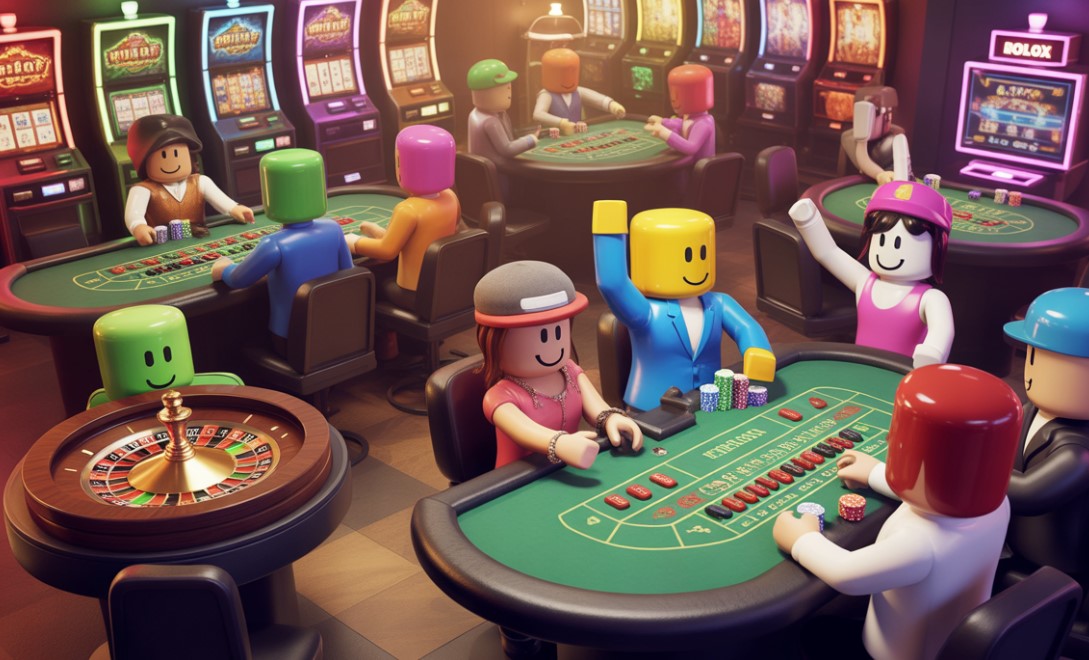
Explaining Poker and Blackjack Games in Roblox
Can You Play Casino Games in Roblox? Something has been blowing up in the Roblox community lately – casino games. Yes, there is an interesting issue at this point. While your little cousin or sibling might be building rainbow pyramids, there’s a whole underground scene of poker tables and blackjack dealers operating in Roblox right under everyone’s noses. But before you freak out about kids gambling their (or yours) Robux, let’s break down what’s actually happening here. The YaninaGames explains how casino games in Roblox work, what their gambling rules are, and why developers are surprisingly stoked about building these experiences. So, can you play casino games in Roblox? Here’s the straight answer – no, you can’t gamble for real money or anything with actual value on Roblox. The platform is clear about direct gambling in its Terms of Service. Roblox absolutely prohibits gambling, where players can win or lose Robux (their premium currency you can trade) or any items that have real-world value. But if Roblox game developers use the principles of crypto casinos, then there is a legal loophole for adult users to gamble within this platform. This anti-gambling policy makes total sense, considering Roblox has millions of players under 18. And the company definitely doesn’t want to deal with the legal nightmare that would create. But simulated gambling games are totally cool. Think of it like playing poker with your friends using chips that don’t represent actual money. Players can learn new mechanics while having fun and without losing actual money. It can be safer than playing any gacha game, where even adult players can’t control their urges to spend real money sometimes. Do’s and Don’ts in Casino Roblox Games The line Roblox draws is pretty straightforward. Developers can create poker and blackjack games that use: Free in-game currency that has zero real-world value. Play “fake” money that can’t be converted to Robux. Practice chips that reset regularly or are given out freely. What you, as a gamer and developer, absolutely can’t do in casino games of Roblox: Let players bet Robux on the game’s outcomes. Create systems where Limited items can be wagered. Build any mechanism that converts winnings into real money. Implement any third-party gambling systems. Roblox Developers Can Actually Build Legit (And Fun) Casino Games Creating a poker or blackjack game with Roblox’s rules isn’t rocket science, but it does require some smart design choices. Developers have gotten pretty creative about building engaging casino games in Roblox without crossing into actual gambling territory. The key is making your in-game currency completely disconnected from anything of real value. Most successful Roblox casino games give players a daily allowance of chips – maybe 10,000 chips every 24 hours. You can play all you want, win big, lose everything, and then come back tomorrow for more. There’s no pressure, no real stakes, just the fun of the game. Some devs have even implemented loyalty systems where consistent players earn cosmetic rewards – fancy card skins, dealer outfits, or VIP table access. These rewards don’t affect gameplay but give players something to work toward without creating a pay-to-win scenario. The Actual Casino Games in Roblox You Can Play Right Now The Roblox platform has some surprisingly polished casino games and communities if you know where to look. These games typically feature multiple table games beyond just poker and blackjack. You might find roulette wheels, slot machines (again, for fun money only), and even craps tables. Roblox developers have put serious work into creating authentic casino atmospheres with ambient music, dealer NPCs that actually feel alive, and social spaces where players can hang out between hands. Some of top Roblox casino games and gambling platforms in 2025 are: Rob The Casino Obby! The most visited Roblox casino-themed game with millions of plays. It features challenges and casino-style gameplay. Casino Simulator Tycoon. A popular casino simulation game with strategies around building and managing casinos. Da Casino. Another engaging Roblox game in Da Hood verse with casino elements. BloxEmpire. A famous gambling website offering Crash, Cases, Towers, Roulette, Mines, Ludo, Stairs, and more PvP casino games for Roblox users, with a strong community. High Rollers Casino. A casino game focusing on popular gambling modes suited for Roblox players 21+. There are also various card mini-games within Roblox – e.g., Hitman Card Game and Card Battles – modeled after traditional casino card games. What’s wild is how some of these games have evolved. Adult players form high-roller clubs, organize tournaments with bragging rights on the line, and even develop betting strategies just like they would in real poker rooms. The competitive scene in Roblox is totally legit, even without actual money involved. What Does the Roblox Community Think About Casino Games in Roblox? What makes Roblox casino games surprisingly sticky isn’t just the card mechanics – it’s their social element. Players aren’t just grinding chips alone. They’re hanging out at virtual tables, chatting with friends, and building communities around these games. Some of the best casino games in Roblox have integrated social features that rival online social casino apps. You can friend other players, join crews or clubs, customize your avatar with casino-themed accessories, and even host private tables where only invited players can join. The social dynamics get fascinating. Players develop reputations as aggressive bettors or cautious players. High rollers (in fake chips) become celebrities within their game communities. Some players even successfully stream their gambling sessions from Roblox casino games, acting like they’re at the World Series of Poker. Monetization in Roblox Games Without Breaking the Rules Here’s a tricky question – how do developers make money from these games without violating Roblox’s gambling policies? The answer is similar to how free-to-play games monetize: cosmetics and convenience. Developers can sell cosmetic items, such as custom card backs, unique table themes, or avatar accessories. Some casino games in Roblox offer VIP passes that give players access to exclusive lounges or faster chip regeneration (though not more chips overall). The key

Top Real Money Slots With Minimal Deposit
Picking the Best Real Money Slots with Minimal Deposit in 2025 For many budget-minded players, the common question is “Where can I play real money slots with minimal deposit?” The good news is that several reputable, U.S.-friendly casinos now let you enjoy real money slots without a big upfront cost. These platforms clearly list their banking details and minimum deposit amounts, with the lowest entry points typically available through Lightning Bitcoin. We reviewed the official banking pages and promotions of several casinos to verify their current minimum deposits and slot features. Below is a detailed review of our best picks for 2025, including their bonuses, banking methods, and slot variety. Sloto Cash Casino Sloto Cash leads with one of the lowest minimum deposits of just $5 via Lightning Bitcoin. This small entry point gives players immediate access to a large portfolio of over 400 real-money games, most of which are slots. The site operates entirely on an instant-play interface, eliminating the need to download any software. It is also mobile-optimized, making it easy to use on the go. For new players, Sloto Cash offers a multi-part welcome package worth up to $7,777 with 300 free spins spread over the first five deposits. The cashier accepts credit cards, several cryptocurrencies, and e-wallets, with Lightning Bitcoin offering the lowest entry point. Their banking section emphasizes speed and security, and deposits appear in your account almost instantly, which makes it one of the best low-deposit online casinos that we have been to. Grande Vegas Casino Grande Vegas Casino ensures that players with modest amounts can easily get into the business of gaming. Bitcoin deposits start at only $5, with other payment options such as credit cards and common cryptocurrencies commencing at either $10 or higher. This renders the platform available to those who wish to test the waters before investing large amounts. Grande Vegas stands out for its exceptional game quality and vast variety. The platform features a wide range of entertainment options, including classic and modern slot machines, which remain the centerpiece of Vegas-style play. Alongside real money slots, players can explore a solid mix of card games, dice-based options, number games, scratch cards, and a variety of specialty titles. Its platform is instant-play, which enables both desktop and mobile players to play without downloading software. New players are given a $50 no-deposit bonus to explore the site and tiered welcome bonuses of up to $300 on their initial deposits. The interface is easy to use, and the support is 24/7. The available payment methods are credit cards, e-wallets such as AstroPay and Neosurf, and various cryptocurrencies. Grande Vegas provides great value to slot players with its low entry-level crypto deposit, vast selection of games, and continuous promotions. Everygame Casino Everygame Casino, also known as Casino Red, is a veteran site with a strong track record since 1996. It supports Lightning Bitcoin with a $5 minimum deposit, standard Bitcoin deposits require $25, while other cryptos like Litecoin or Bitcoin Cash often require $10. The casino has more than 300 games, such as slots, table games, video poker, and specialty games like mobile strategy titles. The game selection is kept fresh with new releases being added regularly. The site is entirely in instant-play format and mobile-optimized. Everygame’s primary welcome bonus is a 125% match up to $1,000, requiring a minimum deposit of $20 and subject to 30× wagering. It accepts Visa, Mastercard, and other cryptocurrencies, such as Bitcoin, Bitcoin Cash, Litecoin, and Lightning. Everygame offers a combination of low deposits, a wide range of games, and an easy-to-use interface to facilitate a pleasant, interactive experience. Jackpot Capital Casino Jackpot Capital caters to small-stakes players. It offers a $10 minimum deposit via AstroPay and $25 via Lightning Bitcoin. The site uses SpinLogic Gaming software, giving you a solid selection of slots. It works through instant play, thus no download is needed, and is fully compatible with mobile devices. Jackpot Capital offers a 222% deposit bonus of up to $2,000, plus 22 free spins on the Fortunate Buddha slot, as its welcome offer. It has regular promotions such as daily and weekly reloads and cash back offers. The payment methods include credit cards, major cryptocurrencies, and e-wallets. Red Stag Casino Red Stag Casino is a blend of vintage Vegas and crypto-friendly banking. Lightning Bitcoin deposits begin with $5, Bitcoin Cash and Litecoin with $10, while credit/debit cards are accepted at a $25 minimum. The casino provides hundreds of slots, especially classic and Vegas-themed games, as well as table games and video poker. Daily or weekly slot tournaments and occasional video poker or table game tournaments let you compete for prize pools, often with low-cost entry. Red Stag offers a 500% welcome bonus with code WIN500, and a 500 no-deposit free chip with WIN50. It has instant-play software that provides smooth gameplay across desktop and mobile platforms, and 24/7 customer service, and a convenient cashier to enhance usability. Bitcoin is mentioned as a quick, secure deposit option, and the $5 Lightning Bitcoin deposit presents one of the lowest entry points in the sector. Red Stag provides a combination of low-cost deposits, good slot choices, and good promotions. Slotastic Casino Slotastic is aimed at a fun, entertaining gaming experience, with the Lightning Bitcoin deposits beginning at $5. The other options are credit cards or standard Bitcoin at $10, Litecoin, AstroPay, or Neosurf. The casino focuses on slots, with hundreds of real time slots with video playback, including popular progressives like Spirit of the Inca and Jackpot Cleopatra’s Gold. The platform works in instant-play, so the games are available on any browser, desktop, or mobile device. Slotastic offers a 250% bonus on Lightning Bitcoin deposits of at least $5 with the code BOLT250. The interface is clean and modern, and there are regular slot promotions that offer a chance to get additional rewards. Slotastic, with its low entry and vibrant game atmosphere, is the option for players who want to have instant fun and win big. Slots