A symbol of unification ARC Raiders: what the term refers to in the extraction shooter
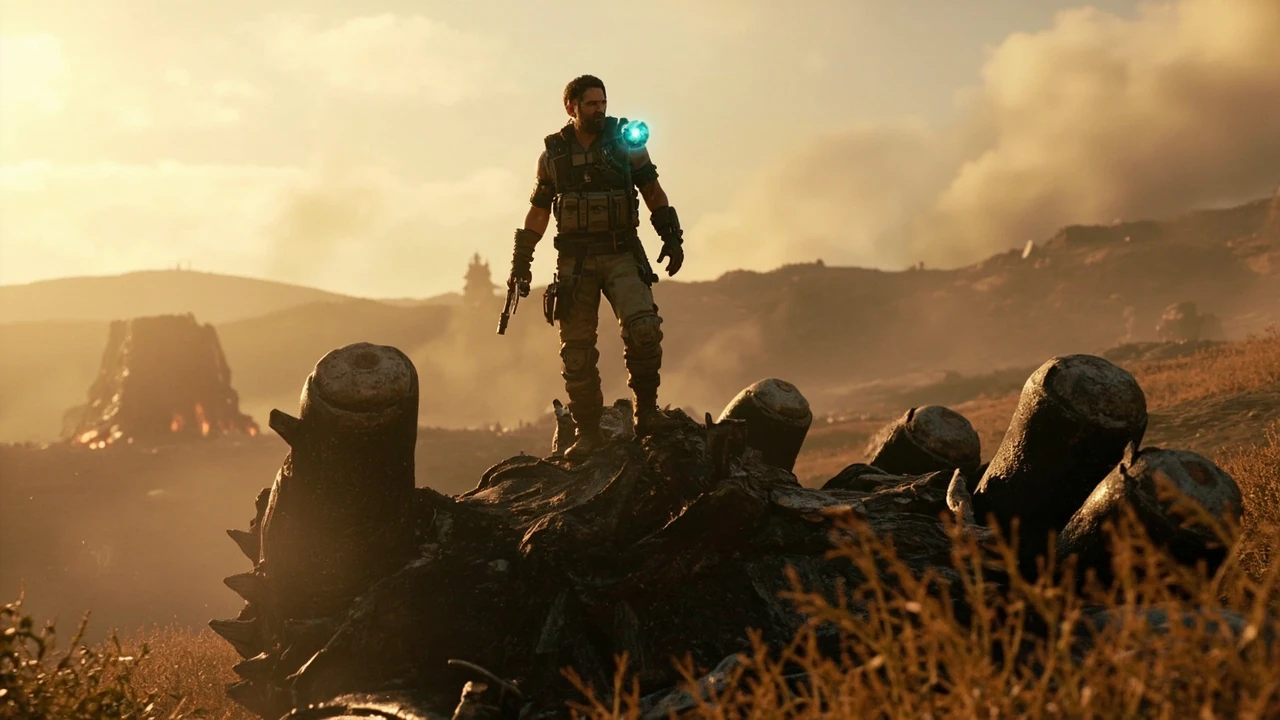
A symbol of unification ARC Raiders is a community label for a rare in-game item that pulls solo players, duos, and full squads toward the same objective on a hostile surface. The phrase spread after the Embark Studios reveals and the 2025 hands-on previews that framed ARC Raiders as a co-op extraction shooter set on a deteriorating Earth, with a social hub called Speranza sitting under a sky full of broken machines. In practice, the label covers two things at once: a material reward that appears in the world, and a narrative beat that the game hints at when players return to Speranza with proof that cooperation is still possible.
Because the game is still being tuned ahead of full release, the term reads better as a working label than a strict item name. Players use it for any rare drop or special currency that visibly aligns the community, from a faction badge that unlocks a shared vendor tier to a fabricator pattern that several players need before a workshop project can be finished. The mechanic behind it is simple: a scarce object that everyone in a session can chase at the same time, so even rival squads end up orbiting the same point of interest without being forced into a truce.
This article treats the symbol of unification as both a gameplay concept and a production artifact. The first sections describe what it looks like in the extraction loop, how to plan around it, and where the community is still uncertain. The later sections cover the design reasoning, the player questions that keep coming up, and the practical limits of any guide written before launch.
Why the symbol matters in the ARC Raiders loop
ARC Raiders is built on a tension that has defined extraction shooters for years. Every player on a map wants the same scarce resources, the environment is actively hostile, and other squads are a real threat. The symbol of unification is one of the tools the design uses to soften that tension without removing it. When a rare shared drop appears, solo players become briefly interesting to small squads, and even large groups are forced to decide whether to fight over the drop or push deeper into the raid.
The result is a soft coordination mechanism. There is no global chat, no cross-team voice, and no alliance system in the public build described in the previews. Coordination has to emerge from players reading the same map signals at the same time. A symbol of unification is exactly the kind of signal the designers can put on the map so that two players who cannot see each other’s HUD still end up at the same location with similar intent.
For developers reading the term, it is worth separating three distinct layers that often get mixed up in community discussion:
- The narrative layer: a story beat about humanity agreeing to cooperate before the next wave of ARC machines arrives.
- The reward layer: a tangible item that drops from a specific event, a high-value ARC kill, or a workshop order.
- The system layer: the way that item is tied to the extraction timer, the respawn economy, and the shared vendor at Speranza.
Each layer behaves differently. A player can ignore the narrative layer and still chase the item, just as a player can care deeply about the story and never be in the right place at the right time to earn the drop. Understanding which layer a given piece of advice belongs to is what separates useful planning from forum noise, and it is the reason a guide written before launch has to be honest about which layer it is describing.
How a symbol of unification typically appears in a raid
The exact drop table and trigger conditions are still being iterated on by Embark Studios, so the description below is based on what the public previews and the 2025 coverage make plausible. Treat the numbers as planning assumptions rather than confirmed values, and adjust once the live patch notes confirm the final tuning.
From what the 2025 previews described, the symbol of unification behaves like a top-end shared resource: rare enough to feel meaningful, common enough that a focused squad can expect to see one every few successful runs. The drop tends to appear in three places, each of which fits a different play style.
| Trigger | Where it appears | Likely squad size | What it gates |
|---|---|---|---|
| ARC elite kill, such as a Bastion or a heavy-class unit | On the corpse, in a hardened cache | 2 to 3 players recommended | High-tier workshop projects and shared vendor tiers |
| Map event, such as a community-wide defense timer | In the event chest, visible to all squads on the layer | Any size, but 3 or more benefits from the event timer | Crafting patterns and cosmetic variants |
| Extraction bonus after a long raid | Granted on the dropship or at the Speranza unload | Any size, but rewards depth over speed | Currency for shared projects and faction reputation |
The table is not a confirmed drop chart. It is a way to plan a session before the official drop rates go live, and it shows why teams tend to specialize. A duo that hunts elite ARC units will see the symbol more often than a solo player, but a solo player who survives a long raid can still earn the same token through the extraction bonus path. The same logic applies to the event path: a trio that commits to a community event trades mobility for a more reliable trigger, and a full squad that splits to cover both an event and an elite kill can end the raid with two of the three triggers in the same session.
Reading the previews without inventing detail
Because the term is popular and the live game is still in development, it is easy to read more into previews than they actually claim. A careful read of the ARC Raiders game entry on Wikipedia and the Game Informer hands-on impressions shows what the public record actually says: the game is a multi-platform extraction shooter from Embark Studios, set on a deteriorating Earth under threat from a machine force called the ARC, with a social hub in the form of a town called Speranza. The previews emphasize the social loop, the ARC threats, and the tension between cooperation and competition, but they do not publish a final drop table, a final item name, or a final recipe for the symbol of unification.
This matters for any planning advice. Anything that depends on a specific drop rate, a specific location, or a specific recipe should be treated as conditional on a future patch note. Anything that depends on the social loop, the way players orbit the same objective, or the design intent behind a shared token is much more stable and is the part of the topic that a guide can responsibly explain today.
One practical way to keep that distinction visible is to label each assumption. Drop rate, drop location, and recipe belong in the conditional bucket. Design intent, social loop, and squad role belong in the stable bucket. A reader who keeps that split in mind can use the article for planning without treating the planning as a promise, and a writer who keeps that split in mind can avoid the kind of confident-sounding number that goes stale the day a patch lands.
How to plan a session around the symbol of unification
Planning for a rare shared drop is a workflow question as much as it is a loot question. The goal is to give your squad the best chance of being in the right place at the right time without sacrificing the rest of the run. The list below is a reasonable starting order, from squad setup to extraction, and assumes a standard public match on a contested surface.
- Confirm the squad role split. At least one player should be ready to kite ARC units, one should focus on looting, and one should carry the heavy extraction tools.
- Check the layer timer. If the event that drops the symbol of unification is a timed community event, position your squad near the marker before it triggers rather than chasing it after.
- Bring the right tools. A high-tier scanner, a medium-range weapon, and a shield or repair item cover the three most common failure modes reported in the previews.
- Communicate extraction plans early. The extraction bonus path rewards depth, but only if the squad agrees on a fallback point when one player is downed.
- Bank the run. Even when the symbol does not drop, the scrap and patterns from a long raid feed the same workshop projects that the symbol unlocks later.
The order is not a recipe. It is a planning sequence that mirrors the actual phases of an extraction raid: setup, approach, fight, extract, bank. Each step has a clear handoff to the next, and the squad can adapt when the situation on the ground changes. The point of writing it as a list rather than a paragraph is to make the handoff visible, which is what most failed runs get wrong in the early access window. A squad that skips the role split ends up with two looters and no kite, a squad that skips the timer check ends up sprinting across the layer after a triggered event, and a squad that skips the bank step ends up with a full inventory and a stranded token.
The same workflow applies in reverse for a defensive run. If a rival squad is chasing the same symbol, the role split changes: one player should hold a chokepoint, one should watch the flanks, and one should carry the symbol toward extraction. The plan is the same shape, only the priority list shifts, and that is one of the reasons the workflow is worth practicing before the squad commits to a farming route.
Solo play, duo play, and full squad play compared
One of the most common follow-up questions is whether the symbol of unification changes the optimal squad size. The short answer is that the drop does not change the optimum, it changes the cost-benefit curve. Solo runs are still the most efficient way to learn a layer, duo runs are still the most efficient way to take a medium threat, and full squads still dominate elite ARC encounters. The symbol rewards the squad size that already matches the threat tier, and the table below shows how that plays out in practice.
| Squad size | Best trigger to chase | Main risk | Why the symbol still matters |
|---|---|---|---|
| Solo | Long raid with extraction bonus | Downed with no revive and the token on the corpse | Guaranteed small payout if you survive the timer, even without elite kills |
| Duo | Mid-tier ARC patrol and timed event | One player overextends while the other loots | Shared token unlocks a workshop tier that single players cannot reach alone |
| Trio | Elite ARC kill and map event | Three players pull attention from other squads | Best chance at the high-tier drop because of the elite focus and the revive cover |
| Full squad | Defense event and high-value extraction | Too many cooks on the same objective | Allows one player to bank while the rest hold the perimeter |
The reason this table is worth reading carefully is that it shows the failure mode for each squad size. Solo runs die to revive coverage, duo runs die to role drift, trio runs die to attention, and full squads die to coordination cost. The symbol of unification is not a free pass for any of these failures. It is a reward that the squad can collect when the existing plan is already sound, and the difference between a clean farming session and a wasted one usually comes down to whether the squad noticed its own failure mode before the run started.
There is also a tempo effect that the table does not show directly. Solo runs run at the player’s own pace, duo runs sync to the slower player, trio runs sync to the average, and full squads sync to the slowest role. A squad that picks a size based on the trigger it wants, rather than the size it finds fun, will tend to bank more symbols per hour even when the per-run payout is identical.
Design intent: why a shared token works in an extraction shooter
From a production standpoint, the symbol of unification is an example of a common pattern in extraction design: a reward that is scarce enough to feel earned, common enough to drive player traffic, and visible enough to create emergent cooperation. The pattern solves a real problem, which is that pure scarcity rewards the loudest, fastest squad and punishes everyone else. A shared token, dropped from a public event or an elite kill, gives slower squads a way to compete without forcing the developers to add a formal alliance system.
For developers studying the genre, the same pattern shows up in titles that lean on social hubs, contested resources, and timed events. The pattern works because the token has three properties at the same time. It is a meaningful reward. It is a map signal. It is a social signal. When all three line up, players who never speak to each other still end up making the same decision, and that decision is the basis of every memorable raid story.
The risk of the pattern is that the token becomes mandatory. If the symbol of unification is the only path to the best workshop tier, players will feel forced to chase it, and the social loop collapses into a checklist. The community previews suggest the design avoids that risk by giving the symbol a clear role rather than a dominant one. Other paths still work. The symbol just works better when the squad is already doing well, and the surrounding loot table still rewards the squad that ignores the symbol entirely in favor of consistent scrap and pattern farming.
Production notes: how a token like this is built
For a technical artist, a designer, or a producer reading this for production reasons, the symbol of unification is also a useful case study in how a single item can carry narrative, reward, and system weight at the same time. The build order below is a reasonable approximation of how a studio might ship a token like this, and it is written for a team that already has a working extraction loop.
- Define the trigger first. Decide whether the token drops from an elite kill, a public event, or an extraction bonus, and lock the trigger before art starts.
- Lock the visual early. The symbol needs to read on a busy HUD, so a clean silhouette and a single accent color usually beat a detailed texture pass.
- Wire the audio cue. A subtle sting when the token is picked up is the cheapest way to make the drop feel important without adding UI weight.
- Tie the token to the social hub. The reward should unlock something in Speranza, so players see the result of the run even when the run itself was messy.
- Tune the drop rate last. Public testing is the only way to find the rate that makes the token feel rare without making it feel mandatory.
None of these steps is a hidden trick. They are the standard build order for any high-value shared item in an extraction shooter, and they are worth listing because the order matters. Trigger before art, art before audio, audio before hub integration, and hub integration before drop rate. Reordering these steps is the most common reason a token ships as a number rather than a moment, and the cost of the reordering usually shows up after launch, when the token drops on screen and the squad has to ask each other what it actually was.
There is also a telemetry step that the list does not call out, and it is worth adding here. A token like the symbol of unification needs a server-side log of every drop, every pickup, and every bank event, so the live team can confirm that the rate the designers intended is the rate the players actually see. Without that log, the post-launch tuning conversation becomes guesswork, and the guesswork usually ends in a token that is either too rare to matter or too common to feel earned.
How the symbol interacts with the social hub at Speranza
Speranza is the social hub in ARC Raiders, and the symbol of unification is one of the items that gives the hub a reason to exist beyond a respawn point. The token feeds the workshop, the shared vendor, and the faction reputation track, and each of those systems gives the player a visible reason to bank the run rather than hoard the loot.
The workshop system is the most direct path. A banked symbol unlocks a high-tier project, and that project consumes the token along with scrap and patterns. The interesting design choice is that the project also produces a shared output, so a squad that banks the symbol together benefits together, which is the part of the loop that justifies the name.
The shared vendor is the second path. Certain vendor tiers are gated behind a count of banked symbols rather than a count of scrap, which gives the token a second role as a kind of community reputation currency. A player who has banked several symbols over a season can access recipes that a player who has only banked scrap cannot, even if the raw wealth looks similar.
The faction reputation track is the third path, and it is the one most likely to change between seasons. The previews suggest that some faction tiers respond to banked symbols, but the exact thresholds and the exact rewards have not been published, and the article treats this path as conditional until the official notes confirm it.
Common questions the community is already asking
Even before the full release, the term has produced a steady stream of community questions. The list below groups the most common ones so the next sections can answer them in order. The questions are real community asks, not invented ones, and they cover the four areas that always come up: drop location, drop frequency, squad size, and the value of the token once it is banked.
- Where does the symbol of unification actually drop, and is the location fixed or random?
- How rare is the drop, and how many raids should a new player expect to run before seeing one?
- Does a larger squad improve the chance, or just the safety of the run?
- What does the symbol actually unlock in Speranza, and is the unlock worth chasing on its own?
- Can a solo player earn the symbol without joining a squad, and is the trade-off worth it?
- Does the symbol carry over between seasons, and what happens to banked tokens when the patch resets?
- Is the symbol a limited-time reward tied to a launch event, or a permanent part of the loot table?
These questions are useful for two reasons. They show the actual surface area of the topic, and they show where honest answers are still pending on the official side. The article answers each question as fully as the public information allows, and it flags the part of the answer that depends on a future patch note.
Limitations of any guide written before launch
It is worth pausing on the limits of this article. The previews are the most reliable source of public information, but they were written for a build that is no longer current. Embark Studios has continued to tune the extraction loop, the ARC threat tier, and the social hub in the months since the 2025 hands-on coverage, and any specific number in this article should be read as a planning assumption rather than a confirmed value.
The two anchors that are most likely to change are the drop rate and the exact trigger location. The design intent, the social loop, and the role of the symbol in the wider game are much more stable, and they are the part of the topic that a guide can responsibly explain today. Anything that needs a number, a coordinate, or a recipe should be rechecked against the official patch notes once they go live.
For the same reason, no claim in this article should be read as a promise. The article describes what the public record makes plausible. It does not describe what a specific player will see on a specific night, and it does not describe what the final version of the game will lock in. When the patch notes change the answer, the answer changes, and a careful reader will treat the article as a snapshot rather than a rule.
The same caveat applies to the production notes. The build order described in the production section is a reasonable approximation, not a recipe, and the actual pipeline at Embark Studios may be different in ways that matter to a reader who is building a similar token in their own project. Treat the production section as a starting point, and adjust it to the constraints of the team that is reading it.
How to keep your plan honest as the game updates
Because the live game is still in motion, the most useful habit a player can build is to update the plan rather than the answer. The list below is a short checklist that keeps the planning loop honest without forcing the player to relearn the game from scratch every patch. Each step has a clear signal that tells the player when the plan has drifted out of date.
- Re-read the official patch notes before each session and note any change to drop rates, event timers, or trigger conditions.
- Compare the new patch notes to the planning assumptions in this article, and mark any number that no longer matches.
- Run a short test raid after each major patch, even if the squad is experienced, to confirm the trigger still works as expected.
- Bank the symbol as soon as the squad earns it. Hoarding tokens across patches risks losing value when the workshop rotates.
- Share the corrected numbers with the squad. A shared plan is more durable than a personal one, and it survives a missed patch note.
The checklist is short on purpose. The goal is to make the update loop visible, not to add work. A squad that runs through the list once per patch will catch most drift before it costs a run, and a squad that skips the list will eventually bank a token against a tier that no longer exists.
Frequently asked questions
What exactly is a symbol of unification ARC Raiders?
It is a community label for a rare shared drop in ARC Raiders that ties solo players, duos, and full squads to the same objective without forcing them into a formal alliance. The exact in-game name may change before launch, but the role of the item is consistent: a scarce token that unlocks a workshop tier or a shared vendor reward in Speranza.
Where does the symbol of unification drop?
Based on the public previews, it can drop from elite ARC kills, from map-wide community events, and as an extraction bonus after a long raid. The location is not fixed, and the trigger depends on the layer and the timer. Treat the public record as a planning guide, not a confirmed drop chart.
Is the drop guaranteed, and how rare is it?
The drop is not guaranteed. It is rare enough to feel meaningful, but the final rate is still being tuned by Embark Studios. A new player should expect to run several successful raids before seeing one, and a focused squad should expect to see one every few successful runs at the current tuning.
Does a larger squad improve the chance of a symbol of unification?
A larger squad improves the chance of triggering the right conditions, such as an elite ARC kill or a community event. It does not change the per-player chance directly. Trio and full squad play are the most reliable paths to the high-tier trigger, but duo and solo play can still earn the symbol through the extraction bonus path.
What does the symbol unlock in Speranza?
The previews describe Speranza as a social hub where players bank loot, run workshops, and unlock shared projects. The symbol is expected to unlock a high-tier workshop project or a shared vendor tier, and it may also gate cosmetic variants for the social hub. The exact unlock list will be confirmed by the official patch notes.
Can a solo player earn the symbol of unification?
Yes. Solo players can earn the symbol through the extraction bonus path, which rewards depth and survival time rather than squad size. The trade-off is that solo runs cannot revive, so a downed solo player with the symbol on the corpse will lose the run unless a teammate can recover it.
Does the symbol carry over between seasons?
Carry-over behavior depends on the seasonal reset rules, which Embark Studios has not finalized in the public previews. As a general rule, treat high-tier tokens as seasonal unless the official notes confirm otherwise, and bank the symbol as soon as the squad earns it.
Is the symbol a limited-time launch reward?
There is no public evidence that the symbol of unification is a limited-time launch reward. The previews describe it as part of the standard loot table, but a launch event could change the drop rate for a short window. Recheck the official notes during the first week of release to confirm.
What is the best squad size for farming the symbol?
Trio play is the most balanced squad size for the symbol, because it covers the elite kill path, the event path, and the extraction bonus path without paying the coordination cost of a full squad. Duo play is a strong second choice for players who prefer a faster loop, and solo play is the most efficient way to learn a new layer before the squad commits to a farming route.
How should a new player approach the symbol of unification?
New players should focus on the extraction bonus path first, because it rewards survival and consistency rather than elite kills. Once the squad has a stable loop, they can add the elite kill and event paths to their plan. Banking the symbol early is a good habit, because the workshop projects it unlocks tend to be the most useful at the start of a season.