Your First Steps in Pywel: Essential Crimson Desert Tips
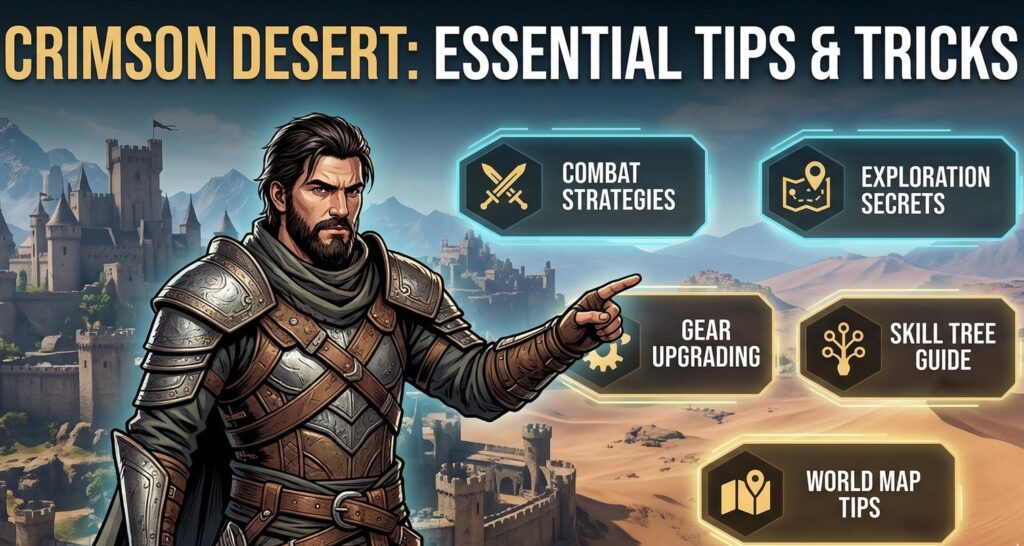
You know what? Starting Crimson Desert feels like walking into a bustling tavern mid-story. Everyone’s got a quest, the music’s loud, and you’re just trying to figure out which tankard is yours. The continent of Pywel is huge, the combat system has layers, and those three playable characters? They each play like entirely different games. Honestly, it’s a lot. But that’s the fun part. This guide packs the most useful Crimson Desert tips we’ve gathered to help you find your footing without missing the good stuff.
Getting Started Right: Core Crimson Desert tips for Day One
Let’s keep it real – your first few hours matter. You don’t need to master everything at once. Focus on the rhythm. Crimson Desert doesn’t use a traditional XP leveling system. Instead, each character has a personal skill tree you grow using Abyss Artifacts found in quests, boss fights, or hidden nooks. That means progression feels personal. You’re not just grinding mobs; you’re unlocking abilities that change how you move, fight, and interact with the world.
Start with Kliff. He’s the story’s heart, and his balanced melee style teaches you the combat language. Slide, dodge, counter – it’s less about button-mashing and more about reading the fight. Think of it like learning a dance. You’ll stumble at first. Then, suddenly, you’re flowing.
Here’s a thing many miss early: don’t rush the side questlines for Damiane and Oongka. Yeah, the main story pulls you forward, but those two bring entirely new mechanics. Damiane’s agility opens up combo routes Kliff can’t touch. Oongka? He’s the heavy hitter with grappling moves that let you yank riders off mounts. Skipping their stories means missing gear and abilities you won’t find anywhere else.
| Character | Best For | Key Strength |
|---|---|---|
| Kliff | Learning the ropes, main story | Balanced weapons, broad skill access |
| Damiane | Agile combos, magic mixes | Separate questline, unique traversal skills |
| Oongka | Crowd control, heavy damage | Grapple-focused, fishing feature tie-in |
One more early-game nugget: ring that bell in your starting area. It reveals the local map and marks Traces of the Abyss – those are your fast travel points. Discovering them early saves so much backtracking later. Seriously, it’s one of those small actions with huge payoff.
Combat That Feels Alive: Why Crimson Desert Tips Matter in a Fight
Okay, let’s talk combat. Crimson Desert’s system is fluid – almost fighting-game-like. You can chain weapon strikes with bare-hand kicks, grapples, and environmental throws. Knock an enemy into a wall? They’re stunned. Grab a hostage? Nearby foes hesitate. It’s dynamic, and it rewards creativity.
But here’s the catch: you can’t just block forever. Stronger enemies will break your guard. That’s where arrow deflection comes in. Learn that timing early because archers show up everywhere. A well-timed deflection doesn’t just stop damage – it opens a counter window. Feels amazing, right?
Another subtle mechanic: weapons can be knocked from your hands. Enemies can do it to you, but you can also snatch up fallen weapons mid-fight. Don’t panic if your sword flies away. Look around. That axe on the ground? It might be exactly what you need to turn the tide.
The Axiom Bracelet ties into deeper systems we’re still unpacking. Think of it as your wildcard tool. It interacts with equipped abilities in ways that can shift an encounter. Pay attention to its prompts.
That bracelet isn’t just flair – it’s part of your tactical kit:
- Master the slide-dodge: It’s faster than a roll and keeps you in combo range.
- Practice arrow deflection: Timing it feels like catching a fastball – pure satisfaction.
- Use hostages wisely: Grabbing one enemy can freeze a whole group.
- Watch for weapon drops: Losing your gear isn’t a wipe if you adapt fast.
You know what’s wild? Boss fights have phases signaled by health bar colors. Blue means phase one. Green, phase two. Red? That’s the “oh wow” moment. White Horn, for example, shifts behavior dramatically in that final red phase. Adjust your approach when the color changes – it’s your cue.
And when you beat certain bosses? You might get their gear with Signature Abilities. These aren’t just stat boosts. They’re unique effects that can redefine your build. Always check those bonuses before selling or storing loot. A lower-stat piece with the right Signature Ability can outshine “better” gear in the right fight.
Gear and Progression Made Simple: Practical Crimson Desert tips
So, how do you get stronger without getting lost in menus? Two words: crafting and upgrading. Blacksmiths and specialist NPCs in Pywel’s settlements can refine your gear, boosting its power against tougher foes. Don’t sleep on this. Against multi-phase bosses, upgraded gear makes the difference between a clean win and a frustrating retry.
Crafting weapons from scratch is another path. Crafted pieces often grant bonuses to core stats or enhance specific skills in ways random loot doesn’t. Think of it like tailoring your loadout. You’re not just finding gear – you’re building it to fit your style.
| Gear Focus | Best For | Where to Start |
|---|---|---|
| Refined Weapons | Boss fights, elite enemies | Hernand blacksmiths early game |
| Crafted Armor | Custom stat boosts | Regional tailors in Pailune |
| Abyss Gear Slots | Adding special effects | Unlock via main story progression |
Here’s a gentle contradiction: you don’t need the “best” gear to progress. Crimson Desert’s Dynamic Difficulty Scaling adjusts challenges based on your development. That means the world stays engaging whether you’re undergeared or overprepared. Explore freely. The game won’t punish you for taking the scenic route.
But – and this is a friendly but – don’t ignore resource gathering. Chopping trees, mining rocks, fishing: these feed into crafting and alchemy. Meals give temporary boosts to Health, Spirit, or Stamina. Alchemy lets you brew dyes and medicines that enhance combat. It’s all connected.
Exploring Pywel Without Getting Lost
Pywel has five distinct regions, each with its own vibe. Hernand, where you start, is mountainous and river-cut. Pailune is the Greymanes’ homeland. Demeniss handles politics and military stuff. Delesyia leans into science and tech. And yeah, the Crimson Desert itself is a lawless, red-sand expanse.
You can tackle these in any order. That freedom is glorious – and a little daunting. Use your movement tools: climbing, gliding, and horseback riding. Later, you might even hop on a dragon or a missile-firing mech for aerial traversal. But early on? Focus on finding those Traces of the Abyss.
Each one unlocked is a fast travel point saved:
- Mounts: Horses, bears, even dino-like creatures for ground travel.
- Climbing and gliding: Built-in abilities, no special items needed.
- Traces of the Abyss: Discover to unlock fast travel points across Pywel.
One tip that feels obvious but isn’t: talk to everyone. Regional vendors have different inventories. A blacksmith in Hernand might not stock what a tailor in Delesyia does. Exploring towns isn’t just scenic – it’s how you find specific gear and resources.
And hey, the world reacts. Strongholds like Roothold start under one faction’s control. Clear out the invaders, defeat their boss, and the area opens up with new merchants and resources. It’s satisfying to see a location transform because of your actions.
Factions and Side Content That Matters
Most factions in Pywel start friendly, funneling you into side quests that flesh out the world’s politics. But hostile groups occupy territories. Clearing them isn’t just busywork – it makes travel safer and unlocks rewards.
Side activities aren’t filler, either. Fishing, mining, puzzles in forgotten ruins, card games, horse racing – these feed into resource management and gear progression.
Engage with them regularly, and you’ll keep your character competitive without grinding combat encounters:
- Alternative Missions: Run parallel to the main path, often with unique rewards.
- Deep-Dive Activities: Mining, fishing, and resource gathering for crafting.
- Minigames: Card games, arm wrestling, and target shooting for breaks and prizes.
You know what’s cool? Dispatching comrades on missions. Send your crew to blockaded locations or enemy fortresses. They’ll return with currency, resources, or materials for cooking and alchemy. It’s like having a little offline progress system while you focus on other objectives.
Base building at Greymane Camp lets you expand using funds and resources from your journey. Prepare meals, manage the farm, craft furniture. It’s not just cosmetic – these upgrades support your progression in tangible ways.
Advanced Combat Nuances: Leveling Up Your Playstyle
Once you’ve got the basics down, Crimson Desert starts showing its deeper layers like in GTA VI and Red Dead Redemption. Combat isn’t just about dealing damage – it’s about controlling space, reading enemy tells, and adapting on the fly.
Take enemy posture, for instance. Some foes have a visible stance indicator. Break their posture with heavy attacks or perfect dodges, and they become vulnerable to critical strikes. It’s a risk-reward dance. Do you play it safe and chip away, or go for the big opening?
Environmental awareness matters more than you’d think. Fight near a cliff edge? A well-placed shove can end the encounter instantly. Battling in a narrow corridor? Area attacks become way more valuable. The game doesn’t spell this out – you learn by doing.
And then there’s weapon switching. You can carry multiple weapons and swap mid-combo. Start with a sword for speed, switch to a hammer for a stagger, then finish with a dagger for bleed damage. It sounds fiddly, but once it clicks, it feels incredible. Like conducting an orchestra of violence.
One thing to watch: stamina management. Every dodge, sprint, and heavy attack drains it. Run dry, and you’re wide open. Learn to weave light attacks between dodges to keep your bar healthy. It’s a rhythm thing – find your groove, and fights flow.
Mastering the Axiom Bracelet and Skill Synergies
The Axiom Bracelet isn’t just a cool-looking accessory. It’s your key to mixing abilities in unexpected ways. Equip a fire-based skill? The bracelet might add a burn effect to your next grapple. Pair a defensive ability with a mobility tool? You could create a quick escape with damage reflection.
Experimentation is your friend here. Try different combos in low-stakes fights before taking them into boss arenas. Keep a mental note of what works. Maybe fire + grapple melts armor faster. Or ice + slide creates a slippery zone that slows pursuers.
Don’t forget to check the bracelet’s cooldowns. Some powerful synergies have longer recharge times. Plan your big moves around those windows. It’s like managing ultimates in a team shooter – timing is everything.
And hey, don’t sleep on utility skills. A well-placed trap or decoy can turn a chaotic brawl into a controlled engagement. Sometimes the smartest move isn’t the flashiest one.
Resource Management and Crafting Deep Dive
Let’s talk about the stuff that keeps your adventure going: resources. Crimson Desert’s crafting system is robust but approachable. You don’t need to be a spreadsheet wizard to make it work.
Start by identifying what your playstyle needs. Heavy melee fighter? Prioritize ore for weapon upgrades. Magic-leaning build? Focus on herbs and crystals for alchemy. Mix of both? Balance your gathering.
Here’s a pro tip: mark resource nodes on your map as you find them. That iron vein near the river? The herb patch behind the waterfall? Tag them. Come back later with better tools or when you specifically need those mats. It saves so much wandering.
Crafting stations vary by region. Hernand’s forges excel at heavy armor. Delesyia’s labs handle tech-infused gear. Pailune’s tailors craft light, agile sets. Travel between them if you’re chasing a specific build. The journey itself becomes part of the progression.
| Resource Type | Primary Use | Best Gathering Region |
|---|---|---|
| Iron Ore | Weapon forging, armor plating | Hernand mountains |
| Spirit Herbs | Alchemy, potion brewing | Pailune forests |
| Abyss Crystals | Skill enhancements, bracelet mods | Demeniss ruins |
Don’t overlook cooking. Meals aren’t just flavor text. A well-prepared stew can boost stamina regen for an hour. A spicy skewer might increase critical chance temporarily. Stock up before big dungeons or boss runs. It’s a small effort with noticeable payoff.
And fishing – yeah, it’s relaxing, but it’s also practical. Certain fish are key ingredients for high-tier potions. Plus, fishing spots often hide treasure chests or rare materials nearby. Cast a line, then look around. You might find more than you bargained for.
Endgame Prep: Getting Ready for What’s Next
Thinking ahead never hurts. Even in the early hours, small choices can smooth your path later. Keep an eye on gear with scalable stats – pieces that grow with your character. They’re rarer, but worth holding onto.
Reputation with factions matters more as you progress. Helping a town early might unlock exclusive vendors or quests down the line. Don’t just chase the main story. Those side interactions build your network in Pywel.
Also, save those rare materials. It’s tempting to sell everything for quick coin, but that one unique crystal might be the key to a late-game upgrade. When in doubt, stash it. You can always sell later if you don’t need it.
One last thing: don’t rush the end. Crimson Desert rewards exploration. That weird cave with the glowing mushrooms? That abandoned tower with the puzzle lock? Those are the moments that stick. The game’s heart isn’t just in the boss fights – it’s in the journey between them.
FAQ
What’s the best character for beginners?
Kliff. He’s balanced, story-central, and teaches core combat mechanics before you unlock Damiane or Oongka.
How do I fast travel?
Discover Traces of the Abyss scattered across Pywel. Each one unlocked becomes a fast travel point on your map.
Can I change my character later?
Yes. You start as Kliff, but Damiane and Oongka unlock through story progression, each with unique questlines and combat styles.
Do I need to craft gear to progress?
Not strictly, but crafting and upgrading gear significantly boosts your effectiveness against tougher enemies and bosses.
What are Signature Abilities?
Unique effects on boss-derived gear that can dramatically shift your combat approach. Always check these bonuses before selling loot.
How does difficulty scaling work?
Crimson Desert adjusts environmental challenges based on your character’s development, keeping encounters engaging without sudden difficulty spikes.
Are side quests worth my time?
Absolutely. They expand the world, reward unique gear and abilities, and feed into resource systems for crafting and alchemy.
Wrapping Up Your Pywel Journey
Look, Crimson Desert doesn’t hand you a checklist. It gives you a living world and says, “Figure it out.” That can feel overwhelming at first. But that’s where these Crimson Desert tips come in – not as rigid rules, but as gentle nudges toward what matters.
Focus on the rhythm of combat. Learn to slide, deflect, and adapt. Don’t rush the side stories for Damiane and Oongka – they’re not extras, they’re expansions. Upgrade your gear, but don’t stress about having the “best” piece. The world scales with you. Explore freely, discover those fast travel points, and talk to vendors in different regions. The little things add up.
And hey, it’s okay to get lost. Pywel is meant to be wandered. That weird ruin with the puzzle? That fishing spot with the rare catch? Those are the moments that stick. The game rewards curiosity as much as combat skill.
So take a breath. Ring that bell. Find your first Trace of the Abyss. Let the combat flow feel like a conversation, not a test. You’ve got this. And when you hit that first boss phase shift and adjust on the fly? That’s the magic. That’s Pywel.
Now go make your mark. The continent’s waiting – and it’s way more fun when you’re not just surviving, but thriving.
If this guide helped you kickstart your Pywel adventure, do us a solid – share it with your squad on social media and toss a bookmark on it so you can find it when you need those Crimson Desert tips mid-quest. Got a wild idea for a collab or want to chat about something creative or commercial? Slide into the YaninaGames team’s DMs – we’re always up for good conversations with fellow gamers and creators.