How to Make a VR Game If You a Beginner – Expert Tips
Virtual reality content slowly but steadily captures the hearts and minds of gamers around the globe. That’s why the development of VR games become a prestigious yet challenging niche to explore. The YaninaGames team already uses its skills and knowledge to create the assets for VR content. We want to share our knowledge and inspire beginners who make their first steps in game development. The following guide focuses on how to make a VR game for different platforms.
We don’t want to focus on specific platforms because we will do this later. Our task is to show you that this game development niche is quite perspective and possible even for new game developers.
Many beginners ask our developer team – how hard is it to make a VR game? We won’t lie to you. The development of any first game is extremely hard but the creation of the second one is a bit easier. Believe in the process and do not give up. However, be prepared that a few tries won’t be quite successful from the selling point, though, it is not a mistake.

How to Make a VR Game – The Basic Steps
Such video gaming giants as Facebook, Google, PlayStation, and Valve already invest in their hardware and exclusive VR content. At the same time, Sony along with Samsung has ventured into creating new VR devices to make them accessible to a wide range of people. HTC’s partnership with Valve resulted in the Vive – one of today’s most advanced virtual reality systems available for sale. From low-cost mobile phone solutions to costly high-end VR consoles, consumers have many budget-friendly and premium options of VR-ready devices to choose from.
That is why your first step is to choose the platform (software) and VR device (hardware) where your VR gaming content can be played by real users:
Choose Your Hardware
Pick from a range of VR devices, starting with light ones for phones such as Google Cardboard and going up to top-notch headsets that use PCs like Oculus Rift or HTC Vive.
Choose Graphics
Select the graphics type that is most appropriate for your game, be it 2D, 3D, real-life or 360-degree panoramic video. The YaninaGames team humbly offers our 2D game development services.
Choose Your Development Platform
You may select a VR game engine, such as Unity or Unreal Engine. Consider factors like graphics support, programming languages, and compatibility with different platforms.
Conceptualize Your Game
Begin with a creative session where you generate new game ideas that match the interests of your intended players. Think about the wow moments and feelings your game will bring, as well as why VR is crucial for its experience.
Pick Your Developer
Pick to invest in an experienced development team. Even if their rates seem higher at first, these developers can save you both time and funds over the long haul.
Research and Develop
Test your game in the early stages. Start with a basic prototype (MVP) to collect useful data from testers. Keep up with VR advancements and adjust the game accordingly.
Publish Your Game
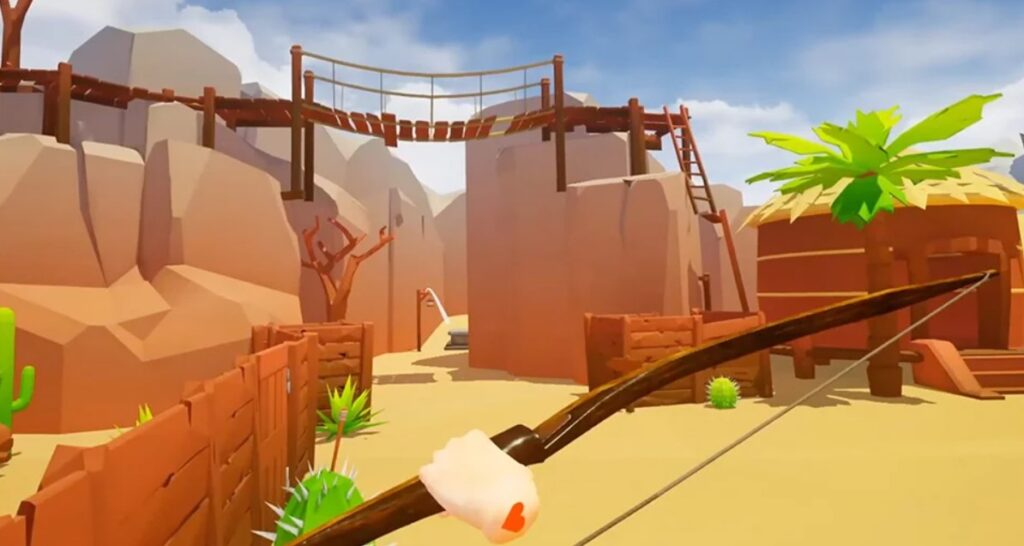
Finally, you have the chance to publish your game on places like Steam, Viveport, Oculus, or Google Play. Your project has to meet all the market rules.
The development of VR games gives a good chance for people who are ready to put in their time and money. If you take these steps and work with a skilled team, you can handle the difficulties of VR game building and use the possibilities in this quickly growing market.
How to Make a VR Game – The Most Common Types
It is a common myth that beginner developers can only create VR games or any other first game titles with Unity. Well, Unity is a great toolbox of game development instruments. However, you can easily learn how to make a VR game in Unreal Engine 5 without any experience. In addition, the variety of VR gaming genres only proves this point.
VR Action and Adventure Games
Get ready for a journey that’s epic, thrilling, and action-packed; prepare to solve puzzles that bend your mind and engage in combat so intense it can stop your heart. Look no further than the famous Half-Life: Alyx which is known as the best example of an immersive VR game.
VR Horror Games
VR horror games immerse you into fear, causing each noise of a wooden floor or strange whisper to send a chill through your back. If you are brave enough, step into the nightmare world of Resident Evil 7: Biohazard VR. If you want to learn how to make a VR game on mobile, then this genre is favorable because people like to play horror games on any platform and with any visual style.
VR Simulation Games
Virtual reality (VR) simulation games transport you into a world where the distinction between what is real and what is imagined becomes faint. With Microsoft Flight Simulator VR, you can buckle up for an exhilarating journey in the virtual cockpit.

VR Puzzle Games
Use your brainpower to solve “mindboggling” puzzles that will test your intelligence and amaze your senses. The Room VR: A Dark Matter calls you into a place full of mystery and fascination, where each twist uncovers fresh riddles for unraveling.
VR Sports and Fitness Games
Who told me that gaming can’t be an exercise? Prepare yourself for perspiration and release your internal sportsperson with VR sports games such as Beat Saber, a place where rhythm encounters fitness in the best dance presenting blades and beats.
VR Racing Games
Fasten your seatbelt and prepare for a thrilling experience in the virtual reality racing world. Feel the wind on your face and the excitement of winning as you race through games such as Project CARS 2 VR.
VR Strategy Games
Strategy games in VR put you in the role of a commander. You can strategize, give orders, and triumph like a true general. Skyworld is one such game where your tactical skills will guide your forces to victory.
VR Educational and Training Games
Who says learning can’t be fun? Immerse yourself in the educational world of VR and enjoy exploring all the wonders that our world offers. Take a trip inside the human body with The Body VR, where you will find out about science by interacting with this unique learning experience.
VR Narrative and Story-Driven Games
Dive into stories and experiences that are full of emotion and excitement, making you feel deeply and imagine freely. For example, in narrative-focused works like Moss, you will start your adventure with curiosity about what might be encountered along the way – from wonders to dangers as well as promises for unseen wealth.

Hopefully, right now you can see how to make a VR game without Unity or AI-based instruments in different genres.
How to Make a VR Game with Unity and Unreal Engine 5 – Essential Tools
Unity
Unity, the intuitive and strong helper, is your best friend in the journey towards VR excellence. It doesn’t matter if you’re making impressive 3D universes or carefully adjusting complex game elements – Unity supports all actions.
Unreal Engine
Create breathtaking visuals and let loose your artistic ability with the unmatched strength of Unreal Engine. Utilize its state-of-the-art graphics capacities and easy-to-use instruments, which allow for the development of immersive VR experiences that go beyond the normal limits of imagination.
Blender
Use Blender for shaping, moving, and giving vitality to your digital creations. With a full set of 3D design instruments, Blender is excellent for creating all types of things like characters or landscapes with unique accuracy.

Maya
Explore the professional world of 3D modeling and animation with Maya. Used by experts in the industry as well as beginners, Maya has many tools and characteristics that can help you create your VR worlds with exceptional precision.
FMOD and Wwise
Make your VR experience better by using the strength of immersive audio design. You can create tools with FMOD and Wwise to make soundscapes that are full and moving, which will pull players more into your virtual worlds and increase the feeling of being immersed and real.
With these core instruments at hand and a sprinkle of imagination, you are all set to start your adventure in the captivating universe of VR game creation. Now you know the basic instruments of how to make a VR game for Oculus Quest, Unity, and Unreal Engine 5.
How to Make a VR Game Character with Unity, Unreal Engine 5, and Other Engines?
Making fascinating characters in VR gaming is a combination of visual attractiveness and interactive involvement. For example, Alyx Vance from Half-Life: Alyx shows us that these characters must have more than just good appearances; they need to feel like real-life beings within virtual reality.
In the VR game development niche, the character’s design is not just about how they look. Characters need to find the right mix of being very enough to handle close-up views and optimized for smooth running. After all, even the slightest glitch can shatter the illusion of VR immersion.
Making these characters move is another level of intricacy. In normal video games, people can look past rigid motions, but virtual reality needs smooth and realistic animations. Players anticipate that the figures will respond dynamically to their moves – be it a slight nod of understanding or a complete body reaction to movement.
However, it’s not only about how they look and move. VR characters are also companions, opponents or leaders. This requires interaction on a different level. The smallest of details like facial expressions and dialogue react to create an environment where one feels present and emotionally linked to the character.

You can also check the Reddit users’ argument about this game development process and the necessity to follow these ethical rules.
Worrying about the Influence on People’s Perception of Reality
The capacity of virtual reality to build hyper-realistic environments makes us think about its impact on how we perceive reality. The unclear boundary between the virtual and actual worlds can have significant psychological effects, particularly for younger or more sensitive users.
Desensitization and Empathy
VR experiences, especially ones that show violence or traumatic situations in a very real way may make users less sensitive. But also, VR could help to increase understanding and empathy by making people feel what it’s like for someone else. People who create VR need to think about this balance between giving an intense story or game and the possible effects on the mind – making sure VR always improves empathy and comprehension rather than lessening it. This is what you should consider when learning how to make a VR game.
VR Motion Sickness and Disorientation
Another VR-related problem many people experience is getting motion sickness while watching or playing in a VR headset. This occurs when there is a mismatch between what your eyes see and the movements your body feels. Along with it, feelings of confusion and dizziness can also come up as possible side effects. To reduce these problems, developers making VR should focus on creating designs that are friendly to users like providing settings that can be adjusted by users for their comfort level.
Mental Health Considerations
VR experiences have the potential to be very intense and cause emotional reactions. Developers should give noticeable alerts and provide settings that can be adjusted by the user to fit their comfort, particularly for games that might increase anxiety or other mental health problems. Giving choices for users to manage how powerful the experience is and including resources on mental health support could be seen as part of ethical VR game designing.
Data Collection and Privacy Concerns in Virtual Reality
Virtual Reality Systems can gather considerable user information, like body movements, voice data, and even biometrics. This generates big privacy issues. Keeping data safe and following laws about the protection of information is very important for VR game developers to keep user confidence.
Frequently Asked Questions
How long does it take to make a VR game?
The terms required to make a VR game differ. They are based on factors such as how complicated the game is and the experience level of the development team. It is possible to make a simple VR game within some months, but AAA titles with large budgets and teams may take years to complete.
Usually, the process takes such phases as idea formation, prototype building, asset creation, programming, and testing. Each stage can last from a few weeks to several months. The variables such as the development of the virtual environment, digital assets, and skills of developers influence these terms as well.

How to make a Roblox VR game?
You are to have a VR headset (you can rent or use the virtual headset software) to begin the development. Your steps have to be the creation of a detailed game design plan, the development of a simple prototype to test the core mechanics, designing the assets, levels, and locations, and writing the scripts to implement game logic, including VR-specific functions.
Also, you can check the tutorials on the Roblox Developer Forum. They give complete instructions about including certain VR aspects like hand movement and teleporting
How to make a VR game without a PC?
Yes, you can create any VR game without a PC. However, you will require a VR-ready laptop or mobile device with a VR headset to test your gaming prototype.
Your steps should be something like these:
- Decide on the game idea and its features;
- Create a simple prototype to test the core mechanics;
- Design and create the game assets, such as models, textures, and animations;
- Write the scripts to implement the game logic, including VR-specific functionality;
- After you complete the game, test it on your VR-ready laptop or mobile device with a VR headset;
You can use the Unity XR Device Simulator and HMD Mock to test your game’s performance without a physical headset. These are just the basic steps of how to make a VR game without PC or mobile. But you should continue reading our blog or check some other trusted sources to
How much does it cost to make a VR game?
The price to make a VR game is different according to how complicated, what type of game it is, and the person who develops it. For simple VR games, you might need around $ 5K up to $ 8K. But if the game becomes more complex with better graphics and features then this can go from about $ 20k up to $ 80k range.
Shops and cinema applications in VR usually have a cost starting at around $ 10K up to $ 35K. The price will depend on the special features you want for your shop or cinema application.
The price of making a horror VR game can be from $ 30K to $ 90K. For shooter games in VR, the cost could start at around $ 65K for only one level and each extra level might add another $ 30k or so. If we talk about general virtual reality gaming applications they range between approximately $ 50k – $ 200k. Yet, if it’s an MMORPG then development costs will start from no less than 100 thousand dollars and upwards.
Conclusion
Hopefully, this guide prepared by the YaninaGames team will help you look in the right direction when you develop VR content. How to make a VR game? Be passionate about your project even if you lack money and opportunities. Study, learn, try, test, and share your experience online whenever you can to engage VR gaming enthusiasts. Build a portfolio with simple and small VR games before doing something big. Gather the team, pitch your projects, and grow together with your virtual reality games.