Ghost of Yotei new game plus: what players actually need to know
Sucker Punch Productions built the original Ghost of Tsushima around a careful loop: explore, fight, customize, then push deeper into the world. A new ghost of yotei new game plus mode has not been announced at the time of writing, but the studio’s design history and the structure of the sequel make the feature a near-certain addition once the main campaign has been completed by a critical mass of players. This guide focuses on what players can reasonably expect, what to carry forward mentally from past Sucker Punch NG+ implementations, and how to plan a second playthrough so it feels like a deliberate design decision rather than a reset.
Rather than guess at feature flags, this article breaks the mode into its moving parts: which systems are likely to carry over, which are likely to reset, and which decisions you should make on the first run so the second run is more interesting instead of more tedious. It also explains where the open-world design of Ghost of Yōtei differs from the original enough that NG+ will probably need to be tuned around it. The goal is to give you a working mental model, not a leak.
How Sucker Punch has handled NG+ in the past
The single most useful reference point is the New Game+ mode added to Ghost of Tsushima in October 2020, roughly five months after launch. It was not a day-one feature, and the studio did not promise it during marketing. Instead, it was delivered as a free update once the live team had a clear picture of player progression and balance. That history matters because it tells you how the studio treats NG+: as a post-launch systems layer rather than a launch feature.
The Tsushima NG+ mode kept nearly all of the player’s unlocked cosmetics, techniques, and gear. The key design changes were:
- All combat techniques, stances, and sword upgrades were carried forward, so the player could use the late-game moveset from the very first duel.
- Enemy difficulty was raised across the open world, with new attack patterns and a tougher AI profile for duels and Mongol camps.
- Cosmetic gear, dyes, and unlocked bows were retained, but key quest items and progression-locked weapons were reset.
- The white dye reward for finishing NG+ gave experienced players a visible reason to replay beyond the mechanical changes.
That design is a useful baseline for thinking about ghost of yotei new game plus, because Sucker Punch has shown a clear preference for difficulty-driven replays with carryover cosmetics, rather than fully reset prestige runs. The original game also shipped with a Legends mode that evolved separately from the single-player campaign, and that split has carried into how the studio thinks about post-launch content as a whole: campaign updates affect NG+, while multiplayer or horde content lives on its own track.
It is also worth remembering that the Tsushima NG+ update was not the only post-launch change. Director’s Cut editions, the Legends co-op expansion, and several balance patches all arrived in the same window. NG+ was one piece of a longer support plan, and the same is likely for the sequel once the studio has finished stabilizing the launch build.
What is likely to carry over in ghost of yotei new game plus
Working from the Tsushima template and the systems visible in the early Ghost of Yōtei coverage, the categories below are the ones most likely to survive into a second playthrough. None of this is confirmed, but it is consistent with how the studio balances carryover and reset pressure, and it reflects the design notes the team has shared about player identity as a long-term reward.
| System | Expected behavior in ghost of yotei new game plus | Why it makes sense |
|---|---|---|
| Sword and weapon upgrades | Carry over at the same rank or a softened rank | Allows the second run to focus on combat variety, not early-game grind |
| Unlocked stances and combat arts | Carry over fully | These define the player’s identity; resetting them defeats the purpose of NG+ |
| Armor and cosmetic gear | Carry over fully | Skins are a long-term collection reward, not a balance lever |
| Bow types and arrow counts | Carry over, with the legendary bow likely available early | Bow choice is a preference, not a progression gate |
| Horse cosmetics and saddles | Carry over | Mount variety is a personal choice, not a difficulty dial |
| Map fog and discovered locations | Reset | The map is the core exploration reward; revealing it would remove the reason to replay |
| Quest progression and key items | Reset | Narrative must replay for the story to make sense in cutscenes and dialogue |
| Vendor unlocks and merchant stock | Partial reset, with rare items gated behind second-run quests | Creates a reason to revisit merchants, not just skip them |
The pattern across Sucker Punch NG+ design is that player skill and identity carry forward, while world discovery and story gates reset. Expect a similar split for Ghost of Yōtei, with the new weapon types introduced in the sequel factored into the carryover rules. One detail to watch is how the studio treats the wolf companion system, which is new to the sequel. If the wolf acts as a combat tool rather than a cosmetic follower, the carryover rules for it will probably follow the combat-art rules, not the mount rules.
What is likely to reset, and why that is the right call
A common mistake in NG+ design is to carry over so much that the world feels solved. The original Ghost of Tsushima avoided that trap by keeping exploration progress reset even when combat mastery was retained, and the sequel should follow the same rule. A few specific systems almost certainly need to reset, and it is worth understanding why before you wish for the opposite.
Map and fog of war
If the player’s discovered locations, fox dens, hot springs, and Inari shrines remained revealed in NG+, the second run would lose the slow reveal of Ezo’s northern landscape. The map is a primary reward in the genre, and it has to be re-earned so that photography, lore, and incidental encounters still feel earned. The sequel also adds new icons tied to the wolf and to seasonal weather, and those need to be discovered again for the same reason.
Side quest state and rumor map
Ghost of Yōtei expands the rumor and bounty system that the original used. For additional context, Resetting it lets NG+ players re-meet the same NPCs at lower trust levels, which preserves the social rhythm of small-town Japan. Carrying it over would skip every conversation that turns a bounty into a story, and it would also remove the small choices that branch some of those quests. The cost of resetting is repetition; the benefit is that the second run still feels like a return to a place, not a tour of a solved puzzle.
Legendary gear progression
Legendary weapons in the sequel are tied to named duels and exploration milestones. Forcing them to be available from the opening duel would collapse the difficulty curve that NG+ is meant to steepen, so most of them will probably stay gated, with the option to unlock them earlier through a single difficulty-tied quest. The studio has used this pattern before, where a single story beat is the gate to the full legendary set, and it scales cleanly into a harder second run.
Skill points earned from exploration
If technique points were carried over at full value, the player would have nothing to spend early in NG+, which removes one of the core “I just unlocked this and want to test it” loops. The cleaner solution is to grant a small lump sum, then return to earning the rest through play. That pattern was used in the Tsushima update and is likely to repeat, partly because it keeps the second run feeling like a campaign rather than a parade of unlocks you already own.
Collectible currencies and rare materials
Currencies that buy cosmetics are usually carried over, but rare upgrade materials that gate crafting are often partially reset. The reason is balance: if a player starts NG+ with a full inventory of the rarest materials, crafting becomes a non-choice, and the second run loses the loop of weighing which piece of gear to upgrade first.
Likely difficulty changes in ghost of yotei new game plus
Without an official patch, the most honest read of the studio’s approach is that NG+ difficulty is a mix of three knobs: enemy health and damage, new attack patterns, and AI aggression. Players who want a meaningful second run should plan for all three, not just one. A useful way to think about it is that the second run is not a harder version of the same game; it is a re-tuned version of the same game that expects the player to already understand its systems.
| Difficulty knob | What it changes for the player | What to practice on the first run |
|---|---|---|
| Enemy health pools | Duels last longer; mistakes compound across a fight | Stance switching under pressure |
| Damage scaling | Two-hit deaths on harder difficulties become one-hit territory in NG+ | Parry timing and dodge i-frames |
| New enemy mix | Bandit and ronin camps gain heavy variants earlier | Group focus fire and tool use |
| Legendary duelist AI | Named swordsmen mix unblockables with feints | Reading wind-ups, not button inputs |
| Environmental hazards | Wind, snow, and visibility effects return in stronger form | Pathing and line-of-sight planning |
The right way to read this table is to treat it as a checklist for the first run. The skills you want for NG+ are the ones that scale with mastery, not with level. Stance variety, tool usage, and parry reads are the three that transfer cleanly. The ones that do not transfer are raw damage bonuses and gear score upgrades, both of which the harder AI is designed to outscale.
A second consideration is that the sequel’s open world has more verticality and weather variation than the original. That means NG+ will probably layer difficulty onto traversal as well, with rougher mountain passes, more ambushes in narrow valleys, and longer visibility windows for snipers. Plan accordingly, and treat traversal as a combat skill rather than a free movement action.
Build decisions to lock in before you start ghost of yotei new game plus
Builds in the sequel are defined by sword type, stance, armor weight, and charm layout. Some of these transfer better than others when you replay. The list below is what to keep in mind during the first campaign so the second run does not feel like a clean slate.
- Commit to two or three stances rather than spreading points across all of them. NG+ rewards a deep move list more than a wide one, because the toughest duels punish hesitation between stances.
- Pick one ranged tool and one gadget you can rely on in a three-on-one fight. Sticky bombs, throwing knives, and smoke tools are the closest thing to always-correct choices when enemy health scales up.
- Use medium-weight armor sets as your benchmark. The heavy sets are tempting for tanky duels, but they strip mobility, and the new enemy mix in NG+ uses unblockable charges that punish slow reactions.
- Identify your charm economy early. Charms with cooldown effects and parry bonuses scale better in NG+ than charms with raw damage, because raw damage falls off when enemy health scales up.
- Test the new dual-wield and long-grip sword types as soon as they are available. The sequel’s combat design is built around the new weapons, and NG+ will expect you to use them in tandem rather than as a single main hand.
- Keep at least one charm slot open for a late-game unlock. NG+ tends to push rare charm drops into harder content, and an empty slot means you can swap immediately when the drop lands.
One more thing to plan for is the wolf. If the companion system is tied to player progression, the way you build around the wolf in the first run will determine how much of your charm and tool budget you can spend on yourself in the second. A common mistake is to build the wolf as a primary damage source, then discover that the harder AI punishes the wolf more aggressively and leaves you without a backup plan.
Open-world pacing: what changes when you already know the map
The hardest part of any NG+ run is not the duels; it is the pacing. On a first run, you chase question marks across the map because you do not know which fox den has the best charm, which hot spring gives the cosmetic you want, and which bamboo strike has the challenge variant. On a second run, you know, and that knowledge can make the open world feel like a checklist.
The Sucker Punch approach to this problem has been to add second-run-only content. In Ghost of Tsushima, that meant harder Mongol camps and rare dye vendors. For the sequel, expect a similar pattern, with the rumor map and bounty system offering harder tiers of the same content you have already seen. The way to keep NG+ interesting is to choose a route through the map that ignores the order you used the first time. If you went clockwise, go counter-clockwise. If you cleared the south coast first, head inland.
Players who treat the second run as a different route rather than a faster route tend to finish the campaign with a more varied set of cosmetics, a more flexible build, and a better feel for the world. The map is large enough to reward this approach without any official patch. It also helps to pick a small set of side activities that you skipped on the first run, then commit to finishing them in the second. That gives the second playthrough a personal goal that is independent of the main story.
Another pacing trick is to ignore fast travel for the first few hours of NG+. The original game was designed around wind-based traversal, and that system still rewards players who move through the world at the speed of the horse rather than the speed of a menu. Slowing down also gives the harder enemy patrols more room to ambush you, which is the kind of pressure NG+ is built to test.
How ghost of yotei new game plus interacts with the new weapon types
The sequel adds the ōdachi, the kusarigama, and the dual swords as core weapon archetypes. Each one has its own progression tree and stance set. In NG+, the question is whether the carryover applies to the new weapons the same way it does to the katana. Based on the Tsushima precedent, the answer is almost certainly yes for stance and technique unlocks, and no for unique weapon abilities tied to specific quest duels. This split matters because the new weapons are where the sequel’s combat design pushes hardest. The ōdachi trades speed for reach and stance breaks, the kusarigama mixes ranged control with light melee, and the dual swords lean on aggressive combos. If you finish the first run having ignored two of the three, the NG+ carryover gives you a chance to use them from the very first duel, which is the cleanest way to learn them under pressure.
A practical approach is to finish the first run with the weapon you find most intuitive, then use the second run to test the other two against the harder enemy mix. The carryover design is built to support exactly that workflow. It is also worth thinking about how each weapon interacts with the wolf. The ōdachi’s slower swings leave bigger windows for the wolf to draw aggro, while the dual swords’ faster combos pair well with a wolf that pressures single targets. These small interactions are where the build decisions start to compound, and they are easier to test in NG+ than in a first run where you are still learning the basics.
One final point on weapons: the kusarigama’s ranged control is the most likely candidate for a partial carryover rather than a full one, because its ranged attacks are tied to a resource meter that is balanced around the late game. Expect the meter to reset even if the stance unlocks carry forward, and plan your build around that.
Story and side content: what stays interesting on a second playthrough
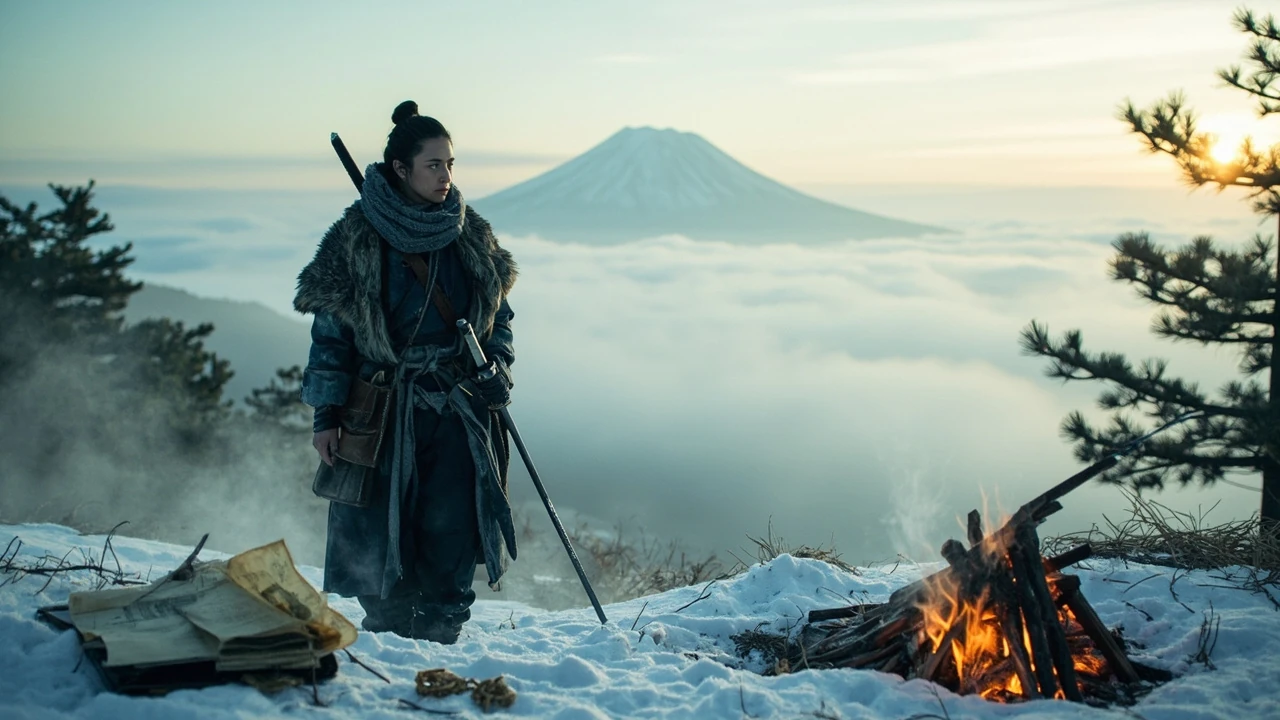
The sequel’s narrative is built around the idea that Atsu is not a continuation of Jin Sakai; she is a different character on her own path through Ezo. That choice has a direct effect on NG+. Because the story is character-led rather than a direct sequel in the plot sense, the second run does not feel like a retread of the same arc. The same beats still play out, but the player is bringing a different skill set and a different worldview to them, which is what NG+ is meant to enable.
Side content is where the second run can either shine or stall. The rumor map, the bounty board, and the wandering NPCs are designed around short, repeatable scenes, and they hold up well under replay. The longer companion quest lines are more delicate. They were written to land once, and forcing the player through them a second time on a faster pace can flatten the emotional beats. A useful workaround is to pick one or two companion arcs you want to slow down for, and treat the rest as fast travel stops rather than destinations.
For the cleanest experience, treat the long companion arcs as something you slow down for, even in NG+. They do not scale with difficulty, but they do scale with attention. The same applies to the major duels. The cinematics do not change, but the duels themselves do, and that is enough to make the second pass feel like a different story rather than the same one on a harder setting.
Systems you should not expect to change in ghost of yotei new game plus
Some systems are unlikely to be touched in an NG+ patch, because they sit outside the carryover and difficulty layers. Knowing which systems are stable helps you avoid the trap of building your second run around changes that will not happen. The list below is based on how Sucker Punch has treated similar systems in past updates, and on the general logic of what belongs in a settings menu versus a progression menu.
- Photo mode tools and filters. These are presentation features, not progression, and there is no design reason to reset them.
- Accessibility options. Visual assists, high-contrast mode, button remapping, and aim assist settings should remain unlocked, because they are a player preference, not a reward.
- Control scheme. NG+ patches rarely touch input mapping, because changing it would invalidate muscle memory earned in the first run.
- Soundtrack and music settings. The score is delivered as a system feature, and NG+ should not gate tracks you have already earned.
- Collectible cosmetics locked behind the in-game store or a paid expansion. NG+ does not normally re-price store items or change their unlock rules.
- Cloud save and cross-progression settings. These are platform-level features, and the studio has no reason to reset them between playthroughs.
These six categories are good signal for what is stable. If a system has a UI toggle rather than a quest gate, it is almost certainly a settings feature, not a progression feature, and it will carry over. That distinction matters because players often spend time in NG+ trying to re-unlock things that were never meant to be gated in the first place. A short read of the settings menu before you start NG+ will tell you which features are part of the carryover and which are not.
It is also worth noting that the studio has historically used NG+ patches to clean up minor bugs rather than to introduce new systems. If a feature is going to be added to Ghost of Yōtei post-launch, it is more likely to arrive as a separate update than to be folded into the NG+ patch. The Tsushima roadmap followed that pattern, and there is no reason to expect the sequel to break it.
How to prepare your save before ghost of yotei new game plus launches
When the NG+ patch drops, the most common mistake is to roll the credits on the main campaign and then immediately start the new run. That sequence throws away the cosmetic and exploration progress you earned along the way. A better workflow is to set up a clean save before the patch arrives, and to think of the save file as a snapshot of the first run that you want to bring forward.
- Finish the main story but leave the major side quest lines active. This gives you a single complete save for NG+ and a separate in-progress save for return play if you want one.
- Unlock every stance and technique for your main weapon before you start NG+. The carryover is more useful if the new run begins with the full moveset already in hand.
- Buy the cosmetics you actually want to use in the second run, including dyes and armor sets. NG+ usually keeps cosmetics, but it does not usually re-stock the merchant who sold them.
- Max out your charm loadout. NG+ should give you a reason to swap charms, not to grind for the slots to do it.
- Set a personal goal for the second run, like a no-damage duel, a specific weapon focus, or a new route through the map. Goals turn NG+ from a reset into a project.
- Take a final pass through the in-game mailbox and storage. NG+ usually does not carry forward pending quest items, and a clean inventory avoids the awkward moment of picking up a duplicate at the start of the second run.
The order matters: finishing the story first gives you a clean save file, then you build out the loadout you want to carry, and only then do you start the new run. If the patch is announced with a specific trigger, like a quest completion or a map milestone, complete that milestone on your clean save before starting NG+ so the system registers it as a valid starting point. It is also worth backing up the save file to the cloud or to a USB drive before you start NG+, because some platforms treat the new save slot as a one-way overwrite.
What to do if ghost of yotei new game plus is not in the first patch
It is worth saying out loud: the studio has not announced NG+ for the sequel at the time of writing. The Tsushima update arrived in October 2020, roughly five months after the July 2020 launch. If Ghost of Yōtei follows the same rhythm, expect a similar gap. If it does not, that is also fine, and the player base has more replay options than a single mode.
Useful substitutes while waiting for a confirmed patch include:
- Restarting the campaign on a higher difficulty with a self-imposed rule set, such as no armor upgrades or no ranged tools.
- Starting a second profile on the same platform to test a different build, then comparing the two runs.
- Focusing on the Legends-style co-op or horde modes that the studio has shipped alongside the campaign, if they are available for the sequel.
- Working through the in-game photography challenges, which are designed to push players into parts of the map they would otherwise skip.
- Tackling the harder bounty tiers and rumored duels on the current patch, which already use NG+ style enemy mixes on the highest difficulty.
None of these is a substitute for an official NG+ mode, but they are honest ways to keep the second playthrough interesting until the patch arrives. They also have a side benefit: by the time the NG+ update lands, you will already know which weapons and charms you want to focus on, and you can skip the first few hours of experimentation that usually slow down a second run.
It is also worth keeping an eye on the studio’s broader post-launch roadmap. The original Ghost of Tsushima received balance patches, photo mode expansions, and the Legends update in the same window as NG+, and the sequel is likely to follow a similar cadence. The BAFTA longlist coverage of the title is one signal that the studio has long-term post-launch support in mind, even if a specific NG+ date has not been announced.
Common design questions players ask about ghost of yotei new game plus
Three questions come up every time a Sucker Punch title gets an NG+ patch, and they are worth answering here because the answers have been consistent across the studio’s history. They are also the questions that tend to get the most confused answers in forum threads, so a clear write-up saves time later.
Does NG+ keep your horse?
In Ghost of Tsushima, the horse carried over with full cosmetics, and there is no design reason for the sequel to behave differently. Mounts are a player identity, not a balance lever. Expect the same here. The same logic applies to the wolf companion, which is a new addition in the sequel: if it is treated as a combat partner, its unlocks will probably carry over, but its progression meter may reset to keep the early-game balance intact.
Do you lose your house decorations?
Decorative items and home cosmetics are typically carried over in NG+ because they do not affect combat or progression. The studio treats them as a long-term collection, not a difficulty knob. The only exception is if a decoration is tied to a quest reward that the NG+ save no longer qualifies for, in which case the decoration stays in your inventory but the quest needs to be replayed to re-trigger the unlock animation.
Can you skip the tutorial in NG+?
Yes. Sucker Punch has always given NG+ players a way to skip the prologue so the second run starts at the first open-world beat. This is a usability feature, not a difficulty feature, and it almost always carries forward to the sequel. The skip is usually tied to a single flag in the save file, so as long as you finished the tutorial in the first run, the option will be available in the second.
Frequently asked questions
Has ghost of yotei new game plus been confirmed?
No. At the time of writing, Sucker Punch has not announced an NG+ mode for Ghost of Yōtei. The studio’s history with the original Ghost of Tsushima makes a post-launch NG+ update likely, but it is not a confirmed feature. The game’s own page on Wikipedia can be checked for the most current development status, since that entry is updated as new milestones are announced.
What carries over in ghost of yotei new game plus?
Based on the studio’s previous NG+ design, players can reasonably expect combat stances, technique unlocks, sword upgrades, armor sets, dyes, and bow types to carry over. World map progress, quest state, and merchant stock are likely to reset so the second run still feels like a fresh exploration rather than a checklist. Cosmetic rewards earned through the in-game store should also carry over, since they are tied to the player’s account rather than the save file.
Will the new weapon types carry over?
Almost certainly yes for stance and technique unlocks, and likely partial for unique weapon abilities tied to specific duels. The carryover should let you start the second run with the full moveset for at least one of the new weapons, which is the cleanest way to learn it under pressure. The kusarigama’s ranged meter is the most likely candidate for a partial reset, since it is balanced around late-game enemy health pools.
Will ghost of yotei new game plus be harder than the first run?
That has been the pattern with previous Sucker Punch NG+ updates. Expect tougher duels, new attack patterns on Mongol and bandit equivalents, and a harder AI profile for the late-game bosses. The cosmetic rewards and the full moveset carryover are what make that difficulty spike feel fair rather than punishing. The harder difficulty is also a reason to commit to a smaller set of stances rather than spreading points across the full tree.
Can I keep my horse and cosmetics?
Yes, with very high confidence. Sucker Punch has consistently kept cosmetic items, mount skins, and house decorations across NG+ runs, because they are long-term collection rewards, not balance levers. Player skill and player identity carry forward; world state and story progress do not. The wolf companion, if treated as a cosmetic follower, should follow the same rule, but its combat progression is more likely to reset.
Should I finish every side quest before starting ghost of yotei new game plus?
Finish the main story, but it is fine to leave side quest lines active on a separate save. This gives you a clean save for NG+ while preserving your side content for a return playthrough. The carried-over skill points and stances are what matter for the second run, not the side quest state itself. It also helps to clear the long companion arcs on the first save, since those tend to lose the most on a replay.
Will photo mode and accessibility settings reset in ghost of yotei new game plus?
No. Both are settings features rather than progression features, and Sucker Punch has not reset them in previous NG+ patches. Visual assists, button remapping, aim assist, photo mode filters, and soundtrack unlocks are expected to carry over into the second run. Cloud save and cross-progression settings should also remain stable, since they are handled at the platform level rather than the save level.
When is ghost of yotei new game plus likely to release?
If the studio follows the rhythm it set with the original, expect a free post-launch update a few months after the main campaign release, once the live team has a clear picture of player progression and balance. Until an official announcement is made, treat any specific date as speculation rather than fact. Coverage of the broader awards cycle, such as the BAFTA longlist that included the title, suggests the studio has long-term post-launch support in mind, but a date has not been confirmed.
Does ghost of yotei new game plus add new story content?
That depends on how the studio defines the patch. In the original, NG+ did not add new story beats; it added a harder version of the same campaign. If the sequel follows that pattern, expect a re-tuned version of the existing story rather than new cutscenes. Any new narrative content is more likely to arrive as a separate expansion or as part of a Director’s Cut-style release, both of which the studio has used before.
Can I switch between NG+ and the base game on the same save?
Usually not. NG+ is treated as a separate save slot, and returning to the base game requires a different file. The cleanest workflow is to keep two saves before you start NG+: one with the campaign complete, and one with side content still active. That way you can bounce between the two without losing progress on either.
Is ghost of yotei new game plus worth playing on the hardest difficulty?
If the studio follows the Tsushima pattern, the hardest NG+ setting is built for players who already know the combat system and want to test it under pressure. It is not a setting to start with on your first NG+ run, and it is not a setting to brute-force with raw damage charms. Plan a build around parry timing, stance switching, and tool usage, and treat the difficulty as a skill check rather than a gear check.