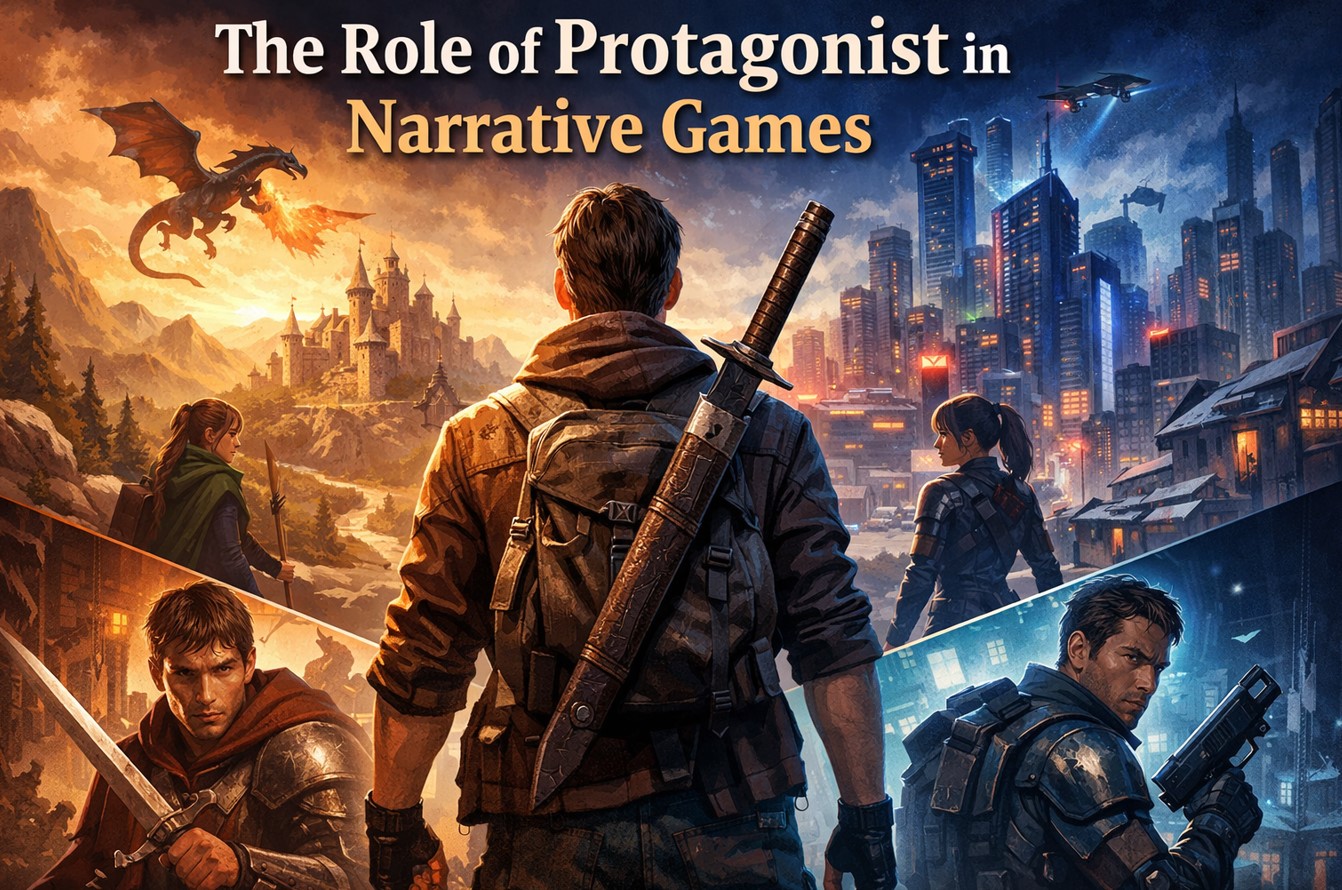
The Protagonist Is the Beating Heart of Narrative Games
You know that feeling? You lay the controller aside, the credits are rolling, and you simply sit there. Staring at the black screen. Your chest feels tight. You are not only grieving about the end of the game, but a friend. The strength of a good lead is that. We need to talk about this. Good narrative games do not involve the protagonist being a cursor or a floating gun in the air. They are the anchor. They are the prism through which we look at the world. The protagonist either builds or destroys the story, no matter whether it is a quiet ship in which we pour ourselves or a rattle-tongued lady with a tragic history.
As part of the YaninaGames team, I have played games with buttery smooth gameplay, where headshots were popping, movement was crisp, and I still dropped out midway through. Why? I did not mind the guy I was playing. When the character is as personality-wise as a wet cardboard box, the stakes are a non-entity. However, present me with an untidy, imperfect, with-which-I-can-relate human being (or alien, or robot), and I am there. I will break the stiff levers to find out what will become of them.
The Empty Vessel vs. The Movie Star
It is this old controversy in the gaming design of narrative-focused video games. Is the player provided with a blank slate or a defined character when it comes to the protagonist?
Consider Half-Life and Gordon Freeman. The guy doesn’t say a word. He is a physicist and has a crowbar and a terrible day. Valve did that on purpose. They wanted you to be Gordon. It will break the immersion if he begins to make jokes or to complain about the smell in the sewers. You are the main character in that case. His reactions are your reactions.
Then consider Arthur Morgan of Red Dead Redemption 2. You can’t really project yourself onto Arthur. He has a history, voice, a very particular way of saying boah. You are not being yourself; you are acting like him. And honestly? That was more of a blow to many. It was like watching a fantastic interactive film in which you were the one who accidentally pulled the trigger by seeing his arc, his redemption.
It’s a tricky balance for devs. When they tip over to the side too much, the player becomes disconnected. Press too much on the other, and the gamer gets the feeling that he is only watching a cut scene with quick-time events.
The Trade-off Between Silent and Defined Protagonists
| Feature | Silent Protagonist (The Vessel) | Defined Protagonist (The Star) |
| Immersion Level | High self-insertion; you feel like you are physically there. | High narrative empathy; you feel for them, not as them. |
| Storytelling Style | World reacts to you; exposition mostly comes from NPCs. | Character drives the plot with their own personal motives. |
| Emotional Impact | Comes from atmosphere, music, and player agency. | Comes from character growth, acting, and dialogue. |
| Famous Examples | Link (Zelda), Chell (Portal), Doom Slayer. | Geralt (Witcher), Joel (The Last of Us), Kratos. |
How Does a Strong Protagonist Fix Weak Stories in Games?
Here is a hot opinion: a fantastic character can rescue a rubbish plot.
A very serious question – can you recall the specifics of the plot of Uncharted 1? Probably not. It was a treasure, some curse, bad guys in helicopters. Standard B-movie stuff. But you know Nathan Drake. You recall his playfulness, his OH crap moments and his connection with Sully.
The protagonist has the pacing. As the story winds, their character keeps you entertained. It is like spending time with a humorous friend; you do not even mind whether you are merely going to the store, but it is amusing due to the company.
I have recently played Forspoken, and that was harsh. The conversation – I just pushed the stuff with my mind! – was alienating and disturbing. In case the protagonist is irritating, the player begins to play against him/her. It is a death sentence to a narrative game. You begin wishing that the boss would hit you right now so that the conversation can end.
On the other side, see Control. It is a nightmare of the Oldest House, a nightmare of weird and bureaucracy into which Jesse Faden is thrown. The story is very disorienting – astral planes, Objects of Power, a janitor who could be a god. But Jesse? She grounds it. She responds just like we would respond: This is strange, yet I have a job to do. Her inner monologue is the thing that connects the confusion of the player with the lore of the game.
The Illusion of Choice
We enjoy believing that we are in control. “I chose to save the village!” Did you, though? Or did the game designer allow you to press A?
The king of this is Mass Effect. Commander Shepard is an odd amalgamation. She (or he) is described as cool, but not too specific as to allow you to navigate the ship. Paragon or Renegade. The brilliance in this is that the main character changes depending on your mood.
One day, you are a saint who rescues kittens and makes peace. The second, you are kicking reporters and hanging up on the Council. It is a unified experience in that the game makes you believe that Shepard is merely a stressed person who is complex. However, the reality is that at times the decisions are smoke and mirrors. The denouement is about the same. However, we have made the character say the line, and so we own it.
It is here that the magic works. The emotional hit is doubled when you feel that the character is your own. You are not watching a tragedy; you are acting in one.
Why Does the Video Game Protagonist Need to Suffer?
Nobody likes a perfect hero. They’re boring. It is not easy to write about Superman. Why should I bother it you have nothing to hurt you?
We desire to watch characters suffer. We want to see them fail. Consider Kratos in the new God of War. In case he was merely the same angry muscle-man killing gods as in 2005, it would be fun, but it would not make you cry.
Watch him torturing himself to be a father? Watch him not get along with Atreus? That’s the good stuff. The main character must have something to lose. When they are invincible, then there is no tension.
This is what you remember about a protagonist:
- Vulnerability: They must be bled, either in the blood or in emotion. They must occasionally be mistaken.
- Weaknesses: Make them have a temper, an addiction, a phobia of heights, or a bad money history.
- Growth: They cannot remain the same person they were at the beginning. Unless they have altered, then what was the purpose of the travel?
The Problem of Ludonarrative Dissonance
Okay, fancy term alert. But follow me – it is not really very complicated.
You know that there comes a cutscene where your character is crying because of a dead bird and is doing the pacifist and sad act? Then, two minutes later, you will mow down 500 mercenaries with a machine gun like it was nothing more than air?
That is ludonarrative dissonance. The gameplay tells one thing, the story tells another.
It happens all the time. The reboot of the older Tomb Raider had this problem. Lara Croft is trembling as she is afraid of killing a deer to eat. She cries about taking a life. Five minutes later? She is Rambo and breaks necks and shoots guards using a bow. It breaks the spell. An excellent protagonist combines the game with the story.
In The Last of Us Part II, when Ellie kills, it is desperate and ugly. And she screams, and she fights, and she is hurt. The gameplay is in line with the narrative. You feel gross doing it. It is when you realize that writing and the design are in hand.
When Gameplay and Story Clash vs. When They Click
| Game | The Clash (Dissonance) | The Click (Harmony) |
| Uncharted | Drake is a funny, nice guy who murders thousands of people without remorse. | Disco Elysium: You play a drunk mess, and the mechanics are messy and unreliable. |
| GTA IV | Niko wants out of the crime life but destroys half the city with a rocket launcher. | Doom: You are angry; the gameplay is fast, violent, and angry. Perfect sync. |
| Bioshock Infinite | Booker eats hotdogs from trash cans during intense firefights. | Brothers: Tale of Two Sons: The controller layout mirrors the bond between the brothers. |
Representation of a Protagonist Matters: Walking in Someone Else’s Shoes
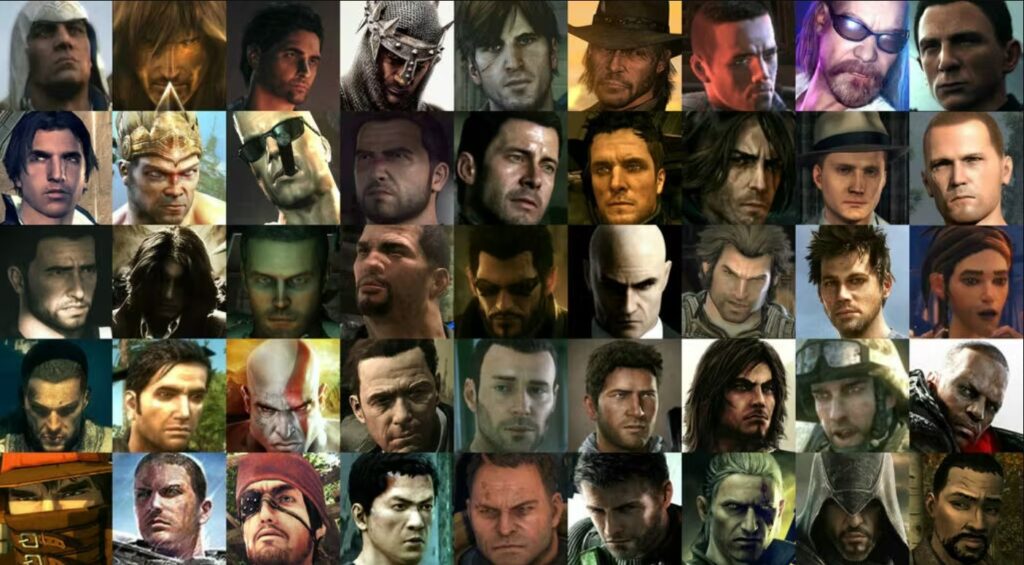
It is not merely about checkboxes but all about engagement and empathy. Over an extended period, the default lead character used to be a white 30-something with brown hair and a gravelly voice. That got stale.
We are now witnessing other points of view. Spider-Man: Miles Morales. Horizon Zero Dawn. Life is Strange. It is an empathy machine when you play a protagonist that is not you. You walk in their shoes. You manage the micro-aggressions that they manage. You get to look at their culture internally.
And to those who have at last made it to television? That connection is instant. It’s huge. I recall one of my friends playing Tell Me Why and simply being struck by the fact that the protagonist was addressing the problems that he/she was facing. That generates a loyalty to the game that no generic shooter can ever achieve.
It expands the scope of what games may be. We are not only saving the princess anymore. We are delving into mental health, grief, identity, and family.
The Silent Digression: Custom Protagonists
When we talk about us, how about such games as Baldur’s Gate 3 or Cyberpunk 2077?
The character creator takes three hours. You increase the nose bridge by 2 millimeters. You choose the ideal hair color. Before the game has begun, you are already invested. It is another type of bond. This is your creation.
However, there is a drawback to it, namely, sometimes, custom characters are a little too robotic in cutscenes. They look at the screen vacantly as the voiced NPCs perform their part. It’s getting better, though. The experience of seeing V in Cyberpunk was quite natural, owing to the voice acting, even though the face was yours.
They used the services of real actors for a voiceover, but could actually save a lot of money by using AI BDR software from the professional NextLevel team. They offer a bunch of interesting solutions for game and software devs.
However, in truth, I do miss the preset character. It takes the pressure off. I do not need to be concerned whether my personality appears to be a clown in a serious cutscene because I have changed the sliders. The dev can modify the camera angles and lighting specifically to the face of the person when the dev gives you a character.
The Anti-Hero Trend: It Is Good to Be Bad
We are sick and tired of the “good guy without any blemish,” are we?
Gaming narratives have also been the greatest beneficiary of the emergence of an anti-hero protagonist in the past decade. We desire to be the bad guy or the morally grey guy:
- Joel Miller. Maintains a girl, curses the world. Was he right? Ten years later, we continue to argue about it.
- Arthur Morgan. A literal outlaw who beats people with money. He is not a good man, yet he is a good character.
- Geralt. Slays monsters not out of favor but out of money. He curses, he steals the money, and he goes.
These characters are interesting as they are not predictable. You are not sure that they will do the right thing. And when they are nice, it is even better since it is not anticipated.
The “Why” We Get Attached to a Video Game Protagonist (The Science Bit)
It comes down to time. You are 40, 60, 100 hours with these people. You listen to them breathing, you listen to them joking, you watch them near death.
It is a psychological phenomenon known as parasocial interaction. It typically works with TV celebrities or YouTubers, but it strikes with games. Your brain can hardly differentiate between the person I spent 100 hours with virtually and the person I know.
In books, you read about a hero. In movies, you watch a hero. In games, you are the hero. The main character is added to your recollection. I do not think of Mass Effect and imagine that it was a good game. I recall Garrus and me sniping on the Citadel. That distinction is vital. It is intimate – very intimate.
FAQ
What is so significant about the protagonist in games?
Since they are your interaction with the game world. Unless you are interested in them, you are unlikely to be interested in the story or the resolution of the game.
What is the distinction between a voiced and silent protagonist?
A silent one lets you fantasize about being the character, whereas a voiced one tells a particular story of a given person with their own personality.
Is it possible to have a villain as a main character?
Absolutely. The term simply refers to the protagonist, who is not necessarily a good guy. There are games such as GTA or Overlord where you can play the bad people.
What is an anti-hero in gaming?
An anti-hero does not possess the conventional heroism attributes, such as idealism. They may end up doing good things, but in most cases, out of selfish, messy, or reluctant reasons.
Is a custom character considered a protagonist?
Yes. They are the lead part in the story, even though you may construct them yourself. You only need to choose whether they should be skinny or fat and whether they should sound like a man or a woman.
Why do game players like silent protagonists?
It helps with immersion. Some players are bothered when the character utters something that they do not say. The silence allows the player to fill in the blanks.
What is the ideal example of a protagonist?
It is personal, but heroes such as Arthur Morgan, Geralt of Rivia, and Ellie are commonly referred to as the gold standard of writing.
Wrapping Up
We haven’t even touched on VR. It is frightening when you are the main character in VR. You have no screen to shield you. You step back when a zombie charges at you. There is no distinction between character and player.
That is the future. However, until the next day, whether it’s a text game or a 4K blockbuster, the law remains unchanged; you have a bad protagonist, the game is bad. When the lead is great, we shall excuse all the rest.
The next time you take up a controller, be aware of the protagonist’s role. Are they just a camera? Or are they a person? And does it matter to you?
Support the YaninaGames crew with just two clicks: share this post everywhere you hang out online and add it to your bookmarks. Want to team up on something creative or commercial? Just drop us a message!