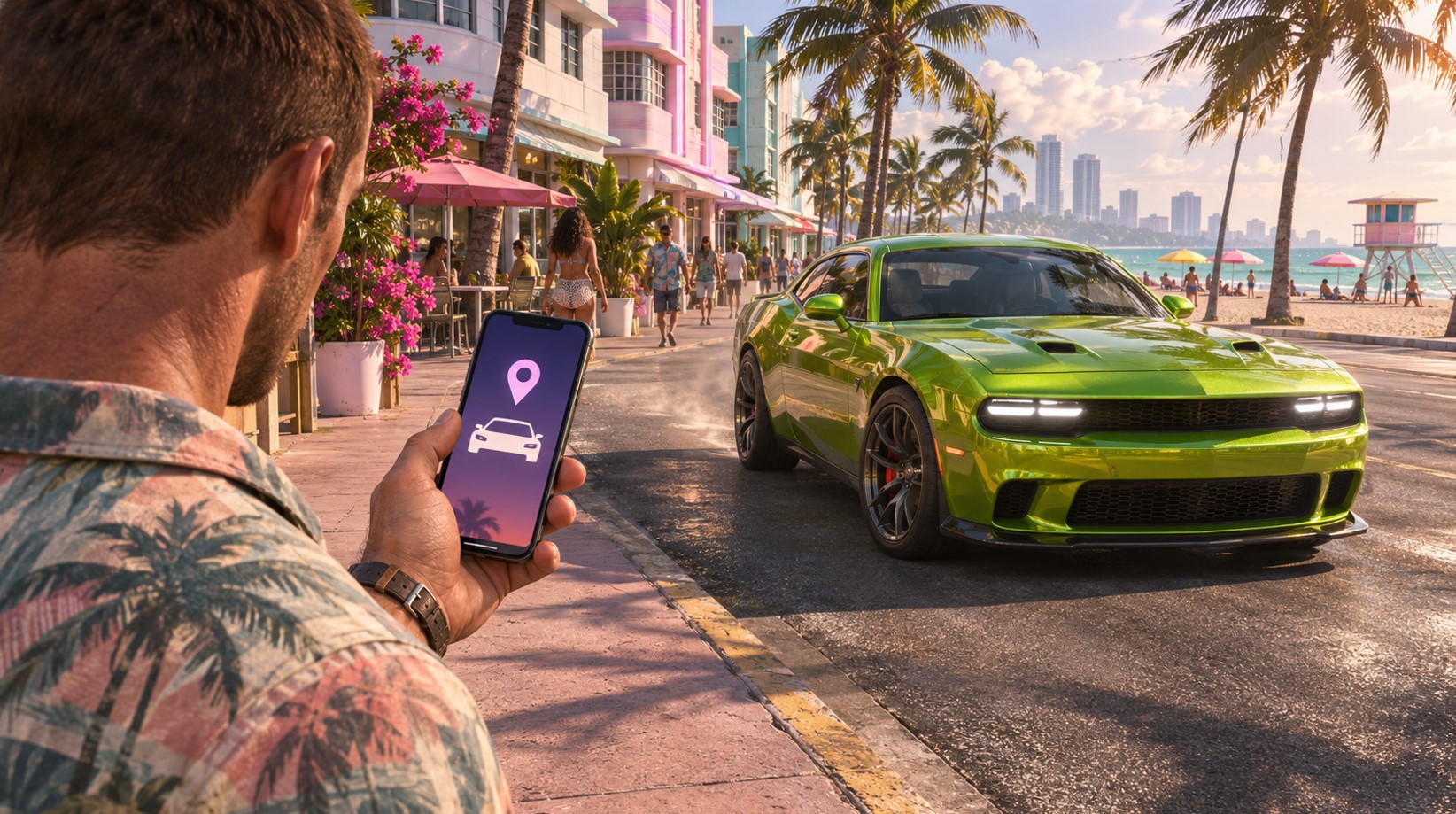
GTA 6 Cops Don’t Chase You – They Investigate You
The single most common complaint on launch day isn’t that GTA 6’s police are too aggressive. It’s that people can’t shake them using the tricks that worked for twelve years. Drive out of the circle, hide for thirty seconds, done. That was GTA 5. It does not work here. Rockstar has rebuilt the whole system around information rather than proximity. The GTA 6 cops in Leonida are running an investigation, and every star on your HUD is attached to something they actually know about you. Until you take that knowledge away, distance alone won’t save you.
Here’s the complete model, and the order you need to do things in.
The Rule That Changes Everything: No Witness, No Crime
Start here, because it reframes everything else. In GTA 6, a crime only generates a wanted level if it’s witnessed, reported, or trips an alarm. Commit something in an empty alley with nobody watching and no alarm to trigger, and the police never find out.
That’s a genuine stealth layer the series hasn’t had before. It also means the wanted system is reactive rather than omniscient – you’re not fighting a game that automatically knows what you did.
Severity scales too. Point a gun at a group without firing, and the crime still gets reported, but the wanted level stays low because nobody was hurt. Escalate to violence, and it climbs fast. How far you take things, how long the pursuit lasts, and how much destruction you cause on the way out all feed the number.
Layer One: The Six Stars
GTA 6 restores the sixth star, last seen in GTA IV and Chinatown Wars. GTA 5 capped at five.
The stars do what they always did: indicate how hard the response is coming. One star is a local unit. Six is the full weight of the state of Leonida, and reaching it is an achievement in itself – one of the game’s screen filter cheats requires surviving six minutes at six stars.
But the star count is only half the system now.
Layer Two: Heat, and What the Cops Actually Know
Underneath your stars sits a row of red icons. These are the new thing, and they’re the part people are ignoring.
Each icon represents a specific piece of information the police have gathered about you, supplied by eyewitnesses or by the officers themselves. The more icons lit, the easier it is for them to identify you and restart a pursuit.
| Icon | What It Means | How to Remove It |
|---|---|---|
| Face | Police know what Jason and Lucia look like | Cover your face, change appearance |
| Clothes hanger | They know your current outfit | Change clothes after breaking line of sight |
| Vehicle | They have your car’s description | Switch vehicles out of sight |
| Weapon | They saw the weapon used in the crime | Switch or holster that weapon |
| Accomplice | They know you’re travelling as a pair | Split Jason and Lucia up |
| Witness-based tracking | A specific person reported you | Leave the area before they finish |
Engadget counted six icons in total during hands-on time. The practical implication is that losing the cops isn’t one action – it’s a checklist. If three icons are lit, you have three problems, and solving one doesn’t solve the others.
This is why people are struggling. They’re doing the GTA 5 thing of driving fast and hiding, which addresses line of sight and nothing else.
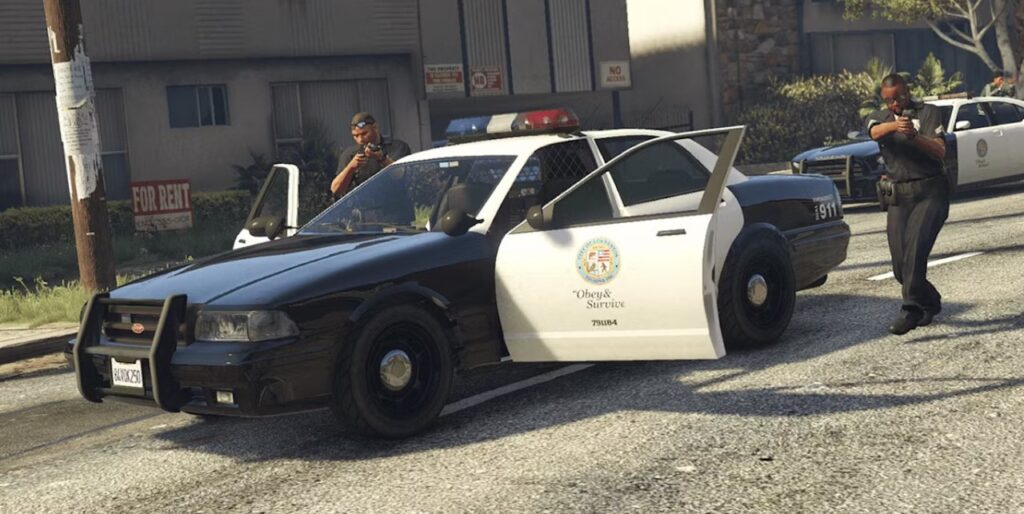
Reading the Star Colours
For the first time in the series, the stars change colour to tell you what state the pursuit is in.
Solid white stars mean the police have identified you and currently have eyes on you. You’re being actively pursued. This is the dangerous state.
Hollow or outlined stars mean they’re searching but haven’t confirmed it’s you. The crime is logged, units are looking, but you haven’t been positively identified. This is the state you want to reach, because from here you can genuinely slip away.
Watching that transition is how you know whether breaking line of sight actually worked. If the stars are still solid, it didn’t.
The GTA 6 Cops Escape Sequence, in Order
Order matters enormously here, and getting it wrong is the most common mistake being made today.
- First, break line of sight. Turn into narrow streets, cut behind buildings, take alleyways. Speed alone doesn’t help if they can still see where you’re going.
- Then change your identifying details. Swap vehicles, change clothes, switch weapons. Doing this while they can see you accomplishes nothing – they simply update the description.
- Then leave the search area. Open your map and move out of the marked zone.
- Then stay away. Give the remaining attention time to fade before returning or committing anything else.
That sequence is the whole game. Changing your shirt in front of a police officer is not a disguise; it’s a costume change with an audience.
Rockstar North’s Rob Nelson has confirmed that leaving the Heat Area is one of the ways to end the continuing search, so the final step isn’t optional – it’s part of the design.
An early mission called Unwanted Attention teaches this directly, tasking you with escaping a flashing red-and-blue search zone. If you’re struggling with pursuits generally, that mission is the tutorial you may have rushed.
The Hot Area Problem
Here’s the mechanic that catches everyone out, and it’s borrowed from Red Dead Redemption 2’s bounty system.
Losing your wanted level does not mean the area forgets. The place where you committed the crime becomes a Hot Area, and police presence there stays elevated even after your stars clear. Drive back in too soon and the wanted level can come straight back.
You can check this. Hover over the hot region on your map, and it shows the star level still active there.
Hot Areas cool down over time if you don’t commit anything else in that region. But they mean Leonida now has a memory, and the practical consequence is that you can’t rob the same place repeatedly without the neighbourhood turning against you.
If you must return to a hot region, come in a different car, wearing different clothes, ideally without your partner. You’re walking back into a place that has your description.
Why Your Minimap Stopped Helping
Two changes here, both deliberate.
GTA 6 cops and vision cones no longer appear on the minimap. In GTA 5 you could watch the blue dots and the cones, drive around them, and escape mechanically. That information is gone, which forces you to actually look at the world instead of the corner of the screen.
At higher star levels, the minimap gets obscured by red and blue flashing lights. Exactly when you most want tactical information, the game takes it away.
Players who want vision cones have been asking for them for years – the community discussion before launch was full of people tired of being seen through walls. Rockstar’s answer was to give the cops realistic sight lines and then remove your ability to see them, which is a bolder choice than simply drawing cones.
Splitting Up Jason and Lucia
The Accomplice icon is the one most people won’t think to address. If the police know you’re travelling as a pair, that’s a description they can match. Two people together is far more distinctive than one person alone, and it narrows their search dramatically.
Separating Jason and Lucia breaks that match. It’s one of the fastest ways to make yourself harder to identify, and it’s a tactic that simply didn’t exist in previous games.
What the Cops Do Differently in a Fight
Beyond the information systems, the behaviour has changed:
- They work as a team rather than a swarm. Coordinated positioning instead of a wall of officers piling into the same doorway.
- Emergency services are integrated. Ambulances turn up alongside police, so the response is a whole system rather than just cop cars.
- Response escalates by type, not just volume. Higher stars bring qualitatively different units, not simply more of the same.
- Traffic and street layout work against you. Leonida has heavier traffic and more realistically proportioned streets than previous entries, which makes high-speed escapes harder and foot escapes through alleys far more viable.
That last point deserves emphasis. Abandoning your car out of sight and moving through buildings and alleys is a legitimate strategy now, where in GTA 5 it was usually a mistake.
GTA 6 Cops vs GTA 5 Cops
| Aspect | GTA 5 | GTA 6 |
|---|---|---|
| Maximum stars | Five | Six |
| What triggers a wanted level | Proximity-based detection | Witnessed, reported or alarm-triggered |
| Star appearance | Static | Colour changes by identification state |
| What police track | Your location | Face, clothes, vehicle, weapon, accomplice status |
| Minimap | Shows cops and vision cones | Shows neither; obscured at high stars |
| After escaping | Area resets | Hot Area retains elevated presence |
| Escape method | Leave circle, wait | Break sight, change description, leave area |
The summary: GTA 5’s police were a proximity problem. GTA 6’s are an evidence problem.
Mistakes Players Are Making Today
From the pattern of complaints across GTA 6 launch day:
- Changing clothes in plain sight. If they can see you, they update the description. Break line of sight first.
- Treating distance as the whole answer. You can drive to the other side of Leonida and still be identified if every icon is lit.
- Ignoring the icons entirely. Most people haven’t registered what the red symbols mean, which means they’re solving one problem out of four.
- Returning to a Hot Area too quickly. Your stars cleared; the neighbourhood’s didn’t.
- Keeping Jason and Lucia together while wanted. The accomplice flag is free information you’re handing the police.
- Expecting the minimap to help. It won’t, and at high stars it actively won’t.
The GTA 6 Criminal Profile, Briefly
One more system worth knowing about, separate from all of the above.
Your wanted level is about the crime you just committed. Your Criminal Profile is about your habits over time – the kind of criminal you’ve been across the whole game. They’re different things tracked separately, and the profile persists in a way individual pursuits don’t.
It’s early days and the community is still mapping exactly what the profile influences, but it’s worth knowing it exists and that the game is keeping a longer record than the stars suggest.
FAQ
How many wanted stars are in GTA 6?
Six, up from GTA 5’s five. The sixth star returns from GTA IV and Chinatown Wars.
What do the red icons under my stars mean?
They show what the police know about you – your face, clothes, vehicle, weapon, and whether you’re travelling as a pair. Each one needs addressing separately.
What’s the difference between solid and hollow stars?
Solid white means police have identified you and can see you. Hollow means they’re searching but haven’t confirmed it’s you.
How do you lose the cops in GTA 6?
Break line of sight first, then change your vehicle and clothing, then leave the marked search area, then stay away while the heat fades.
Why do the police find me again after I escape?
Probably a Hot Area. The region where you committed the crime keeps elevated police presence after your stars clear, and returning too soon can restart the pursuit.
Do crimes always give you a wanted level?
No. A crime must be witnessed, reported, or set off an alarm. Unobserved crimes don’t register.
Why can’t I see cops on my minimap?
Rockstar removed cop markers and vision cones from the minimap, and at higher star levels the minimap is obscured by flashing lights.
Think Like a Suspect
The mental shift that makes this system click: stop asking “how far away am I” and start asking “what do they know about me.”
Every pursuit in GTA 6 is a list of facts the police have collected, and escaping means deleting those facts one at a time. Line of sight, then description, then location, then patience. In that order, every time.
Get it right and the new system is the best police model the series has ever had. Get it wrong and you’ll spend your first evening in Leonida wondering why a helicopter keeps finding you.
If this explained why your old escape routine stopped working, pass it on – share it, bookmark it, send it to the friend still driving in circles. And if you’ve got a creative or commercial project that needs handling before anyone notices, YaninaGames leaves no witnesses.