The Best Mobile Controller Is the One That Fits Your Phone, Not the One With the Best Review Score
Every guide about picking the best mobile controller that you’ve read today has probably handed you a ranked list. Number one, number two, number three, buy link, done. The problem is that mobile controllers fail for reasons a ranked list can’t capture. Your case doesn’t fit. Your phone is a foldable. Your OS is a version too old. You bought the wireless one and then found out it doesn’t talk to your Switch. None of that shows up in a star rating.
So this one works differently. Three questions first, picks second. Answer the questions and the right controller mostly selects itself – and you avoid the restocking fee.
The Three Questions That Actually Decide This
Before any brand names, settle these:
- How does it connect? Wired USB-C or Bluetooth. This single answer rules out roughly half the market for you.
- What is your phone wearing, and how big is it? Case thickness and phone size kill more controller purchases than any spec. Foldables narrow the field dramatically.
- What’s under the thumbsticks? Standard potentiometers, Hall effect sensors, or TMR. This decides whether your controller survives two years or develops drift.
Everything below follows from those three.
Fork One: Does It Plug In or Pair?
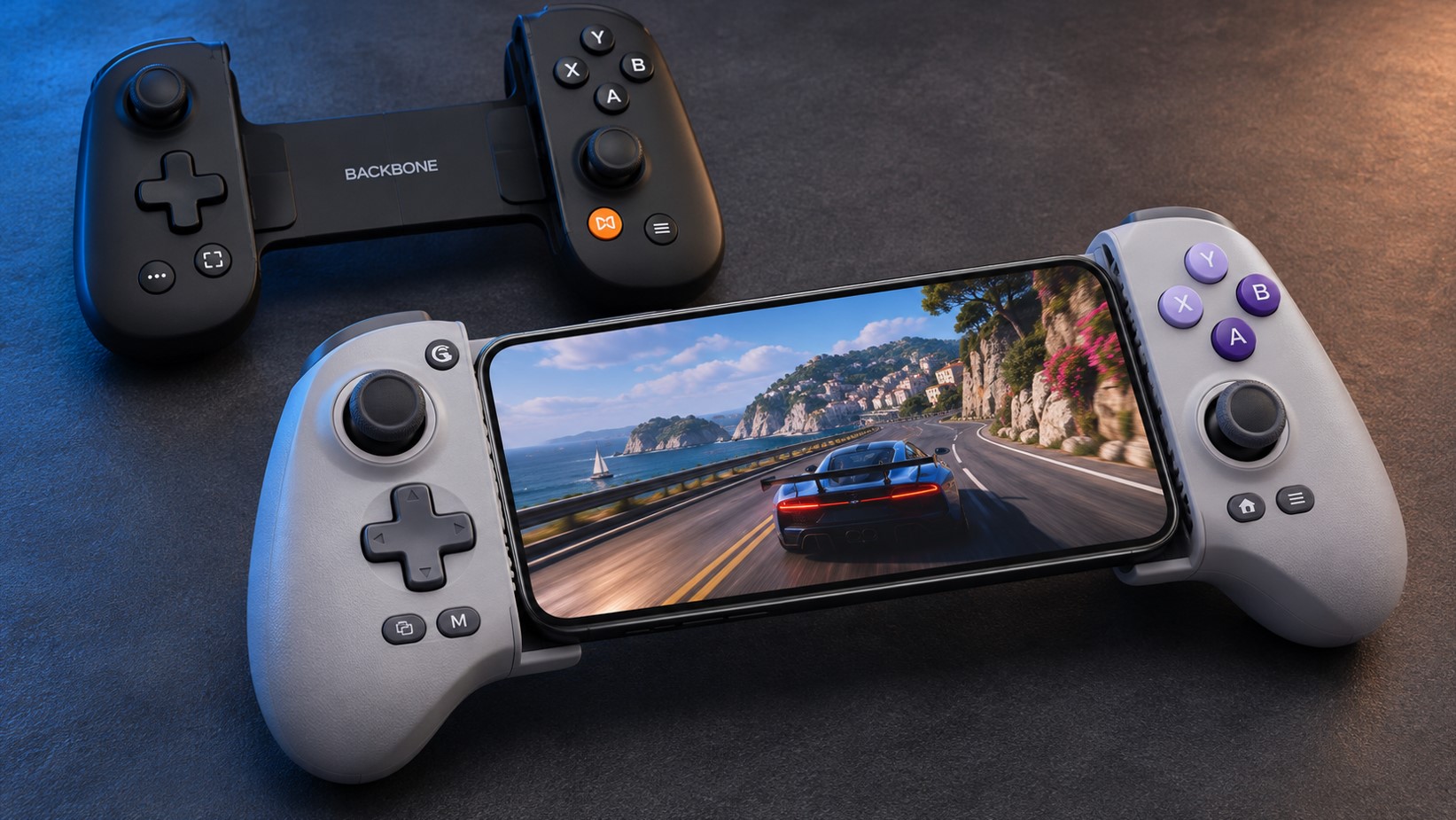
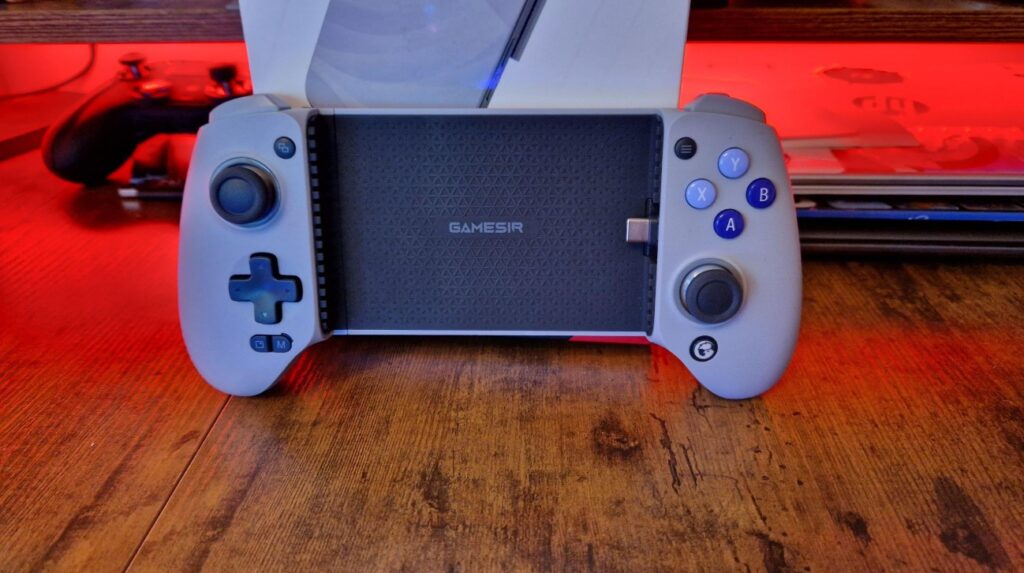
Wired USB-C gives you the lowest latency, no charging to think about, and no pairing. The controller draws power from your phone, which is the trade-off – you’re eating battery while you play. The GameSir G8 Galileo, the Backbone One, the Razer Kishi V3 Pro and most of the clip-on field sit here.
Bluetooth costs you a small amount of latency and adds a battery to charge, but it buys you something significant: the controller stops caring about your phone’s port placement. That’s why Bluetooth models handle foldables, thick cases and tablets so much better.
The GameSir G8 Plus is essentially the wired G8 Galileo with Bluetooth instead, and that one change makes it work with large foldables and the Switch. Tom’s Guide tested it across a stack of games and reported input lag barely perceptible in practice.
If you play competitive shooters where milliseconds genuinely register, go wired. For everything else – and that’s most people, most of the time – the latency argument is mostly theoretical in 2026.
Fork Two: What Is Your Phone Wearing?
This is the fork nobody warns you about, and it’s the leading cause of returns:
- Backbone’s controllers are the most compact in the category, which is exactly why thick cases often have to come off before the phone will seat properly. If you run a heavy protective case and you’re not willing to pull it every session, that’s a real daily annoyance.
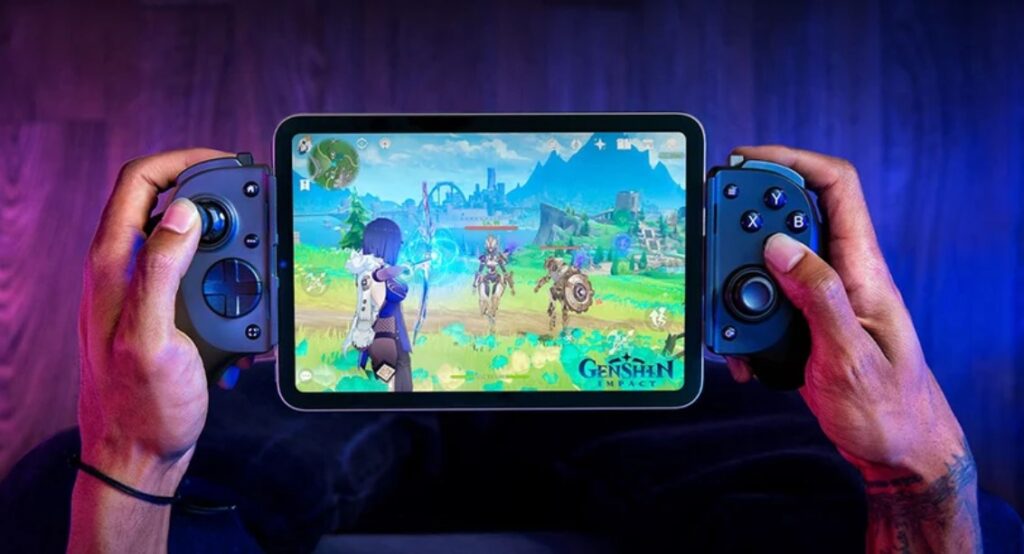
- Razer built the Kishi V3’s entire pitch around fixing this. Case compatibility is the headline feature, and the V3 family handles the biggest phones with cases still attached. The Kishi V3 Pro XL goes further and accommodates proper tablets.
- The Kishi Ultra, the previous flagship at around $130, also fits 8-inch tablets including the iPad Mini – worth knowing if that’s your main screen.
- Foldables are their own category. A clip-on wired controller and a Galaxy Z Fold are not natural partners. Bluetooth is the sane answer there, which again points at the G8 Plus.
One compatibility trap that catches people: the Razer Kishi V3 Pro requires Android 14 or newer, or iOS 18 or newer, per Windows Central’s review. Older phones are simply out. Check your OS version before ordering.
Fork Three: What Is Under the Thumbsticks?
Three technologies, and the difference matters more than almost anything else on the spec sheet.
- Potentiometers are the traditional design. Physical contact, physical wear, eventual drift. The Backbone One uses standard components here and doesn’t market Hall effect at all.
- Hall effect sensors read magnetic fields instead of scraping a contact surface. No wear, no drift. The GameSir G8 series built its reputation on this, and it’s why the G8 Galileo keeps winning value awards.
- TMR (tunneling magnetoresistance) is the newer magnetic approach, generally more precise and more power-efficient than Hall effect. The Razer Kishi V3 Pro is the main clip-on running TMR, and it’s a genuine part of what you’re paying for.
If you keep accessories for years, this fork alone can justify spending more. A $150 controller that never drifts outlasts two $70 controllers that do.
The Best Mobile Controller for Most People Right Now
GameSir G8 series – roughly $80
The consensus across GamesRadar, Tom’s Guide, Pocket Tactics, and most tested round-ups this year lands in the same place, and it’s not close. GamesRadar’s review of the G8 Galileo called it “a certified Backbone breaker,” and its 2026 buying guide names the G8 Plus the best phone controller available for versatility.
The reason is straightforward value. Hall effect sticks and triggers, full-size console-style grips, and a price around half what the premium options ask. Tom’s Guide described the G8 Plus as the closest thing to wrapping an Xbox Elite controller around a phone, and that’s the right comparison for how it feels in the hand.
Two versions, and the split is clean:
- G8 Galileo is the wired USB-C model. Cheaper, includes a 3.5mm headphone jack, lowest latency.
- G8 Plus is Bluetooth. Costs a little more, adds Switch support and foldable compatibility, and carries magnetic faceplates you can lift off to swap thumbsticks or rearrange the face buttons between Xbox and Nintendo layouts.
The downside is bulk. The G8 is a chunky thing, and it won’t disappear into a jacket pocket the way a Backbone does. If portability is your priority, this isn’t your controller.
When to Spend the Extra: Razer Kishi V3 Pro
The price is around $150 (£149.99, AU$269.95). This is the performance pick, and TechRadar’s review landed on “expensive but solid value” – which sounds like a hedge until you look at what’s included.
TMR sticks. Console-grade ergonomics with full-size buttons. Four extra remappable inputs, bumpers and back buttons, which addresses the specific criticism reviewers levelled at the Kishi Ultra for offering only extra bumpers. Multiple sizes including the XL. And Razer Nexus, the companion app, is free.
That last point matters more than it sounds. Backbone’s app is the most polished in the category but pushes a Backbone+ subscription at around $4 a month. Over two years, that’s roughly $96 of software on top of your hardware.
The honest criticisms: there’s a Razer tax, the standard non-Pro Kishi V3 has been described by reviewers as feeling plastic-y, and the whole family is large. GamesRadar flagged it as best suited to people with bigger hands.
Also worth flagging for one specific group: neither the Kishi V3 Pro nor the Backbone Pro supports the Switch. The GameSir G8 Plus does. If Switch play is part of the plan, that single fact decides it.
When Backbone Still Makes Sense
Backbone’s hardware is no longer the spec leader, and that’s fine, because it was never really competing on specs.
Backbone One (2nd Gen) – commonly $70 to $100 depending on sale – remains the easiest recommendation for a first mobile controller. The most compact body in the category, the most polished software, magnetic adapters, a headphone jack, and a PlayStation Edition if you want the matching buttons. No Hall effect, and thick cases are a problem, but for cloud gaming and casual play it simply works with less fuss than anything else.
Backbone Pro at around $170 is the most versatile device in the entire category, and that’s the reason to consider it. FlowState Bluetooth, roughly 40 hours of battery, case compatibility, and – the differentiator – it detaches and works as a standalone wireless pad for a TV or PC. One controller, three contexts.
It’s also the most expensive thing here, and it still doesn’t do Switch.
The Best Mobile Controller – The Budget End
You don’t have to spend $80. Several genuinely decent options sit under $50:
- GameSir X2s – around $50, Hall effect sticks, plug-and-play. The best way to test whether you even like mobile controllers before committing.
- GameSir X5 Lite – around $45, built around Xbox cloud play.
- GameSir X5s – GamesRadar’s budget pick in its 2026 guide, and it handles the Switch 2.
- 8BitDo Ultimate 2C Wireless – roughly $45 to $55. Not a clip-on; a traditional pad with Bluetooth and a dongle, for playing on a propped-up phone or a TV.
The compromise at this tier is usually build quality and app support rather than the sensors, which is a better trade than it used to be.
The Best Mobile Controller Price
| Controller | Approx. US Price | Connection | Sticks |
|---|---|---|---|
| GameSir X5 Lite | ~$45 | USB-C | Hall effect |
| GameSir X2s | ~$50 | USB-C | Hall effect |
| Backbone One (2nd Gen) | $70-$100 | USB-C | Standard |
| GameSir G8 Galileo | ~$80 | USB-C | Hall effect |
| GameSir G8 Plus | $80-$99 | Bluetooth | Hall effect |
| GameSir X3 Pro | $79-$89 | USB-C | Hall effect |
| Razer Kishi Ultra | ~$130 | USB-C | Hall effect triggers |
| Razer Kishi V3 Pro | ~$150 | USB-C | TMR |
| Backbone Pro | ~$170 | Bluetooth | Standard |
Treat these as approximate. Mobile controller pricing moves constantly, GameSir discounts aggressively, and sale prices on the Backbone One in particular swing by $30 depending on the week. Special editions sit slightly above base – the G8 Plus Fortnite Edition runs around $90.
The Three Flagships, Head to Head
| GameSir G8 Plus | Razer Kishi V3 Pro | Backbone Pro | |
|---|---|---|---|
| Price | ~$80 | ~$150 | ~$170 |
| Connection | Bluetooth | USB-C | Bluetooth |
| Sticks | Hall effect | TMR | Standard |
| Switch support | Yes | No | No |
| Foldable-friendly | Yes | Limited | Yes |
| Works off-phone | No | No | Yes |
| App cost | Free | Free | Free tier + ~$4/mo |
| Extra buttons | Via faceplates | 4 remappable | Yes |
Read that table as three philosophies rather than three rankings. GameSir sells hardware value. Razer sells performance and ergonomics. Backbone sells convenience and software.
Picks by What You Actually Play
- Cloud gaming (GeForce Now, Xbox Cloud, PS Remote Play) – Backbone One. The app’s library organisation is genuinely the best part of the product, and raw stick precision matters least here.
- Competitive shooters (CoD Mobile and similar) – Razer Kishi V3 Pro for TMR precision, or the G8 Galileo wired if you’d rather not spend $150.
- Emulation and long sessions – GameSir G8 series. Full-size grips are the thing that stops your hands cramping at the ninety-minute mark.
- Switch 2 alongside your phone – GameSir G8 Plus or X5s. The premium options from Razer and Backbone are out.
- iPhone specifically – Backbone One and Backbone Pro are designed around Apple compatibility; the Kishi V3 Pro covers recent iPhones, and the Scuf Nomad is Scuf’s iPhone-focused entry.
- Tablets – Kishi V3 Pro XL, or the Kishi Ultra for 8-inch tablets, including the iPad Mini.
What Nobody Tells You Before You Buy:
- Check your OS version first. The Kishi V3 Pro needs Android 14 or iOS 18 and up. This is the single most common incompatibility right now.
- Measure your case, not your phone. Compact controllers like the Backbone One often need the case off entirely. Decide now whether you’ll actually tolerate that.
- Wired controllers drain your phone. You’re powering the controller from the handset. Long sessions on a wired clip-on cost noticeably more battery than Bluetooth.
- Subscription costs compound. A free companion app is worth real money over the life of the hardware.
- Not every game recognises every controller. Mobile controller support is still inconsistent title by title, and some popular games have historically failed to detect specific models. Check your main game before committing.
- Headphone jacks are not universal. If you play wired audio, confirm it. The G8 Galileo has one; several rivals don’t.
FAQ
What’s the best mobile controller overall in 2026?
The GameSir G8 series for most people – Hall effect sticks and full-size ergonomics at around $80. It takes the top spot in most tested round-ups this year.
Which mobile controller is best for iPhone?
Backbone One or Backbone Pro, both built around Apple compatibility. The Razer Kishi V3 Pro works with recent iPhones, and MFi-certified GameSir models are safe picks.
Is the Razer Kishi V3 Pro worth $150?
If you want TMR sticks, the most console-like ergonomics available, four extra remappable buttons and a free app, yes. If you mainly play cloud games, you won’t feel the difference.
Do any mobile controllers work with the Switch?
The GameSir G8 Plus and X5s do. The Backbone Pro and Razer Kishi V3 Pro do not.
Hall effect or TMR – does it matter?
Both resist drift, which standard potentiometer sticks don’t. TMR is generally more precise and more power-efficient. Either beats a standard stick for longevity.
Will a controller fit my phone with the case on?
Depends on the model. The Razer Kishi V3 family was designed specifically for case compatibility. The Backbone One often needs the case removed.
What’s the cheapest mobile controller worth buying?
The GameSir X2s at around $50, or the X5 Lite at roughly $45. Both have drift-resistant sticks, which is rare at that price.
Picking One and Moving On
If you skimmed to the bottom: buy the GameSir G8 Plus if you want the best hardware for the money and Switch compatibility, the Razer Kishi V3 Pro if performance matters more than price and your phone runs a current OS, and the Backbone One if you mostly stream games and want the least friction possible.
If you’re still torn, the G8 is the default for a reason. It’s the pick that the fewest people regret.
And whichever you land on, check the case question before you order. That’s the one that bites.
If this saved you a return label, send it along – share it, bookmark it, paste it at whoever’s been asking you for a recommendation all month. And if you’ve got a creative or commercial project that needs a good grip, the YaninaGames team is always one button press away.