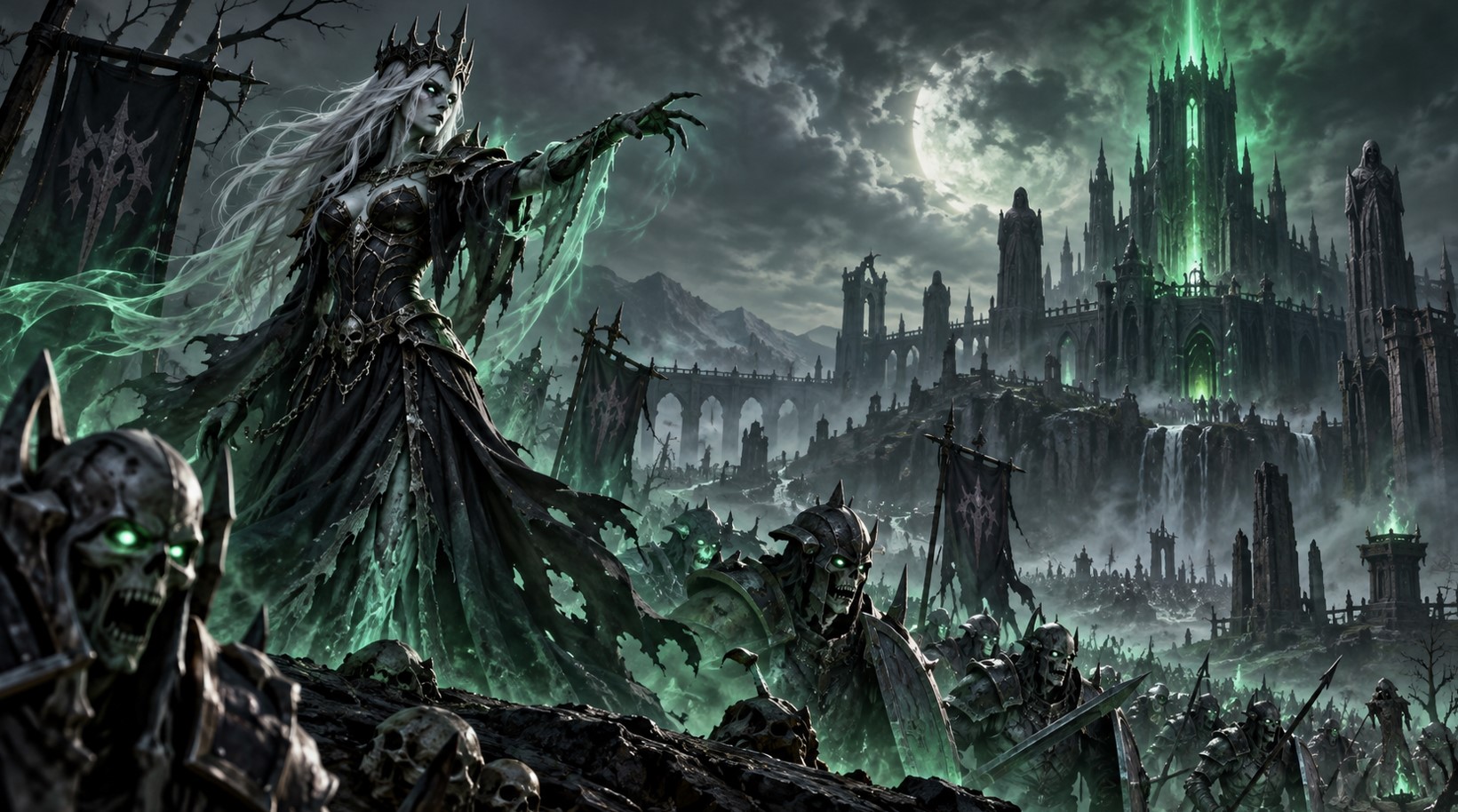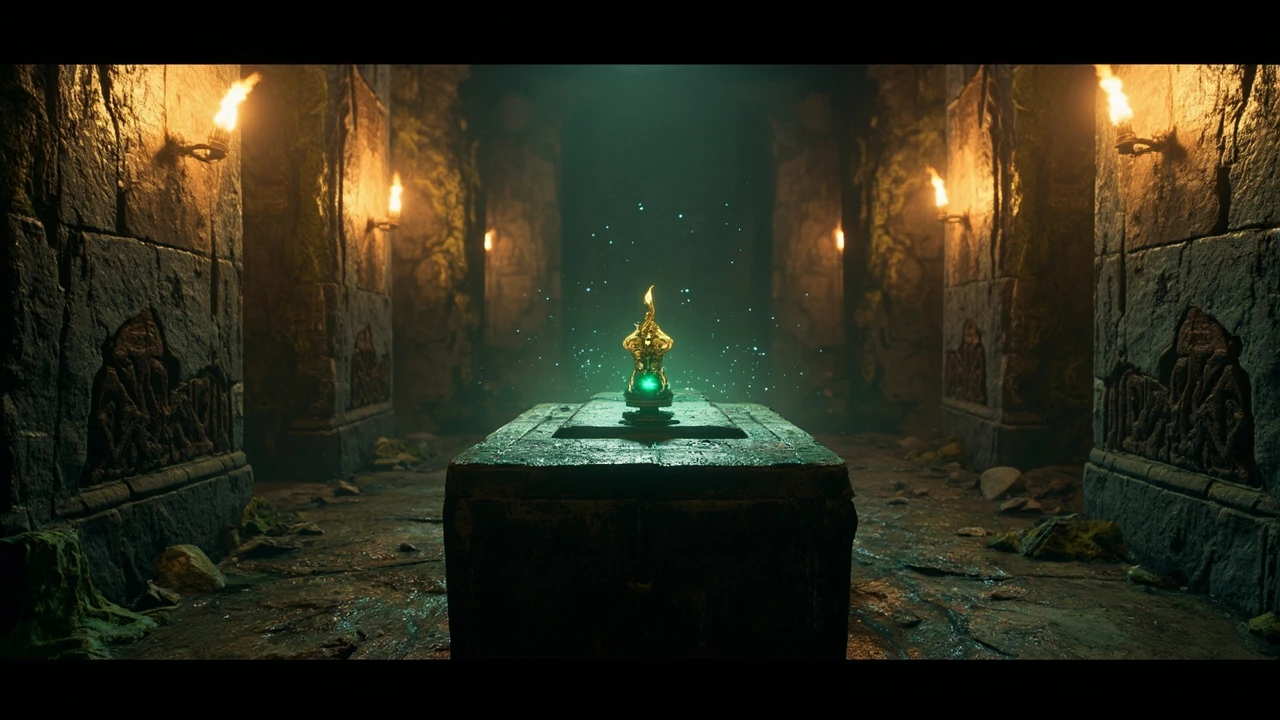
Cursed tomb treasure in game design
Treasure rooms are among the oldest temptations in interactive entertainment, and a cursed tomb treasure is the version that turns reward into a question of cost. Players walk past a sarcophagus because the room looks wrong, then step closer because the glow looks right, then open it because the design made opening it feel earned. That sequence is not a coincidence. It is a layered system: visual readability, risk signaling, reward probability, and a follow-up penalty that makes the next encounter feel different. When the system works, players tell stories about the run. When it fails, players remember only the trap that killed them with no recourse.
This article treats cursed tomb treasure as a deliberate design pattern, not a flavor text label. The goal is to give a working developer or designer a clear model for how risk, reward, and feedback combine inside a single container, plus the constraints that decide whether the mechanic feels fair. The examples use representative systems drawn from publicly observable design across roguelikes, action RPGs, looter shooters, and dungeon-focused indie titles, so the discussion stays grounded in the way real games expose this mechanic to players.
What counts as a cursed tomb treasure mechanic
Most loot systems answer one question, “what did the player get?” A cursed tomb treasure answers a second question at the same time: “what did the player give up?” The mechanic is defined by three elements that have to land together for the player to perceive the design as intentional rather than unfair.
- A clearly bounded container. The cursed object lives in a visible, interactable place such as a chest, sarcophagus, altar, idol, or sealed urn. Players need to know that opening it is a choice and not an environmental accident.
- A reward that exceeds the baseline loot of the surrounding area. Higher rarity, a unique modifier, a currency payout, or a permanent unlock are all common. The reward is what makes the player consider the risk in the first place.
- A cost applied at or after the moment of opening. The cost can be a stat drain, a debuff, a countdown, a teleported enemy, a broken item, a corruption meter, or a hidden quest trigger. The cost only needs to be legible enough that the player can connect it to the choice they made.
If any of these three is missing, the design collapses into something else. A chest with a strong reward and no cost is just good loot. A chest with a cost and no visible reward is a trap. The cursed tomb treasure pattern only exists when reward and cost live in the same container and the player sees both, even if the cost stays hidden until after the choice.
Why designers reach for the cursed treasure pattern
The pattern is popular because it does three useful jobs in a single interaction. It gives experienced players a reason to keep engaging with the loot system, it gives narrative designers a way to surface worldbuilding through objects rather than exposition, and it gives producers a measurable moment of decision in a playtest. Each of those jobs can be evaluated separately, which makes the pattern easy to test and easy to tune.
The first job, player retention, is about variance. A loot table that always gives the same statistical distribution over many runs feels flat. A cursed treasure introduces variance without inventing new item categories, because the same item can appear in both cursed and uncursed states. The second job, narrative, is about place. A sarcophagus with a curse lets a writer convey an entire belief system about death, debt, and inheritance through a single readable inscription on the lid. The third job, telemetry, is about the moment of choice. Designers can log the rate at which players open a clearly dangerous container, which becomes a useful balance signal that pure combat encounters do not provide.
How risk and reward are balanced in a cursed chest
Balance is the part most teams under-document, because the system has more degrees of freedom than a normal loot table. A useful starting point is to treat the chest as four separate values: expected reward value, worst-case cost, probability of cost, and the player’s recovery options. Each one can be tuned without touching the others, which is what makes the pattern so flexible across genres.
| Value | What it controls | Common tuning range | Failure mode when mis-set |
|---|---|---|---|
| Expected reward value | The lure that makes the player consider the chest | 1.2x to 2.0x of the room’s baseline drop | Players ignore the chest entirely |
| Worst-case cost | The ceiling of how badly the choice can go | 10 percent to 40 percent of a resource the player cares about | Cost feels arbitrary or wipes a run |
| Probability of cost | Whether the chest feels like a trap or a gamble | 25 percent to 75 percent depending on difficulty | Either always punishes or never punishes, both break trust |
| Recovery options | How the player can undo or mitigate the cost | One to three tools such as a cleanse item, a shrine, or a skill check | Cost feels like a soft ban rather than a decision |
The numbers above are typical, not universal. A hardcore roguelike may set the worst-case cost at 100 percent of a key resource and rely on permadeath as the recovery option. A casual mobile dungeon game may set the worst-case cost at a 5 percent gold penalty and keep the recovery option automatic. The pattern survives because the four values are independent; only the relationship between them is enforced.
Visual and audio signaling for cursed containers
If players cannot read the risk, the mechanic is no longer a decision. The signaling has to do two contradictory jobs at once. It has to make the chest look attractive, otherwise players will ignore it and the mechanic stops mattering, and it has to make the chest look dangerous, otherwise players will treat it as a free pickup and the risk disappears. Most shipped solutions resolve this with a layered signal system rather than a single cue.
- Color and material. A red or purple glow, an unnatural sheen on the gold, cracked stonework, or a faint smoke trail on the lid. This is the broadest signal and reaches the player even at a glance.
- Sound design. A low drone that starts when the player enters the room, a heartbeat or distorted choir that intensifies as the player approaches, or an ambient whisper that is only audible in headphones. Sound is the signal that survives when the player is focused on a different threat.
- Environmental storytelling. Bones around the chest, scorch marks, broken weapons, or another open sarcophagus nearby with a clearly looted state. This is the signal that teaches the system across multiple encounters.
- UI and tooltip friction. A long examine text, a red confirmation prompt, or a tooltip that includes a visible penalty line. This is the signal that closes the gap between the visual and the moment of choice.
The order matters. Color and material reach the player first, sound sustains the signal as the player approaches, environment confirms the signal across the whole dungeon, and UI removes the last excuse for not understanding the cost. A team that ships only the visual layer will see the mechanic feel arbitrary, because the player will still see a chest and click it without reading the room.
Cursed tomb treasure as a narrative device
Narrative designers use the pattern because the chest is a self-contained story node. A single readable inscription on the lid can establish who was buried there, what they wanted protected, and what their culture believed about the afterlife. The mechanic then turns that story into a mechanical choice. A character who was buried with gold because they believed it would buy passage in the next world gives the player a clear reason to feel guilty about looting them, and the curse is the world pushing back.
The pattern also scales into larger narrative arcs. A dungeon with five cursed chests can become a meta-quest, where opening all five unlocks a boss fight or a final room that explains why every tomb in the region is cursed. The mechanic then stops being about a single chest and starts being about a system of curses that the player chooses to engage with. Designers should still keep each chest readable on its own, because the player who skips the meta-quest still has to feel that each individual choice was fair.
For writers, the most useful constraint is the curse text. The curse is a contract between the designer and the player. If the inscription says “those who take my eye will lose their own” and the cost is a permanent stat drain, the player understands the exchange. If the inscription is vague and the cost is unrelated, the player learns to ignore the text in future chests, which is a more serious failure than ignoring the chest itself.
Designing curse effects that read clearly
Meta-progression gives designers a way to make the player’s relationship with the mechanic part of the narrative. A character who has opened a hundred cursed chests can be a specialist who has learned to read the signals, or a victim who has accumulated so many minor curses that the world treats them differently. The trap is that meta-progression has to be visible in the UI, and a meta-progression system that the player cannot see is just a hidden number. The signal is also worth reading through film history. The visual grammar of the cursed tomb is older than games, and the cinematic release of The Curse of the Mummy’s Tomb already established the lighting, the inscription, and the consequence-of-opening pattern that the mechanic still borrows from today. Pairing that historical grammar with a current synopsis and production detail of the 1964 film is a useful sanity check for any writer drafting a curse inscription, because the cinematic version had to deliver the same signal in 80 minutes that the game has to deliver in a single chest prompt.
Curse effects live on a spectrum from pure stat penalty to complex behavior change. The right effect depends on the genre, the difficulty, and the recovery options in the rest of the game. The list below is not exhaustive, but it covers the categories that show up in shipped design documents most often.
- Resource drains. Lost gold, lost XP, lost crafting materials, or a temporary reduction in maximum health. These are easy to balance but can feel like a tax if the player cannot read the exact amount.
- Debuffs and timers. Reduced damage for a fixed number of rooms, a slow damage-over-time effect, a vulnerability to a specific damage type, or a stun on interacting with NPCs. Timers are easier for players to plan around than permanent drains.
- Summons and triggers. A monster teleports in, a hidden boss awakens, or a wave spawns from the walls. These convert the chest from a choice into a combat encounter and need to be tuned for the player’s current resource state.
- Corruption or alignment shifts. A meter that ticks up over time and unlocks new content at thresholds, often tied to a multiple ending. These are the strongest narrative tools but the hardest to balance because the cost is delayed.
- Inventory corruption. An equipped item becomes cursed, a slot is locked, or a piece of gear is downgraded. These are the most intrusive effects and need the clearest UI feedback to avoid feeling like a bug.
Every effect above has shipped successfully in at least one well-known title. What separates a working curse from a broken one is almost always the readability of the cost at the moment the player has to decide. A corruption meter that takes 30 minutes of play to trigger is a fine effect if the UI shows the meter filling during normal play. It is a frustrating effect if the meter is hidden until the threshold is reached.
Loot tables and cursed distribution
The loot table is where most curse systems quietly fail. Designers tend to add curses as a separate roll on top of the existing item table, which produces a distribution where most chests are slightly worse than normal and a small number are dramatically better. That distribution reads to the player as a tax, not a choice, because the expected value of opening the chest is lower than skipping it.
A more honest design separates the cursed pool from the baseline pool and treats the chest as a different encounter. The cursed pool offers items that the baseline pool cannot roll, often with unique modifiers, set bonuses, or cosmetic variants. The cost is the entry fee for that pool. As long as the expected value of the cursed pool, including the cost, beats the expected value of the baseline pool by a meaningful margin, the chest is a real choice. If it does not, the player learns to ignore it and the mechanic dies.
| Pool type | Reward profile | Cost profile | Player experience |
|---|---|---|---|
| Baseline pool | Common to rare items, expected value equals room average | None | Default engagement, no decision |
| Cursed pool with no offset | Common to rare items, same expected value as baseline | Variable curse applied to the same items | Feels like a tax; players avoid |
| Cursed pool with reward offset | Rare to unique items, expected value 1.3x to 1.8x baseline | Clearly signaled curse with mitigation | Feels like a gamble; players engage |
| Curse-only pool | Items that only exist in cursed form, often build-defining | Heavy curse balanced by item strength | Feels like a system; players theorycraft |
The curse-only pool is the most powerful design and the most expensive to maintain, because every item in the pool needs unique tuning. It is also the pool that creates the most community discussion, because players will share builds that revolve around specific cursed items. For most teams, the cursed pool with a reward offset is the right starting point because it gives a meaningful choice without multiplying the item budget.
Player feedback loops after the choice
The moment after the chest opens is the moment the design is judged. The player has made a decision and needs three pieces of feedback in quick succession: confirmation that the reward landed, confirmation that the cost applied, and a sense of whether the trade was worth it. Missing any of those three pieces turns the interaction into a memory of a bug rather than a memory of a choice.
- Reward feedback. A clear pickup animation, an item compare tooltip, a sound distinct from baseline loot, and a visible stat change on the character sheet. Reward feedback is where most teams already invest, so the cursed chest can usually reuse the existing system.
- Cost feedback. A red flash on the debuff icon, a unique curse name that shows up in the buff bar, a popup explaining the cost, and a sound that the player has not heard anywhere else in the game. Cost feedback is where teams often under-invest, because it is easier to add a new item than a new sound.
- Trade feedback. A short window where the player can compare the reward and the cost side by side, either through a stat panel or a journal entry. Trade feedback is what lets the player learn the system rather than memorize it.
Trade feedback is the most undervalued layer. A new player will open the first cursed chest, take the cost, and feel punished. A player with trade feedback will open the first cursed chest, take the cost, and learn the relationship between reward rarity and cost severity. That learning is the long-term value of the entire mechanic.
Failure modes that break the system
Most negative feedback about cursed chest mechanics traces back to a small number of repeatable design mistakes. The list below is not a moral judgment on shipped games, because every entry has shipped in at least one well-known title, but each one is a pattern that designers can identify and avoid.
- The hidden cost. The chest looks normal and applies a permanent penalty on open. Players cannot learn a system they cannot see, and the result is a Reddit thread rather than a build discussion.
- The mandatory cost. The chest costs the same every time and gives the same item every time. The choice collapses into a script, and the mechanic stops being a system.
- The uncatchable cost. The cost is so severe that no reward can justify it. Players learn to skip the chest and the design becomes decoration.
- The themeless curse. The cost has no narrative connection to the chest, the dungeon, or the world. The mechanic reads as a minigame bolted onto the world rather than a feature of it.
- The recovery-free cost. The cost is permanent and the game offers no path back. The mechanic becomes a soft ban on a class of players and erodes trust in the rest of the loot system.
The five failure modes share a common structure. Each one removes a piece of information that the player needs in order to make the decision the design wants them to make. The fix is almost always to add a signal, a recovery option, or a narrative connection, not to nerf the cost.
Cursed treasures in roguelikes, RPGs, and looter shooters
The pattern is genre-agnostic, but the implementation details are not. A roguelike run is short, the cost can be brutal, and the recovery option can be “start over.” An action RPG run is long, the cost has to be more measured, and the recovery option usually lives in a town. A looter shooter run is built around the loot, which means the cursed chest has to compete with many other loot sources, and the cost is often a lateral move rather than a downgrade.
| Genre | Typical reward profile | Typical cost profile | Typical recovery option |
|---|---|---|---|
| Roguelike | Build-defining unique or stack of meta currency | Permanent debuff for the current run, occasionally a death | Start a new run; some items are unlocked permanently |
| Action RPG | Set item, legendary weapon, or large crafting batch | Timed debuff, gold drain, or a curse that requires a cleanse item | Cleanse at a vendor or shrine; debuff decays over time |
| Looter shooter | High-rarity weapon with a unique modifier | Modifier is double-edged, such as higher damage but slower reload | Swap modifier at a crafting station; curse is never permanent |
| Dungeon crawler | Gold, gems, or a single-use spell | Spawn adds, lose map progress, or trigger a mini-boss | Combat recovery; some curses are tied to specific enemies |
| Casual mobile dungeon | Cosmetic, currency, or a small stat boost | Short timer or a percentage gold penalty | Watched ad or soft currency to undo the cost |
The table is a snapshot of how shipped games have handled the trade-off, not a prescription. The right profile depends on the difficulty curve, the player’s time budget, and the rest of the loot system. The pattern is portable precisely because the four values in the previous section are independent.
Designing cursed treasures for live service and seasonal content
Live service games add a constraint that single-player games do not have. The cursed chest mechanic has to stay interesting across seasons, because a pattern that is solved in week one becomes a static part of the UI. Two strategies tend to work in shipped service games, and both rely on a metadata layer that the player can read.
- Rotating curse pools. The set of possible curse effects changes each season, often tied to the season’s narrative theme. The player has to relearn the trade-off each season, and the loot table stays fresh without needing new item art.
- Player-controlled curse tiers. The chest offers a slider or a set of difficulty options that change both the reward and the cost. The player can pick the risk profile that fits their build, and the system exposes a natural progression metric.
Both strategies rely on the same underlying structure. The chest is a small piece of content that the design can update without touching the rest of the game, which is a useful property for any system that has to last more than one season. The trap is to treat the curse as a pure number. As soon as the curse is just a stat change, the system becomes a math problem and the narrative layer that makes the mechanic feel cursed disappears.
Accessibility considerations for cursed treasure systems
Cursed treasure systems have an accessibility footprint that is easy to overlook because the mechanic feels optional. The footprint comes from three places: the visual signal, the timing of the choice, and the recovery options. Each one has a different mitigation, and a team that covers all three is doing the minimum honest work on accessibility for this mechanic.
- Visual signal alternatives. A colorblind mode, a shape-based glyph on the chest, or a tactile cue for controller rumble. The signal has to survive the loss of any single channel.
- Decision timing. The chest prompt should not time out faster than the player’s reading speed, and the cost text should be readable without holding a button. A chest that punishes the player for hesitating is hostile to a wide range of input and reading speeds.
- Recovery accessibility. The cleanse option should be available through multiple game systems, including a non-combat path for players who cannot handle the combat-based recovery. A mechanic that only recovers through a specific encounter is a mechanic with a hidden skill gate.
None of these mitigations require new art or new content. They require a design pass on the existing prompt, the existing UI, and the existing recovery loop. The pass is worth doing early, because retro-fitting accessibility onto a curse system after launch is more expensive than designing it in.
Validating the mechanic in playtest
A cursed chest system is a good candidate for a layered playtest because the mechanic has visible inputs and visible outputs. The simplest test is a binary engagement metric: what percentage of players open the chest on the first encounter. A well-tuned system lands between 40 percent and 70 percent, because the goal is to show that the choice is real without making the cost feel like a wall.
The more useful test is a follow-up survey or interview that asks players to explain the cost. If the player can describe the curse in their own words, the signaling is working. If the player can only describe the reward, the cost is not legible and the design has to revisit either the visual or the UI layer. The third useful test is a long-run retention metric, which asks whether players who opened the chest in the first session are more or less likely to return than players who did not. A well-tuned system should not punish engagement, even when the player took the cost.
| Test | Question it answers | Healthy signal | Action when unhealthy |
|---|---|---|---|
| First-encounter engagement | Did the player perceive the choice as real? | 40 percent to 70 percent open the chest | Below 30 percent: weak reward; above 80 percent: weak cost signaling |
| Cost recall | Was the cost legible at the moment of choice? | Player can name the curse in plain language | Rewrite the cost text, add a UI prompt, or re-record the cost audio |
| Return rate by behavior | Does the mechanic reward or punish engagement? | Openers return at the same rate as non-openers | Openers churn more: the cost is too severe or too opaque |
| Build discussion | Are players theorizing around the system? | Forum threads compare curse combos and counter-strategies | No discussion: the mechanic is too uniform to be interesting |
None of these tests are substitutes for each other. A mechanic that passes the engagement test and fails the cost recall test feels unfair. A mechanic that passes both and fails the return test is hurting long-term retention. The four tests together are what a designer should run before considering the system shipped.
Common pitfalls when scaling the system
The pattern scales well until the loot table grows. Once the dungeon has twenty chests with the same cursed item, the player stops engaging with the choice and starts treating each chest as a routine. The list below is a set of scale traps that show up in shipped games, plus a working mitigation for each.
- Identical chest art across the dungeon. Players learn that the same chest always carries the same curse, and the choice collapses. Mitigation: vary the container, the lighting, and the curse at the art level, not just the loot table.
- Identical curse effects across the dungeon. The cost becomes wallpaper. Mitigation: rotate curse effects, gate them by region, or chain them so the second curse is worse than the first.
- Curses that ignore the player’s build. A curse that takes gold from a gold-less build is a non-choice. Mitigation: tie the curse to a resource the player is currently using, so the cost is always real.
- Curses that ignore the player’s progress. A curse that takes 10 percent of gold at level 5 and 10 percent of gold at level 50 is a non-choice at the high end. Mitigation: scale the cost with the player’s current power, not with a flat percentage.
The four traps share a common lesson. The mechanic has to keep reading the player, because the player keeps changing. A system that was tuned for level 5 and never updated is a system that the player will outgrow, and once the player outgrows the system the player will also outgrow the dungeon.
Where the cursed tomb treasure pattern is heading
The pattern is moving in two directions at once in shipped games, and both directions are worth watching. The first is procedural generation, where the curse and the chest are rolled together at world generation so each dungeon has its own set of trade-offs. The second is meta-progression, where the player’s history with cursed chests changes the cost or the reward of future chests in the same save file.
Procedural generation gives designers a way to ship more curse variety without writing more content, because the curse text and the curse effect can both be generated from a small grammar. The trap is the same trap that any procedural system has: the variety can become noise, and the player can stop being able to predict the system. A well-tuned procedural system keeps the cost types small and the cost texts large, so the player can predict the trade-off even when the exact wording is new.
Practical checklist for shipping a cursed treasure system
The checklist below is a working pass for a designer who is about to ship a new curse system. It is not a substitute for playtest, but it catches the failure modes that show up most often in code review and design review.
- Confirm that the cursed pool’s expected value, including cost, beats the baseline pool’s expected value by a clear margin.
- Confirm that the cost is signaled through at least two channels, including one that survives without color.
- Confirm that the cost text and the cost effect match, so the player can learn the contract.
- Confirm that the recovery option is reachable in the current game state, including for low-resource players.
- Confirm that the cost scales with the player’s current power, not with a flat percentage.
- Confirm that the cost is visible in the UI for at least the duration of its effect, not just at the moment of trigger.
- Confirm that the chest prompt does not time out faster than the player’s reading speed.
- Confirm that the chest can be skipped without locking the player out of a critical path reward.
- Confirm that the curse is recorded in telemetry, so the design can be retuned after launch.
- Confirm that the narrative of the dungeon gives the player a reason to care about the chest before the cost lands.
A team that clears all ten items is shipping a system that has been considered from the design, the player, and the data layer at once. A team that clears seven is shipping a system that works in the common case. A team that clears fewer than five is shipping a system that will produce player reports in the first week. The exact number is less important than the discipline of running the check at all.
Frequently asked questions
What is a cursed tomb treasure in game design?
A cursed tomb treasure is a self-contained loot encounter in which a clearly bounded container offers a reward that exceeds the room’s baseline, while also applying a visible cost at the moment of opening or shortly after. The mechanic is defined by the pairing of reward and cost, not by the lore label. As long as the player can see the container, understand the elevated reward, and read the cost before or at the moment of choice, the design reads as a cursed treasure system rather than a normal chest.
How is a cursed treasure different from a trapped chest?
A trapped chest is a hidden mechanical test. The trap is the only variable, and the reward is usually baseline loot. A cursed treasure is a deliberate trade. The cost is part of the offer, the reward is above baseline, and the player is meant to consider both. The difference matters because a trap punishes a player who fails to detect it, while a cursed chest punishes a player who chose to open it anyway. The two systems can coexist in the same dungeon as long as their visual grammar stays distinct.
What makes the risk-reward balance feel fair?
Fairness comes from three things in combination: the expected value of the cursed pool must beat the expected value of the baseline pool, the cost must be legible at the moment of choice, and the player must have a recovery path that does not require a specific build or skill. If any one of those is missing, the system tilts toward either exploitation or punishment. Designers usually start with a 1.3x to 1.8x reward offset and then tune from telemetry rather than from theory.
How do you signal a cursed chest without giving away the cost?
Layered signaling is the standard approach. A color or material cue, a sustained audio cue, environmental storytelling around the chest, and a UI prompt that closes the gap at the moment of choice. Each layer adds a different kind of information, so the player can read the risk even when one channel is missed. The trick is to make the signal strong enough to feel intentional without spelling out the cost, because the surprise is part of what makes the mechanic memorable.
Can cursed treasure work in a non-fantasy setting?
Yes. The pattern is genre-agnostic. The container can be a server rack, a sealed evidence locker, a radioactive cache, or a forbidden archive, and the cost can be a data breach, a witness flag, a radiation counter, or a clearance downgrade. The narrative framing changes, but the underlying structure of elevated reward plus visible cost stays the same. Designers usually keep the container visual language consistent with the world, and let the cost inherit the world’s own consequence system.
How do live service games keep cursed treasure fresh across seasons?
Two strategies tend to work. The first is a rotating curse pool, where the set of possible curse effects changes with the season and forces the player to relearn the trade-off. The second is a player-controlled curse tier, where the chest offers a difficulty option that scales both reward and cost. Both rely on a small, well-tagged content layer that the design can update without touching the rest of the game.
What accessibility issues come up most often?
Color-only signaling, time-pressured chest prompts, and recovery paths that require a specific build. Each one has a known mitigation, and a designer who runs an accessibility pass on the chest prompt and the recovery loop catches most of the issues before launch. The pass is small relative to the size of the system and tends to improve the experience for every player, not only for the ones who need the mitigation.
How do you measure a cursed chest system in telemetry?
First-encounter engagement rate, cost recall from surveys, return rate segmented by opener behavior, and the rate of forum discussion around curse builds. The four metrics together catch most of the failure modes that the design can produce. A system that performs well on all four is a system that is paying for its own design cost.
Should cursed treasure be optional or required for completion?
Almost always optional. A cursed chest that gates critical path progression turns the mechanic into a soft ban on players who cannot or will not engage with the trade. Optional chests let the mechanic serve the players who enjoy the gamble without punishing the players who do not. Critical path progression should not depend on a cursed item, and the best-in-slot item for a build can sit in a cursed chest without being required.
What is the most common mistake when designing a curse system?
Hiding the cost. A cursed chest that applies a permanent penalty with no signal at the moment of choice reads as a bug, and the player’s trust in the rest of the loot system drops as a result. The cost does not have to be spelled out, but it does have to be reachable from the signal layer. Designers who cannot make the cost reachable should consider a different mechanic, because the cursed chest pattern only works when the choice is real.